
Influence of Confucianism on Chinese society and governance
Helal Uddin Ahmed | Sunday, 26 February 2017
The ancient Chinese Philosopher Kong Fuzi or Confucius (551-479 BC) is unparalleled in the history of human civilization as a focus of cultural significance, a founder of cultural institution and a model of ethical behaviour. Even today, Confucianism is widely considered to be a foundation of society and culture in contemporary China. Born in the state of Lu in a region comprising the south-eastern part of present-day Shandong province of China, he was alive during the decline of the Zhou dynasty (1100-256 BC). His vision about the path to social and political harmony was founded upon the rites and institutions set in motion by the Duke of Zhou five hundred years earlier. These institutions largely contributed to the emergence of the Chinese civilization. The Zhou feudal system prescribed the family relations as the basis of political loyalties. The family constituted the context within which the individual became what he or she was, and the state itself was patterned upon the model of the family.
Confucius is said to have spent the last years of his life in editing and completing his books, which became known as the Five Classics. These are: 'Classic of Poetry', 'Classic of History', 'Spring and Autumn Annals', 'Record of Rites' and the 'Classic of Changes'. Four other works included 'Lun-yu' or 'Analects' - a representative compilation of Confucian philosophy - which recorded his life and teachings. It is considered by scholars to be the most reliable source regarding the doctrine of Confucius and it covers almost all his basic philosophical concepts. The initial parts of this representative work contain his personal remembrances as a human being, and the later parts, particularly the last five of the twenty chapters, were probably produced when Confucius' main disciples started their careers as transmitters of the Confucian way, where they often spoke in their own voices.
CONFUCIAN PRINCIPLES: Confucius stressed five relationships as key to a stable and harmonious society: between ruler and subject, father and son, husband and wife, elder and younger brother, and among friends. The first four relationships were unequal, as the first person was considered superior to the second. The fifth relationship or friendship was, however, equal and based on love and mutual respect. Overall, dutifulness, combined with sincerity and dedication, was considered to be the pathway to social harmony. The major Confucian concepts include 'Ren' (benevolence or humaneness), 'Zhengming' (rectification of names), 'Zhongyong' (doctrine of the mean), 'Junzi' (superior man or exemplary person), 'Xiao' (filial piety), 'Tian' (heaven), 'Ming' (will or fate), 'Li' (proper conduct or ritual), 'Dao' (way or path of virtue) and 'Shu' (using oneself to gauge others). The civil service examination system, which had its beginnings during the Sui dynasty (581-618 AD) and was fully developed during the Qing dynasty (1616-1911), was squarely founded upon the Confucian classics and their recognised commentaries.
Confucianism is not a religion in the strictest sense. Rather, it is a philosophy and a guide to morality and good governance that has affected everything across China, from education, government, public outlook, private attitude, to etiquette, morality and ethics. It is a complex system of social and political values based on filial piety, kinship, loyalty and righteousness. The teachings of Confucius cover a wide range of themes - from how a true gentleman should behave in his day-to-day life to how a ruler should govern. It is a moral guide for good governance - one that values hierarchy, group orientation, respect for elders and the tradition. Confucius was interested about instilling order and harmony in turbulent society. He opined that mankind would be in harmony with the universe if people understood their ranks in society and were taught appropriate behaviour commensurate with their ranks. In the same vein, he believed that societal order was compromised whenever individuals failed to act according to their prescribed roles. He focused on a system of interdependent relationships where the lower levels displayed obedience to the higher levels, which extended from the family to the nation. In contrast to the Western bias for individualism, collectivism is inherent in a Confucian society, where it is necessary to attune one's desires to the greater good of the group, and where an individual is defined by his or her relationship to the group.
CIVIL SERVICE IN CHINA: The members of the administrative or civil service system of the traditional Chinese government since the ancient era were selected through a competitive examination, which gave the Chinese empire stability for over 2,000 years and also provided for mobility in the society. Later on, it served as a model for civil service systems in many Asian and Western countries. The Qin dynasty (221-207 BC) first established the Chinese bureaucratic empire by installing an administrative system. It was then adopted by the Han dynasty (206 BC-220 AD), which in 124 BC established an imperial university to train and test officials in the techniques of Confucian governance. This system was adopted by the Sui dynasty (581-618 AD), which applied it to recruit officials in a systematic way. They also introduced appointment of central government officials at the local level. After that, the Tang dynasty (608-907) introduced the 'Jinshi' examination, which tested an aspiring civil servants' knowledge about Confucian classics for induction into higher levels of civil service. This system was gradually incorporated as the main method of recruiting civil servants, and these non-hereditary elites ultimately became known to the Western countries as 'Mandarins' based on the Chinese dialect they used. This administrative system reached its zenith during the Song dynasty (960-1279), when public schools were set up for the masses throughout the empire and promotions were based on merit and the conduct of civil servants. The 'Jinshi' degree on Confucianism was an essential prerequisite for reaching higher levels of bureaucracy. The Chinese civil service reached its final form during the Ming dynasty (1368-1644), which was also copied by the succeeding Qing dynasty (1644-1911/12). The latter, however, abolished the examination system in 1905, and the prevailing civil service system was abolished after the overthrow of the Qing dynasty in 1911-12.
Since the 1980s and especially since 1993, the government of China has taken major steps to reform the civil service system. An estimated 70 million people were employed in the public sector in 2002, about half of whom worked in the government in one capacity or another. The number of public employees declined in recent years mainly due to the shrinking of state-owned enterprise sector. However, employment in government-owned public service units (in sectors like education, public health, research etc.) has remained steady over the years and showed an increasing trend from 25 million in 2002 to over 28 million in 2003. Among those employed by government departments and bodies, only 4.98 million were formally classified as civil servants in 2004 by China's civil service regulations. The Communist Party plays an extensive part in the management of all state personnel, including the civil service. One of the seven-member Standing Committee of the Politburo, the highest seat of political power in China, is responsible for overseeing 'organization and personnel work' that includes management of the civil service. The Communist Party of China (CPC) entrusts the job of policy making for the civil service to its 'Organization Department'. The State Council's Ministry of Human Resources implements civil service policies under the supervision of 'Organization Department'. Therefore two bodies - one belonging to the government and the other to the party - are tightly linked.
Managed under a civil service law, the Chinese civil service is organized into 12 positions or levels starting from Premier at the top to clerical staffs at the bottom. There are currently 27 (previously 15) ranks or grades, which are determined by the level of responsibility, degree of difficulty of the tasks, the capability of civil servant, their political integrity, practical success, work performance and records. Most civil servants in China work in local governments in the country's around 2,800 counties. According to information available in 1998, only about 10 per cent of civil servants worked at the central level, 11 per cent at the provincial level, 21 per cent at the prefectural level, 41 per cent at county level, and 17 per cent at township level. Less than 1,000 civil servants are ranked at the level of minister/provincial governor. Most civil servants who work in counties hold the rank of section chief or deputy chief (35.7 per cent) and section member (46.8 per cent). Bureau-level officials working at the central and provincial levels made up less than 0.5 per cent of the total in 2002, while around 5.5 per cent were division chiefs (in central and provincial governments) or county heads.
The State Administration of Civil Service (SACS) was established by the National People's Congress in March 2008. It is run by the Ministry of Human Resources and Social Security (MHRSS) that resulted from the merger of Ministry of Personnel and the Ministry of Human Resources and Social Security. The functions of SACS cover management, recruitment, assessment, training, rewards, supervision and other related matters of the civil service. According to the 2006 pay regulation issued by the State Council, there are three main components of civil service pay in China, viz. base pay, cost of living allowances and bonus.
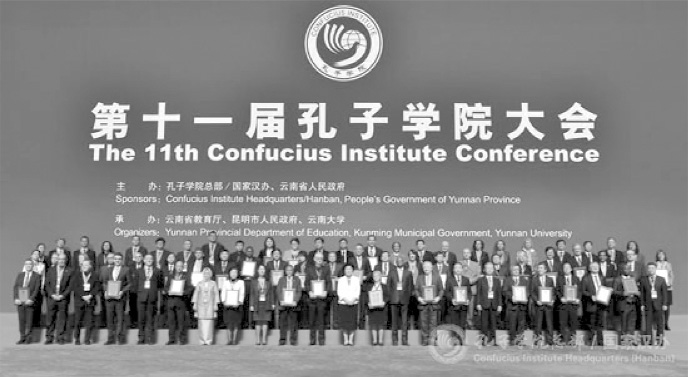
CONCLUSION: It is often argued that the Chinese people have been culturally conditioned by the Confucian view of looking at things in terms of collective responsibility, specifically for their families, the community and the nation at large. Confucius laid much emphasis on education and scholarship, which greatly influenced other countries of the region including Korea, Japan, Vietnam, Cambodia and Singapore. His philosophy directly gave rise to the imperial examination system for the civil service in the 7th Century AD, whereby attempts were made to replace hereditary rule by the aristocracy with a system based on meritocracy. Confucianism was declared as the official state philosophy by the Han dynasty (BC 206 - AD 220) in the 2nd Century BC, and it has remained as a dominant orthodoxy in Chinese society over the last two thousand years. In 2006, the then Chinese President Hu Jintao called on the Chinese civil servants to adopt Confucian morality and ethics as a means to counter corruption and inequality in society. He also sanctioned funding for establishing over 100 'Confucian Institutes' across the globe to reinforce and strengthen education and research on Chinese language and culture around the world.
A retired civil servant, Dr. Helal Uddin Ahmed is currently an 'Understanding China Fellow' of the Beijing-based Confucius Institute Headquarters, pursuing research on the impact of Confucianism at the Beijing Language and Culture University. He is also a former editor of Bangladesh Quarterly and author of the book 'Prachin China Darshan' (Ancient Chinese Philosophy).
hahmed1960@gmail.com