
Influx, land scarcity, underskill bar to execution of dev projects
Urban Dev Journalist Forum dialogue told
FE REPORT | Thursday, 21 July 2022
Influx of people, scarcity of land, skill gap of workforce and lack of coordination among state agencies are among the key constraints on quality implementation of development projects in the capital, speakers viewed at an event on Wednesday.
There is also a grim mismatch in planning and implementation of development works, which leads to extension of project tenure resulting in frequent increase in budget, they observed.
Their observations came at a dialogue titled "Challenges in Formulating and Implementing Development Plans in the Capital" organised by Urban Development Journalist Forum, Bangladesh (UDJFB) at the National Press Club in the city.
Mayor of Dhaka South City Corporation (DSCC) Sheikh Fazle Noor Taposh addressed the event as the chief guest while Rajdhani Unnayan Kartripakkha (RAJUK) chairman Anisur Rahman Miah, Detailed Area Plan (DAP) Project Director Ashraful Islam, Bangladesh Institute of Planners (BIP) president Fazle Reza Sumon, Institution of Engineers, Bangladesh (IEB) general secretary Shahadat Hossain Shiblu, Chinese Enterprises Association in Bangladesh (CEAB) President Ke Changliang, among others, also spoke.
Professor of Department of Urban and Regional Planning at Jahangirnagar University Dr Akter Mahmud presented the keynote paper at the programme presided over by UDJFB president Amitesh Pal and moderated by its general secretary Shohel Mamun.
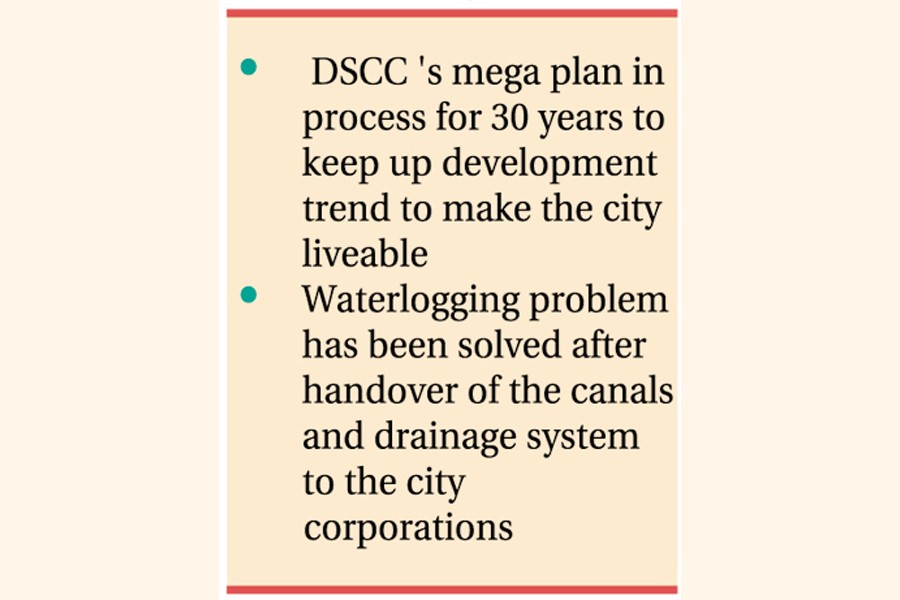
Delivering his speech, the Mayor said DSCC has been in the process to formulate a mega development plan for 30 years to keep continuity of its development works to make the city more liveable.
"Ward centric development plans will be taken to establish playground, kitchen market, waste transfer station and community hall along with betterment of drainage system," he said.
In the last two years, waste transfer stations were increased to 56 from only 24 in the DSCC area, he said, adding: "Scarcity of land is a big problem in establishing those stations as the south city is very congested."
He also said waterlogging problem in the city has been solved to some extent after the handover of canals and drainage system from the Dhaka Water Supply and Sewerage Authority (WASA) to city corporations.
"Besides, we are not allowing any other utility service providers to dig the city roads from April 30 to September 30 so that the roads don't get muddy and unusable during the monsoon," Mr Taposh said.
Referring that the DSCC has collected around Tk8.79 billion in revenue last fiscal, he said due to ensuring good governance, revenue collection increased significantly which now allows the DSCC to finance its projects from own fund.
He also emphasised a change in people's attitude to keep the city clean and free the roads and canals from illegal occupation.
RAJUK chairman said to reduce the mounting pressure of population in the capital, there are no alternative to establishing satellite cities in the suburbs of Dhaka with improved connectivity.
To regenerate the old part of the city, the RAJUK has taken a project to tear down dilapidated, congested and unplanned buildings to construct high-rise apartment complexes but collaboration from the land owners is crucial to make that happen, he said.
Besides, Mr Miah said, "There are many reasons to raise finger to the RAJUK for its works and the authority is accountable to give answer to those questions."
He also claimed that the RAJUK is working more proactively after his joining.
BIP president said there is huge coordination gap in planning and implementation of development works among the 29 state agencies including the city corporations.
If these organisation works in collaborations, the day to day hassles of the city dwellers can be reduced notably, he said.
CEAB president Mr Changliang favoured engaging private sector in the utility services under public private partnership (PPP) model to increase service quality.
ahb_mcj2009@yahoo.com