
Inside the interim govt’s reform agenda
Saif Uddin | Tuesday, 5 August 2025

After the fall of Sheikh Hasina's autocratic regime in the face of student-mass protest, the interim government took over charge of the country's affairs. Nobel laureate Dr. Muhammad Yunus-led interim administration has now outlined the reform agenda, focusing on constitutional and electoral system, administration reforms, alongside improvements in the fields of economy, education, health and human rights.
The key objectives of the reform agenda include a more democratic and stable political landscape, good governance and a level-playing field for holding the next general election in a free and fair manner.
Keeping these in view, the Chief Adviser of the interim government, Dr. Yunus in September, 2024 formally announced the formation of several reform commissions aimed at rebuilding the state of Bangladesh.
The initiative was aimed to establish a universal consensus and it was undertaken based on the aspirations of the July warriors. Following the initiative, a total of 11 commissions were formed, including those for reforming the country's Constitution, electoral system, police administration, judiciary, anti-corruption, heath, media, labour and women affairs.
CONSTITUTION REFORM COMMISSION: Political scientist and writer Ali Riaz led the commission as its Chairperson. The Constitution Reform Commission has made extensive recommendations in five volumes. It has made seven key recommendations. The commission has recommended abolition of several Articles of the Constitution, as well as the removal of the related Fifth, Sixth, and Seventh Schedules.
According to the commission's recommendations, the lower house of the National Parliament will have 400 seats. Elections will be held under the existing system-direct voting. Out of these, 100 seats will be reserved for women, who will also be elected through direct vote. The upper house will have 105 seats, with 100 members elected through a proportional representation (PR) system. This proposal for a PR system in the upper house has already sparked a political controversy. Many have alleged that the proposal was made to provide an undue advantage to some less popular parties.
Currently, the Constitution is based on four fundamental principles: nationalism, socialism, democracy, and secularism. Among these, only democracy has been retained in the newly proposed five principles. The new five principles proposed are: equality, human dignity, social justice, pluralism, and democracy.
ELECTORAL SYSTEM REFORM COMMISSION: Election expert Badiul Alam Majumdar is the chairperson of the commission. This commission has made over 200 recommendations across 16 priority areas. It has proposed several fundamental measures to strengthen the electoral process and the Election Commission (EC). A key recommendation is to bring political parties under the Right to Information Act, which would help increase their accountability.
The commission recommends disqualifying candidates from contesting elections from the date of conviction by a court or the International Crimes Tribunal. This contradicts the Constitution, which should determine eligibility.
POLICE REFORM COMMISSION: Former Secretary Safar Raj Hossain is the chairperson of the commission.
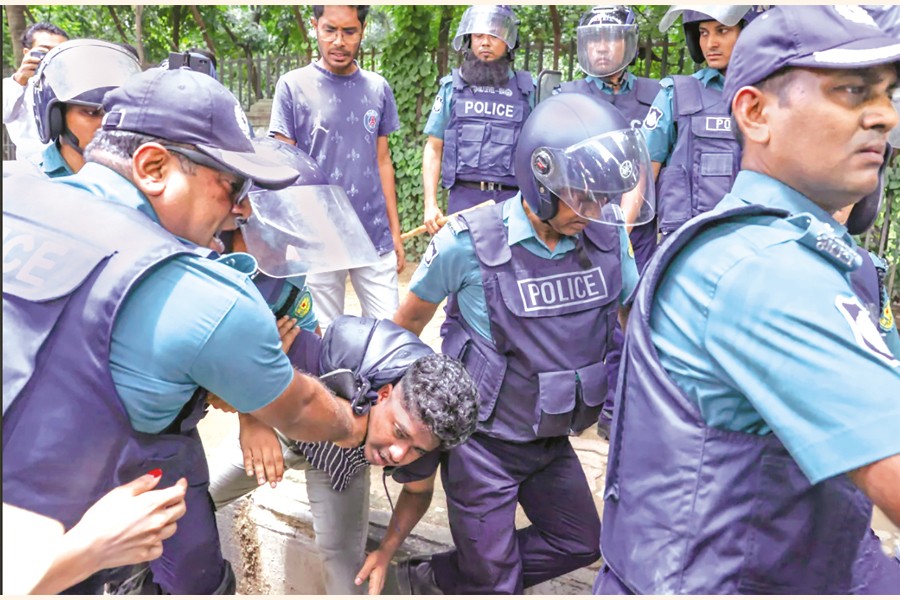
The police in Bangladesh have long been seen as a politically manipulated force. Reforms of this police force are a very old issue. At least 10 commissions have been formed since the British era to reform the police force, and the last draft ordinance was prepared in 2007. The violent roles of some policemen during the July uprising prompted the interim government to bring about such reforms.
In its 110-page report, the commission proposed major reforms in 13 areas and amendments to 22 laws. While it suggested forming a Police Commission to protect the force from political influence, how this commission itself will remain independent is unclear.
In a country where parliamentary committees are not free from political influence and even judicial and quasi-judicial bodies operate under political alignments, it is unclear how a Police Commission can be kept independent. Without a clear understanding of this, the police will continue to be used as a reckless tool of politics, as they had been in the past.
ANTI-CORRUPTION COMMISSION (ACC) REFORM COMMISSION: Headed by the Executive Director of Transparency International Bangladesh (TIB) Dr Iftekharuzzaman, the ACC Reform Commission made 47 recommendations, including granting constitutional status to the (ACC). It gave emphasis on preventing corruption both at the national level and within the ACC itself. The reform commission's report contains a series of proposals. Yet questions may be raised about the justifications of some of the recommendations in the context of Bangladesh.
The first ten recommendations in this Reform Commission's report focus on state initiatives and legal reforms. These include the establishment of an Ombudsman through legislation under Article 77 of the Constitution, permanently ending any state practice of legitimizing income from unknown sources, and ensuring public access to all information regarding the real or ultimate beneficiaries of companies, trusts, or foundations by registering them under a proper legal framework. If implemented effectively, such measures could help reduce Bangladesh's notorious global ranking in corruption in the near future.
The report places an emphasis on the ACC's status, structure, complaint handling, investigation, and prosecution. However, it notably overlooks the root causes of corruption in Bangladesh.
PUBLIC ADMINISTRATION REFORM COMMISSION: Former Chairman of the National Board of Revenue (NBR) Abdul Muyeed Chowdhury was made the chairperson of the commission. The report placed by the Administration Reform Commission sparked debates and protests from various quarters. Critics said most of the proposals made by the commission were not implementable. The report of this reform commission has made more than two hundred recommendations. Among them, the commission has asked for four separate provinces with the four old divisions and a 'Capital City Government' with Dhaka and its surrounding areas under its jurisdiction. But to implement this recommendation, it is necessary to think deeply about whether Bangladesh has the economic capacity to ensure security, including the construction of provincial councils, offices and courts, as well as other infrastructure. The proposal to break up the cadres into smaller ones could create a chaos in public administration.
JUDICIARY REFORM COMMISSION: Retired justice Shah Abu Nayeem Mominur Rahman was made the Chairperson of this commission. This commission's main focus was to ensure the independence and transparency of the judiciary. The recommendations include proposals such as establishing a separate judicial secretariat, forming an independent commission for the appointment of judges (excluding the Chief Justice), setting up permanent High Court benches in all administrative divisions, establishing commercial courts at the district level, setting up civil and criminal courts at the upazila level, and forming a permanent attorney service.
Although there is a tradition of appointing the senior-most judge of the Appellate Division as the Chief Justice, this convention is not always followed. At times, political considerations have led to the appointment of less senior judges to the post. In its draft recommendations, the commission has proposed that the seniormost judge be appointed as Chief Justice. If this recommendation is followed, the President will no longer have discretionary authority in appointing the Chief Justice, and the executive branch will have no influence in the process.
The commission also proposes formation of an independent and autonomous commission for appointing judges other than the Chief Justice. It suggests replacing the current practice-where the Chief Justice alone advises on Supreme Court appointments-with a collective and representative recommendation process, which the commission considers both "rational and desirable."
MEDIA REFORM COMMISSION: Led by veteran journalist Kamal Ahmed, the 11-member Media Reform Commission outlined 20 key recommendations, including that no single individual or entity should own multiple media outlets. It said prevention of cross-ownership will encourage media diversity and reduce the influence of a few powerful business groups over the entire media sector.
The commission also called for the creation of an independent regulatory body to oversee the media sector that would have the authority to monitor content, enforce ethical guidelines, and ensure that media outlets uphold democratic values without external interference. Such a body is necessary to promote transparency and accountability in media reporting.
The commission also recommended revising media laws, particularly amending the Digital Security Act, and improving journalists' financial security by introducing a minimum wage.
In a bid to combat misinformation, the commission proposed stronger measures such as fact-checking systems and public awareness campaigns to rebuild trust in the media. It also suggested the creation of a public list identifying media outlets that violate ethical standards aimed at enhancing accountability.
The members of the commission, among others, include Shamsul Huq Zahid, Editor of the Financial Express, as a representative of the Editors' Council.
WOMEN'S AFFAIRS REFORM COMMISSION: Shireen Parveen Haque, a founding member of Nari Paksha, led the Women's Affairs Reform Commission as its chief. This commission submitted its recommendations in April this year with 15 specific issues to the government, including the introduction of equal property rights for women, a uniform family code, and a separate and permanent women's affairs commission.
THE HEALTH SECTOR REFORM COMMISSION:
The Health Sector Reform Commission, led by its Chairman Professor AK Azad Khan, highlighted seven pillars in its report to ensure universal healthcare.
The pillars are-- health service and physical infrastructure; leadership; good governance and working culture; health workforce management; health workforce education and training; essential medicines, medical technology and equipment supply; and health sector financing and health information systems.
The Commission has called for greater investment in health to build a people-oriented, accessible, and universal healthcare system. It has recommended recognising primary healthcare as a legal right in the constitution and ensuring free treatment for low-income people.
The commission has also mentioned the public opinion survey in the report revealing that 97 per cent of the respondents said that primary health care should be provided free of cost.
LABOUR REFORM COMMISSION: The Labour Reform Commission was headed by Syed Sultan Uddin Ahmed. Overall aspects of the labour reform have been reflected in the 25 main recommendations of the commission.
Among the key recommendations, the commission advocates for universal maternity leave of six months, extendable up to two years, along with measures to eradicate sexual harassment and child labour in workplaces. Special focus is also placed on safeguarding migrant workers' safety and skills development. Additionally, draft laws to protect media workers are proposed.
The commission advocates for the creation of both a labour commission and a wage commission to address various crises effectively and foster a culture of accountability. It urges the government to play an active role in implementing these recommendations.
saif.febd@gmail.com