
Investment to elude BD sans reliable energy supply, predictable policies
ICC,B chief alerts
FE REPORT | Thursday, 23 July 2026
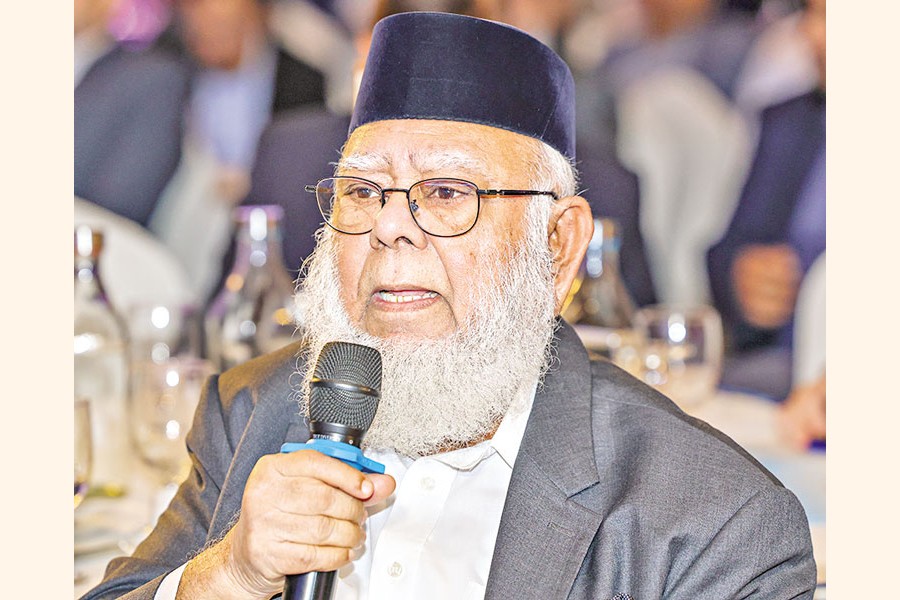
Bangladesh will struggle to attract both local and foreign investment unless it ensures a reliable energy supply and predictable government policies, says ICC Bangladesh President Mahbubur Rahman.
He rings alarm bells as the country's prolonged energy crisis is pushing industries towards collapse and threatening the banking sector.
Speaking from the audience at a policy conclave attended by Power, Energy and Mineral Resources Minister Iqbal Hasan Mahmud on Wednesday in Dhaka, Rahman said investors were reluctant to commit capital in an environment marked by fuel shortages, power-supply uncertainty and inconsistent policies.
"None from home or abroad is going to invest in this country until there is a steady supply of energy, along with predictability of government policies," he said.
He notes that foreign investors often assess a country's investment climate by looking at the performance of domestic businesses.
"As existing industries are struggling to survive because of energy shortages, the country is sending a negative signal to potential overseas investors," he told the meet.
Mahbubur Rahman urged the government to allocate state-owned land for large-scale solar and renewable-energy projects, saying that the country's energy crisis cannot be resolved through rooftop solar alone.
Rahman said the government should shift its focus towards utility-scale renewable-energy projects and ensure a transparent process for allocating land to investors.
He mentions that Bangladesh has ample government-owned land that could be used for solar parks and other renewable-energy projects.
"You have plenty of land. Give it to those who want to invest in solar and renewable energy," he said.
The ICC Bangladesh president called for a transparent and direct mechanism for allocating land to investors, arguing that lengthy administrative procedures discourage investment and delay project implementation.
"Without going through different processes, give it to them directly through a transparent process so it can move forward."
He urged the government to make suitable public land available to both domestic and foreign investors within the next six months to accelerate renewable-energy development.
Mr Rahman makes it clear that expanding renewable-energy generation alone would not be enough unless the government also addresses weaknesses in the electricity-transmission network.
He points out that transmission infrastructure had not been developed adequately over the past 15 years, leaving power plants underutilised even when generation capacity exists.
According to him, strengthening the transmission system should go hand in hand with investment in new renewable-energy projects to ensure electricity reaches industries and consumers efficiently.
The business leader feels that timely government intervention could help ease the energy crisis, protect existing industries from further disruption and restore investor cconfidence.
Rahman has questioned the management of the power sector, noting that Bangladesh has an installed electricity-generation capacity of more than 28,000 megawatts, including captive power, yet continues to import electricity from India and Nepal while many domestic power plants remain idle.
On the fault lines, he also makes a point that the government has been paying thousands of crores of taka in capacity charges to power producers despite being unable to supply sufficient fuel or complete the transmission infrastructure needed to evacuate electricity from those plants.
"You have been paying thousands of crores for idle capacity, but we are not getting electricity. Ultimately, the people are paying the cost," he said, urging the government to stop making capacity- charge payment for plants that remain unused.
Rahman also warns that the energy crisis is beginning to undermine the country's financial sector, as industries unable to operate at full capacity are facing mounting financial distress.
He said businesses were being punished for circumstances beyond their control and cautioned that the situation would lead to a further increase in non-performing loans (NPLs).
According to him, around 43 per cent of total bank deposits are now exposed to growing risks. Unless the energy crisis is resolved, many businesses will fail to service their loans and eventually become defaulters, putting additional pressure on the banking system.
"They are going to be punished for no fault of their own and will become defaulters as NPLs in banks increase further," he said.
bdsmile@gmail.com