
Iran has 'ability' to build N bomb
US seeks to cause tensions in Mideast by spreading Iranophobia: Tehran
Tuesday, 19 July 2022
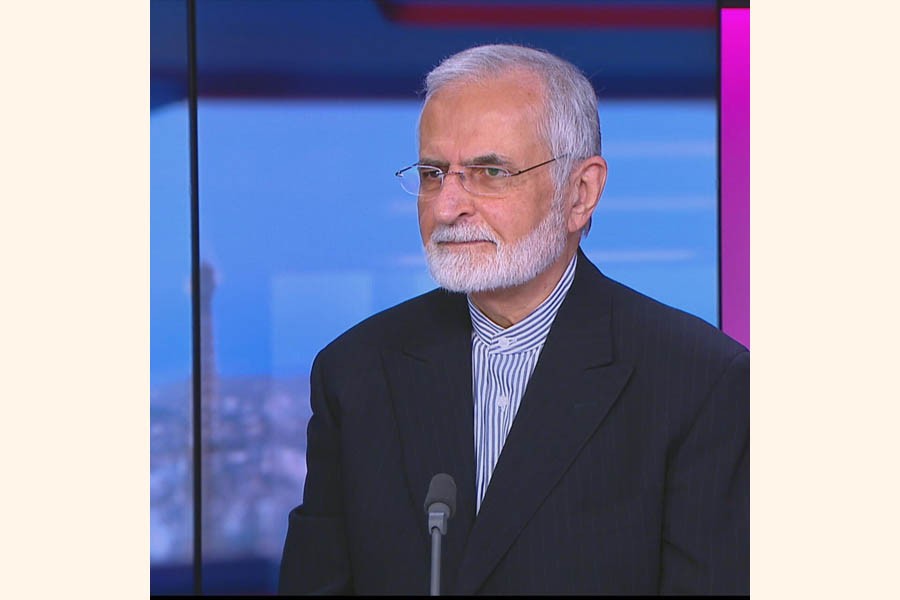
TEHRAN, July 18 (AFP/Xinhua): Iran has the technical capacity to build a nuclear weapon but has not taken a decision to do so, an official told the Al Jazeera broadcaster on Sunday.
Iran "has the technical ability to build a nuclear bomb" said Kamal Kharrazi, who heads an advisory board linked to Iran's leadership.
But Tehran has "not made a decision to build an atomic bomb", he added.
The comments come after US President Joe Biden visited the Middle East this week and signed a security pact with Israel vowing to prevent Iran from acquiring nuclear weapons.
It also comes as efforts to revive a 2015 nuclear deal between Tehran and world powers remain stalled.
Kharrazi, a former foreign minister, also told Al Jazeera that Tehran had carried out extensive drills to be able to strike deep inside Israel "if sensitive (Iranian) installations are targeted".
He did not specify when the drills took place.
The 2015 nuclear deal offered Iran sanctions relief in exchange for imposing limits on its nuclear programme and sought to guarantee Tehran could not develop a nuclear weapon, something it has always denied wanting to do.
The United States withdrew from the agreement in 2018 under then president Donald Trump and reimposed biting sanctions, prompting Tehran to step away from many of its own commitments under the deal.
Iran has held direct talks with remaining parties to the accord-and indirect talks with the United States-in a bid to restore the deal, but negotiations have been at an impasse since March.
The new security pact signed this week by Israel and the United States commits Washington to "never to allow Iran to acquire a nuclear weapon", stating that the US "is prepared to use all elements of its national power to ensure that outcome".
Asked on Thursday how long the US was prepared to give efforts to revive the 2015 nuclear deal, Biden said "we're not going to wait forever".
Tehran earlier Sunday accused Washington of provoking tensions in the Middle East, after Biden vowed that the United States would not "tolerate efforts by any country to dominate another in the region through military buildups, incursions, and/or threats", in a transparent reference to Iran.
The International Atomic Energy Agency (IAEA) said earlier this month that Tehran had started "feeding... a cascade of... centrifuges" at a fuel enrichment plant.
The techniques facilitate the process and would make it easier for Iran to switch to a different level of enriching uranium.
In January 2021, Iran said it was enriching uranium to 20 percent at that facility, a level well beyond the 3.67 percent agreed under the 2015 deal, before later saying it had enriched to 60 percent at another facility, still short of the 90 percent required for military grade uranium.
Earlier report adds: The Iranian Foreign Ministry spokesman on Sunday dismissed the U.S. president's recent claims over Iran's nuclear activity as a "failed policy of promoting Iranophobia," which seeks to cause tensions and crises in the region.
Joe Biden's anti-Iran remarks, which were made during his Middle East visit, are "part of Washington's policy of inciting sedition and fomenting tensions in the region," Nasser Kanaani said.
Citing the American dark record and history of hostility toward other countries, Kanaani noted that the United States invaded and occupied a number of regional countries and has sold numerous weapons, as well as is constantly interfering in regional states' internal affairs.
Nasser Kanaani reaffirmed Iran's strategic policy of seeking to use nuclear technology only for peaceful purposes within the framework of the international rules and regulations, saying Iran is committed to the continuation of the talks on the removal of the sanctions and revival of a 2015 nuclear deal.
He stressed Iran's principled and constructive policy of welcoming dialogues with neighbors and regional initiatives, expressing hope that "regional governments are expected to take constructive steps in favor of collective security, peace, stability and development."
The United States pledged not to allow Iran to acquire a nuclear weapon even at the cost of using "all elements of its national power," affirming its commitment to work together with other partners "to confront Iran's aggression and destabilizing activities," Biden said in a U.S.-Israel joint declaration in Jerusalem on Thursday.