
Iran says indirect talks with US continue via Oman
Raisi after 'strategic' ties in South America tour
Tuesday, 13 June 2023
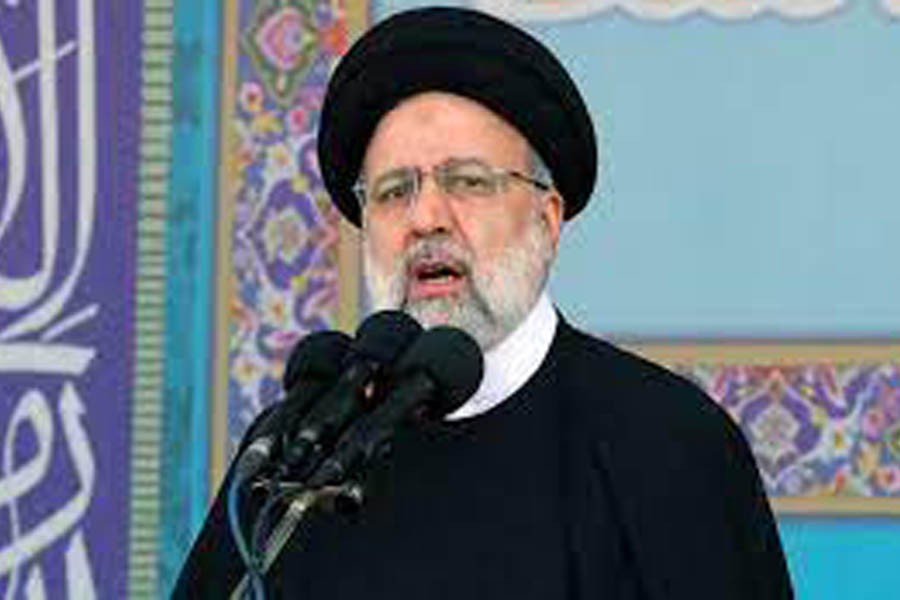
TEHRAN, June 12 (Al Jazeera/Arab News): Iran on Monday said it has continued indirect negotiations with the Unites States through the Sultanate of Oman over its nuclear deal and a possible prisoner swap.
Iran's nuclear program has long been the subject of scrutiny from Western powers, resulting in sanctions that have crippled the country's economy.
A 2015 deal granted Tehran much-needed sanctions relief in exchange for curbs on its nuclear program before it was torpedoed by the United States' unilateral pullout in 2018.
In recent days, the two capitals have denied media reports that they were close to reaching an interim deal to replace the 2015 accord.
"We welcome the efforts of Omani officials and we exchanged messages with the other party through this mediator" over the lifting of US sanctions, Iran's foreign ministry spokesman Nasser Kanani said Monday.
"We have never stopped the diplomatic processes," he added during his weekly press conference, emphasising that the talks "were not secret."
Diplomatic ties between Tehran and Washington soured in 1980 following the 1979 Islamic revolution led by Iran's first supreme leader Ayatollah Ruhollah Khomeini.
Efforts to revive the 2015 nuclear deal have so far failed to yield results.
Iran's supreme leader Ayatollah Ali Khamenei on Sunday reiterated the denial of moves toward acquiring a nuclear weapon.
He also said deals could be reached, provided they do not change "the existing infrastructure of the nuclear industry."
Iran and its arch-nemesis the United States have also been involved in Oman-mediated talks over a possible prisoner swap.
Kanani on Monday said a prisoner exchange could be agreed "in the near future," provided that Washington exhibits "the same level of seriousness" as Tehran.
At least three Iranian-Americans are being held in Iran, including businessman Siamak Namazi, arrested in October 2015 and sentenced to 10 years in prison for espionage.
Meanwhile, Iran's President Ebrahim Raisi has started a three-country tour of South America with the aim of bolstering political and economic ties with allies who oppose Western rule.
The president departed Tehran in the early hours of Monday and is expected to make state visits to Venezuela, Cuba and Nicaragua, all countries that are also sanctioned by the United States.
Iranian state media said the five-day tour will begin with a visit to Venezuela. This is Raisi's 13th foreign trip in the 21 months since the start of his presidency.
The president is accompanied by his ministers of foreign affairs, petroleum, defence and health, along with his chief of staff and deputy for political affairs.
"Relations between the Islamic Republic of Iran and independent countries in Latin America are strategic. The position of us and these three countries is to stand against imperialism and unilateralism," Raisi said before departing.
Among Raisi's three destinations, Iran enjoys the closest ties with Venezuela.
The two countries signed a 20-year cooperation plan they said would take bilateral relations to a "strategic" level during a visit by Venezuelan President Nicolas Maduro to Tehran last year, when he also met Supreme Leader Ayatollah Ali Khamenei.
For the past three years, Iran has been significantly boosting its energy cooperation with Caracas, among other things helping repair and overhaul Venezuelan refineries and sending shipments of heavy crude to help Venezuela ramp up its production of oil and gas.
The two countries also aim to increase cooperation in agriculture, science and technology, shipping, automotive and tourism sectors while increasing flights and strengthening cultural ties.
The Raisi visit comes one week after Maduro arrived in Saudi Arabia for a high-level trip as Riyadh rebuilds alliances without the blessing of its longtime ally, the United States.
Catch up on our coverage of the region, all in one place.
Iran and Saudi Arabia agreed to restore diplomatic relations in a China-brokered deal in March, something that also paved the way for Saudi rapprochement with the Iran-backed Houthis in Yemen and Syrian President Bashar al-Assad's return to the Arab League.