
Justice Murshed - an outstanding jurist of the twentieth century
Nazir Ahmed | Monday, 12 January 2015
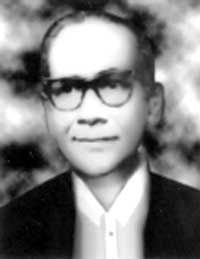
People come in this world and go. This is natural. Similarly, Justices are elevated in the Apex Court and with the passage of time they retire. How many of them are known to us and are remembered decade after decade? Late Justice Syed Mahbub Murshed was one of the exceptions. His outstanding legal career and landmark judgments have made him known both within and outside the legal arena. His commitment and determination to liberty, fairness and justice made him immortal. Lord Denning was the most prominent and important English Judge of the twentieth century. In my opinion, Justice Murshed was Lord Denning of the twentieth century South Asia.
Syed Mahbub Murshed was born on January 11, 1911. His parental forbears were Syeds who settled in the district of Murshidabad during the reign of the Mughul Emperor Shahjahan. His father was Syed Abdus Salek who, after completing a brilliant academic career in the University of Calcutta, joined the Bengal Civil Service and served as a District Magistrate in Bogra and Dinajpur. He had an excellent reputation as an honest and expert officer.
Justice Murshed's mother was Afzalunnesa Begum, the sister of Sher-e-Bangla A K Fazlul Haque, who was the descendent of Khalid-bin-Walid, the 7th century conqueror and one of the greatest generals in the history of Islam.
Justice Murshed was married to Mrs Lyla Arzumand Banu, the daughter of Mohammed Zakariah, a prominent Indian nationalist and the Mayor of Calcutta in 1939.
All of Justice Murshed's children are highly educated and well established in the country and abroad. The sons are: Syed Marghub Murshed, a retired brilliant civil servant (CSP), Syed Mamnun Murshed, a renowned academic and diplomat, and Dr Syed Mansoob Murshed, an eminent educationalist). The daughter is Syeda Shaida Murshed.
Justice Murshed completed his matriculation in 1926 securing the first position among the successful candidates who appeared in the Calcutta University Matriculation Examination in that year from the Rajshahi Division. He successfully obtained BA (Hons) from the famous Presidency College of Calcutta in Economics and MA in Economics from the University of Calcutta in 1930 and 1932 respectively. He passed LLB Exams in 1933 from the University of Calcutta securing a First Class. Justice Murshed then went to the UK for further and higher legal education. He was called to the English Bar in 1939 and was placed first among the candidates from the then British India appearing in the Bar exams that year.
Besides his studies, Justice Murshed was actively involved in extra-curriculum activities. He took a keen interest in literature even in his childhood. While at Presidency College in Calcutta, he once edited the College Magazine. He published some articles on Palestine and Middle East issues in the Guardian, a reputable daily of the UK. This made him known throughout the Middle East. His critical article on Quad-E-Azam in the Statesman in the 1940s had caused a lot of enthusiasm on Justice Murshed. He later emerged as an excellent orator. He successfully led the Debating Society of the Calcutta University. In student life he had keen interest in sports. He was one of the key organisers of the Mohamadan Sporting Club in the 1930s.
Justice Murshed began his legal practice at the Calcutta High Court in the early 1940s. Instead of going to work as an Assistant of his uncle Sher-e-Bangla A K Fazlul Haque, he acted as a junior of the then renowned lawyers Sarat Chandra Boshu and AZ Khaitun. He made his mark at the Bar even at an early age. After the partition of the sub-continent, he joined the then Dacca High Court.
In early 1955, Justice Murshed was elevated to the Bench of the Dacca High Court. Some of his famous judgments, including the Ministers Case, the Pan Case, the Basic Democracy Case, the Mahmood Case and the Convocation Case, were all landmarks in the constitutional history of Pakistan. He also served as an Ad-hoc Justice of the Supreme Court of Pakistan in 1962. One of his judgments, delivered, while serving as an Ad-hoc Justice, is considered to be legal classic.
He served as the Chief Justice of East Pakistan from 1964 to 1976 during which he kept the banner of the rule of law aloft in both what is now Pakistan and Bangladesh. Because of his bravery and bold judgments, the government was feeling threatened and nervous. As a result, the government did not leave any possible stone unturned to put pressure on Justice Murshed. However, Justice Murshed was a man of principle and conscience. When he thought that he could not be dictated by his conscience, he resigned from the post of the Chief Justice on November 16, 1967. After resigning from the post of Chief Justice, Justice Murshed survived more than a decade, towards the end of which he was having a fragile/ill health. He died on April 03, 1979. On his death, the Indian sub-continent in general and Bangladesh in particular lost a great legal icon, the loss of which has not been replaced yet and the absence of which is still felt.
After resignation, Justice Murshed helped organise the defence of the Agartala Conspiracy Case. He took active part in the 'mass upsurge' of 1969. In the roundtable conference called by President Ayub Khan, he advocated the 11 points of the students of the then Province of East Pakistan.
Throughout his eventful career, Syed Murshed was associated with cultural societies and humanitarian activities. He was the founder president of Rotary Club, Lions Club, Pak-China Friendship Association and Bangla-China Friendship Association. He was a life member of Bangla Development Board and Bangla Academy. Justice Murshed was the President of Red Crescent Society in 1956. He established a legal assistance organisation called 'Legal Aid.' This was the first human rights organisation in Bangladesh. The famine of 1943 drew him to the Anjuman-e Mufidul Islam and the cyclones in the 1960s to the Red Cross Society.
Let us see what leading personalities and jurists of the sub-continent had to say about Justice Murshed. Late H. S. Suhrawardy, an eminent lawyer of the subcontinent and former Prime Minister of Pakistan, called Justice Murshed an "unfailing protector of civil liberties in Pakistan." His evaluation of Justice Murshed as a young lawyer in 1937 was "In my opinion he (Justice Murshed) is an exceptionally intelligent young man who will be a credit in our community." Late Birendranath Sarkar referred Justice Murshed as "the only protector of the minorities of Pakistan during the Ayub-Monem Era." In praising Justice Murshed, an eminent jurist of Bangladesh, Barrister Syed Istiaque Ahmed said "When history of the twentieth century judiciary of Bangladesh will be written Murshed's name and contribution will be prominent for what he showed was possible in defence of the law and the Constitution to push the law in the direction of the 'felt necessities of the time' as he himself put it, and declared a crusade against any transgression of the Constitution." According to Barrister Moudud Ahmed, a renowned lawyer and politician, "through his talent and wisdom, he (Justice Murshed) was able to bridge between the minds of judges with the minds of the general people." An eminent politician of the sub-continent Ataur Rahman Khan commented on Justice Murshed, "Justice Murshed believed democracy was the highest right. He tried to maintain and promote democracy through the legal process." Late President Justice Abu Syed Chowdhury termed Justice Murshed's judgment in the case of Golam Sarwar Vs Pakistan Western Railway PIDE 1462 SE 42 as 'legal classic.' According to Justice Mustafa Kamal, an eminent contemporary jurist and the former Chief Justice of Bangladesh, "in interpreting the law in fine way and apply it accordingly, Justice Murshed had no equivalent contemporary in Pakistan. It is rare to find such an extraordinary constitutional jurist in the Indian sub-continent." Dr Mizanur Rahman Shelly, an eminent social scientist, evaluated Justice Murshed in one of his articles in 1994 as "In post-liberation Bangladesh he [Justice Murshed] was instrumental in projecting the voice of reason and justice until his demise in 1979. After the emergence of Bangladesh he was the first prominent public figure who pleaded for a general amnesty for all political prisoners." Many of his judgments are considered as landmarks in the history of the constitutional law.
Despite having success in each and every stage of life and despite having extraordinary wisdom, Justice Murshed did not have pride or vanity. In personal life he was simple, kind and caring.
Justice Murshed was a living legendary in the Indian sub-continent of the last century. He left us 34 years ago leaving behind a legacy for us. That legacy is, his firm commitment to the principles of liberty, justice, rule of law and the ideals of liberalism. The firmness, boldness and strictness of Justice Murshed in ensuring justice and fairness is mostly needed in contemporary Bangladesh where the rule of law is being threatened, justice is being politicised and compromised, and liberties have become cheap commodities so easily to be taken away. Contemporary judges and lawyers have a lot to learn from the shining and outstanding legal and judicial career of Justice Murshed.
Barrister Nazir Ahmed is an UK-based legal expert.
ahmedlaw2002@yaho.co.uk