
Lanka faces humanitarian crisis
Ordinary Sri Lankans wait for days for cooking gas and petrol: Sometimes they get nothing
Thursday, 30 June 2022
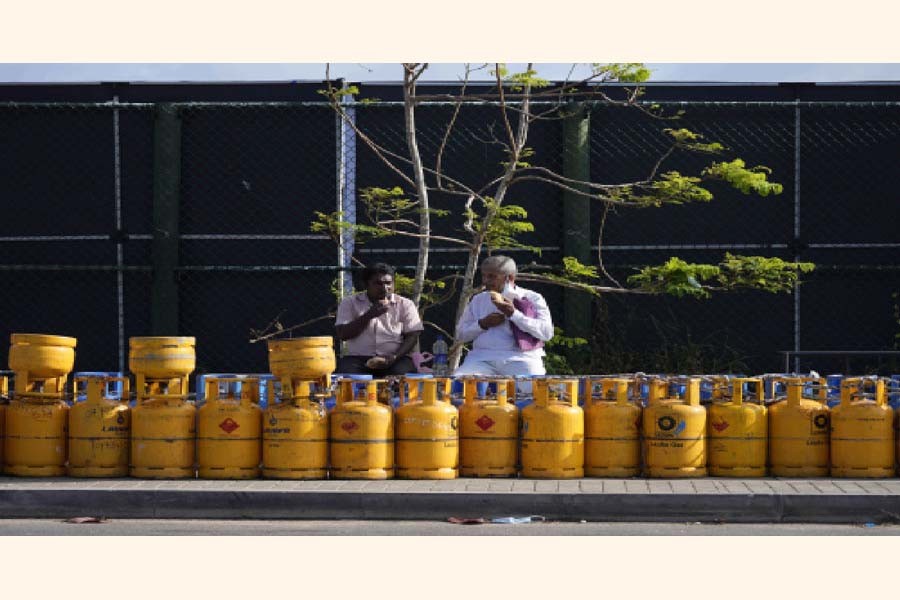
COLOMBO, June 29 (AP): Chamila Nilanthi is tired of all the waiting. The 47-year-old mother of two spent three days lining up to get kerosene in the Sri Lankan town of Gampaha, northeast of the capital Colombo. Two weeks earlier, she spent three days in a queue for cooking gas-but came home with none.
"I am totally fed up, exhausted,'' she said. "I don't know how long we have to do this.''
A few years ago Sri Lanka's economy was growing strongly enough to provide jobs and financial security for most. It's now in a state of collapse, dependent on aid from India and other countries as its leaders desperately try to negotiate a bailout with the International Monetary Fund.
What's happening in this South Asian island nation of 22 million is worse than the usual financial crises seen in the developing world: It's a complete economic breakdown that has left ordinary people struggling to buy food, fuel and other necessities and has brought political unrest and violence.
"It really is veering quickly into a humanitarian crisis,'' said Scott Morris, a senior fellow at the Center for Global Development in Washington.
Such disasters are more commonly seen in poorer countries, in sub-Saharan Africa or in war-torn Afghanistan. In middle-income countries such as Sri Lanka they are rarer but not unheard of: 6 million Venezuelans have fled their oil-rich home country to escape a seemingly unending political crisis that has devastated the economy.
Indonesia, once touted as an "Asian Tiger'' economy, endured Depression-level deprivation in the late 1990s that led to riots and political unrest and swept away a strong man who'd held power for three decades. The country now is a democracy and a member of the Group of 20 biggest industrial economies.
Sri Lanka's crisis is largely the result of staggering economic mismanagement combined with fallout from the pandemic, which along with 2019 terrorism attacks devastated its important tourism industry. The COVID-19 crisis also disrupted the flow of payments home from Sri Lankans working abroad.
The government took on big debts and slashed taxes in 2019, depleting the treasury just as COVID-19 hit. Sri Lanka's foreign exchange reserves plummeted, leaving it unable to pay for imports or defend its beleaguered currency, the rupee.
Ordinary Sri Lankans-especially the poor-are paying the price. They wait for days for cooking gas and petrol-in lines that can extend more than 2 kilometers (1.2 miles). Sometimes, like Chamila Nilanthi, they go home with nothing.
Eleven people have died so far waiting for gasoline. The latest was a 63-year-old man found dead inside his vehicle on the outskirts of Colombo. Unable to get gasoline, some have given up driving and resorted to bicycles or public transportation to get around.