
Lessons from Rana Plaza collapse and Sewol ferry disaster
Mehdi Mahbub | Thursday, 24 April 2014
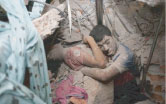
Would April be a month of grief and pains for the peoples of Bangladesh and Korea? When the people of Bangladesh are remembering with sorrow and tears the first anniversary of the disastrous building collapse at Rana Plaza in Savar, friendly people in Korea are still struggling to accept the shock of ship sinking on April 16, 2014 a few kilometres away from its south-western coast.
April 24, 2013 is a painful day in the history of Bangladesh garments industry. A total of 1,130 innocent workers of five garment factories, who went to work along with their thousands of co-workers at the Rana Plaza, were killed as the building collapsed. Thousands more were injured and are still suffering due to this disaster. It is alleged that the proprietor of the building and the owners of those garment factories operated the factories overlooking the minimum safety measures even after cracks in the building were reported and the Bangladesh Garment Manufacturers and Exporters Association (BGMEA), the apex body of the garment trade, advised its member factories (situated at the ill-fated building) not to operate!
April 16, 2014 is a horrible day in the history of Korean transportation industry. A ferry ship, named Sewol, carrying 476 passengers including 325 teenage students, left Incheon to the holiday island of Jeju but sunk near Jindo island. So far, more than hundred dead bodies were found and many are still missing. It is feared that around 300 souls were lost untimely due to this disaster. It is learnt that the captain of the ship abandoned his ship while announcements on board were still telling passengers to stay in their cabins. According to a transcript of a ship-to-shore exchange and interviews with survivors, an official at the Jeju Vessel Traffic Services Centre gave the order to prepare for evacuation just five minutes after it was reported that it was hit under sea and received ferry's distress call. But the captain did not give the order to evacuate the passengers for more than 30 minutes. There were question marks over whether the crews were trained for an emergency after experts noted that there was ample time in the two-and-a-half hours before the boat sank to evacuate everyone on board in the ship's 46 life boats.
The reasons common for these two accidents are: safety negligence and non-compliance of rules. Masud Rana, owner of Rana Plaza, not only overlooked the visible building cracks but also forced the garment workers to continue to work. Lee Joon-seok, captain of the ill-fated ferry ship Sewol, didn't comply with the advice from the nearby shipping service. If Masud Rana and his tenants (garment factory owners) simply followed the advice and closed down Rana Plaza facilities, we won't have to mourn for the loss of so many lives - the second largest garment exporting country of the world won't have to face the embarrassment and challenges what it is now facing. Captain Lee and his crews brought the unexpected embarrassment to Korea, the 12th largest economy of the world, by not complying with simple safety rules.
Korean entrepreneurs helped tremendously in laying the foundation of Bangladesh garments industry in the early 1980s when Korea's Daewoo trading expanded its cooperation with Desh Garment. Youngone, the first jacket exporter from Bangladesh started its operation in Agrabad, Chittagong in 1980. Youngone, which was the first FDI (foreign direct investment) in the apparel sector, is now the largest investor and employer in the EPZs (Export Processing Zones) of Bangladesh. Many other Korean companies are also active in Bangladesh and helping the country's apparel business by transferring technology, bringing new business opportunities and training Bangladeshis from operators to the top-notched garment professionals. On the other hand, many Bangladeshi workers have been helping Korean economy by working sincerely as overseas workers in Korea. Many development experts strongly believe that Bangladesh would do much better if it followed the development paths of Korea. Korea is a newly developed economy and even in the early 1970s, could be compared with the economy of Bangladesh.
Today while we are praying for the salvation of the departed souls of Rana Plaza victims in Bangladesh, let's extend our prayers for the innocent passengers of the Korean ferry ship Sewol. Let's learn from the terrible mistakes what caused loss of so many loved ones and stand by those who need our love and care.
The writer, a business analyst, is CEO & Chief Consultant, Best Sourcing Business Advisory Services. mehdi.mahbub@bestsourcing.biz