
Low Carbon Zone — a new model for industrial development
Ajeya Bandyopadhyay | Saturday, 24 May 2014
Industrial zones like Export Processing Zones (EPZs), Special Economic Zones (SEZs), Industrial Parks and Industrial Clusters have played an important role in the economic growth of many developing nations such as China, India, Bangladesh, Vietnam, Thailand, Turkey, Brazil to name a few. Created to provide tailored infrastructure and business services, these zones have become a successful model for FDI-led industrial development, large scale job creation, transfer of skills and technology and export diversification. Until recently. resource efficient sustainable growth was widely ignored or avoided by most of the enterprises operating in such zones. But now this is becoming a crucial factor for them to stay competitive in the rapidly changing global environment. On the other hand, governments have also become aware of the potential direct and indirect impacts that could be realised by scaling up to a more modern policy and investment regime for industrial zones as a tool for sustainable and globally competitive economic development.
There are tangible drivers behind this changing paradigm of industrial zones and much of these are relevant for a country like Bangladesh whose industrial growth is heavily reliant on industrial zones and clusters. Most of the developing economies where industrial zones played an important role are predominantly energy deficit nations facing challenges of fuel scarcity and growing power demand-supply gap. Many of these countries are in the process of reforming energy subsidies to shift to market driven price mechanism. Consequently, prices of electricity and other energy resources are rising sharply which can potentially affect profitability of the zone enterprises. There is also a visible shift in the procurement preferences of the leading global buyers whom the zone enterprises primarily cater to. Most of the multinational companies are showing stronger preference towards greener and more sustainable supply chain which compels suppliers to produce in an environmentally compliant, resource efficient, safe and socially responsible manner. As protectionist measure, western countries are heavily lobbying for imposing stricter 'environmental, social and safety criteria' as non-tariff trade barriers. All these development in the global market are stimulating a new dynamics of competition. Cheaper labour is no longer the only source of competitive advantage. The zones which fail to adopt sustainable business practices are at the risk of losing future business.
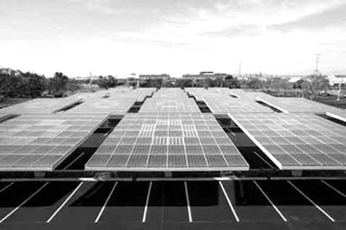
A low carbon zone addresses these challenges to a great extent. Some of the main attributes of a low-carbon zone could include, but are not limited to, increased use of renewable energy, implementation of energy-efficiency measures, construction of buildings and factories using green buildings codes, waste-reuse and recycling systems, material and utility linkage through industrial symbiosis, clean technology R&D, demonstration and deployment. All these actions bring direct business benefits to the enterprises - savings of utility cost, higher capital efficiency, cleaner and leaner production and greater acceptability of products to the global buyers. This endeavour also enhances the brand image of the zone authority and creates a competitive differentiation with respect to other low cost production bases in the region. Beyond contributing to environmental improvement, low carbon zones bring several economic benefits to the country as a whole. According to a recent study by International Finance Corporation (IFC) in Bangladesh, it was estimated that prudent energy management and waste heat recovery could save 0.5 per cent of the present natural gas supply of the country which means an avoidance of USD 6 million of fossil fuel subsidy. This is quite remarkable especially when the country is suffering from acute shortage of natural gas and industries are not granted any new gas connection. Besides a low carbon zone could create market potential for development companies offering industrial energy efficiency technologies and solutions.
The concept of 'low carbon industrial zones' is not new but could be immensely useful to the policy makers as a tool to advance industrialisation in a sustainable manner by influencing aggregate behaviour of the enterprises. This concept is lot easier to implement if in the design itself a zone creates provision for optimal of energy use through material and utility symbiosis and harnessing of renewable energy potential, appropriate zoning for specific type of industries to minimise adverse environmental impact and specifies a pre-condition to the industries to adopt energy efficient technologies and processes.
In this way, SEZs or industrial zones can be the new growth engines by attracting companies producing green products or services and creating high-skilled jobs in the value chain. A more advanced format for such zone can be thought of as 'innovation hub', for example, the Masdar City in Abu Dhabi, the so called test bed for cleaner technologies, products or services. Such knowledge-intensive specialised zone typically hosts technology value chains comprising R&D cum live lab facility, manufacturing, assembly and also venture capital.
Potential low carbon programmes and projects can be mostly financed by the enterprises themselves such as energy efficiency, waste heat re-utilisation and process efficiency improvement measures. Government can encourage speedier deployment of these measures by introducing some performance based incentives (over and above that exists in economic zones) or arranging seed capital, financing vendors or at most taking equity position in one or two demonstration projects that has good replication potential. However, the most important intervention from the government should be to create a one-stop-shop facility inside the zone which can create awareness, roll-out focused programmes and provide technical assistance to the enterprises for developing 'bankable' projects and assist them to access finance and identify right vendors.
Such a facility should be adequately staffed with right set of skills and expertise and organised in a fashion that it can retain and continuously upgrade and enrich its institutional memory. Once successful in one pilot zone, the same institution could be scaled up into a prominent national institution having a wide repository of practical knowledge, benchmarks and best practices which can benefit many industries across sectors. This institution should closely interact with the global buyers translating their needs into effective solutions and helping the industries to implement them and come up to the level that meet external buyers' expectations.
Some industrial zones have evolved into eco-industrial zones, driven by tenant identified opportunities to find cost-savings and income-generating uses of their wastes. For example, the industrial park at Kalundborg, Denmark, developed a complex web of bilateral exchanges of waste, energy and materials between its tenants and nearby entities based on the principle of 'industrial symbiosis'.
Recognising the environmental and economic benefits of such zones, many developing countries such as China, South Korea, Bangladesh, India and the United Arab Emirates are moving fast to adopt low carbon SEZ concepts and practices. China has adopted a 37 per cent carbon emission reduction target for its Jilin economic zone. South Korea has transformed nearly 915 industrial parks into eco-industrial parks, significant of them are eco-industrial parks of Ulsan and Cheongju which adopted 30 per cent carbon emission reduction targets by 2020. Similarly, the 'Invest Hong Kong' initiative is focusing on attracting targeted green FDI in specialised zones. Whatever be the format and intended pattern, these zones are effective platforms for the governments to pilot enabling policies and regulations for low carbon growth. Policies need to be aligned with the Economic Zone Act, national laws and regulations and the overall development priorities of the country. However, a too restrictive policy regime will be counter-productive and discourage new investment in the zone.
The writer is a management consultant. Ajeya.Bandyopadhyay@in.ey.com