
Message from the Deputy Governor, Bangladesh Bank & Chairman, SEANZA Forum, 2013-14
Saturday, 30 August 2014
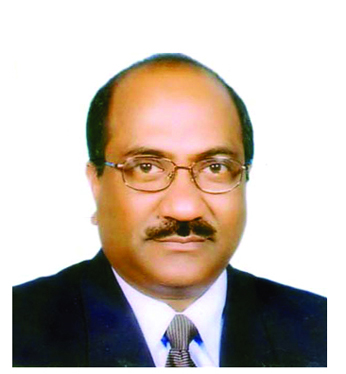
IT is my utmost pleasure to share that Bangladesh Bank (BB), assuming the position of host and chair of SEANZA Forum for the period 2013-14, has successfully arranged two key SEANZA events namely 29th Advisors' Meeting and Central Banking Course (CBC). Besides, BB has played coordinating role with Financial Stability Institute (FSI) of Bank for International Settlements (BIS) in arranging two FSI-SEANZA Joint Seminars in 2014; one already hosted by Hong Kong Monetary Authority and the other is going to be arranged by Bangko Sentral ng Pilipinas.
The Advisors' Meeting took place on 15 February 2014 while CBC during 23-28 August 2014 in Dhaka. In the CBC discussions/presentations took place on basic macroeconomic concepts, monetary policy, financial stability, bank supervision and payment systems related issues. I am very glad that we have been able to avail the service of Prof. Peter Sinclair of the University of Birmingham as Course Director of 29th SEANZA CBC, who is also going to work as moderator of the Governors' Symposium (GS). A number of renowned international academicians and practitioners shared their thoughts and creative ideas with the participants from 14 countries including, many local participants. I made two presentations in the CBC; one on "Financial Stability and Supervision Issues" and the other on "What Will Central Banks Look Like in 2040?".
It is noteworthy that the GS-2014 is going to take place at Radisson Blu Water Garden Hotel, Dhaka, today, 30 August 2014. Theme for the GS is "Macroeconomic Environment and Financial Sector Stability: Vulnerabilities and Managing Crises". Honourable Governor of Bangladesh Bank, Dr. Atiur Rahman, with high officials and delegates from SEANZA member institutions are going attend this Symposium to discuss the issues that will cover the common interest of the participating nations. Governor, BB will present a key note paper on the theme "Macroeconomic Environment and Financial Sector Stability: Vulnerabilities and Managing Crises" of the Symposium.
A sound and growing financial sector is a key to ensuring sustainable economic growth. However, vulnerabilities in the financial system could complicate the smooth accomplishment of monetary policy, limit the policy choices in response to external shocks, and weaken the development of an effective monetary transmission. Hence, maintaining financial sector stability through remedial measures for vulnerabilities and managing crises is crucial. Overseeing the financial sector and assessing the weaknesses in the real sector as well as their spillovers assumes great importance for ensuring inclusive and stable growth in the economy. Banks in many countries are suffering a lot due to their high degree of interconnectedness and investments in complex financial derivatives. Moreover, changes in the regulatory requirements, development of financial environment and infrastructure as well as economic cycles have played their roles in escalating the aftermath of the global financial crisis through the creation of a broader and deeper financial system. For that reason, we need to evaluate the effectiveness of our policy tools continuously, in particular, the strength of monetary policy transmission mechanism in the changing financial environment.
The traditional supervision tools used by central bankers are no longer effective in addressing the system-wide risks. A wide range of macroprudential tools could play a significant role in addressing those risks. Besides, central banks should focus on identifying and addressing the domestic systemically important banks (D-SIBs) since they may transmit contagion risk to other banks. Their failure may even disrupt the real economy directly. In this regard, both individual D-SIBs and their regulatory authorities should develop their own contingency arrangements to handle any sort of banking crisis.
It is the responsibility of the central banks to carry out prompt and pre-emptive actions with the best set of available information for dealing with rapidly changing conditions in the financial system. Subsequently, in the early stages of any financial crisis, a coordinated and consolidated supervision mechanism involving multiple regulators, combined with an effective public awareness program, could overcome the limitations of traditional banking supervision frameworks. But this cooperation should not take place only in crisis situations. Mutual efforts to promote the practice of information sharing and capacity building among regulators and central banks should be ongoing, and will definitely help strengthen their competencies for better macroeconomic management and financial stability, perhaps even preventing these crises altogether.
Bangladesh Bank has started introducing strategic changes in its existing supervision techniques for ensuring stability in the financial sector. It is gradually complementing its traditional approach of micro-prudential regulation and oversight with macro-prudential techniques with a view to identifying systemic risks well ahead of when they materialize and taking precautionary or corrective measures. Importantly, BB initiated implementation of a "Contingency Planning and Bank Intervention/Resolution Framework", and a "Lender of Last Resort Framework" last year under its contingency planning initiatives. These frameworks are expected to be functional within a short span of time.
I believe that the 29th CBC and the GS events would encourage Bangladesh Bank to organize more international events with overseas participants in the forthcoming years, in line with the increasing prominence of Bangladesh's financial sector and BB as a financial sector regulatory authority.
I thank and commend the effort and proactive approach demonstrated by the officials of Financial Stability Department of Bangladesh who have contributed to making the SEANZA events a successful one.
Shitangshu Kumar Sur Chowdhury
Deputy Governor, Bangladesh Bank
& Chairman, SEANZA Forum, 2013-14