
'Middle class' caught between rising prices and social status
MALIHA TASNIM | Wednesday, 11 March 2026
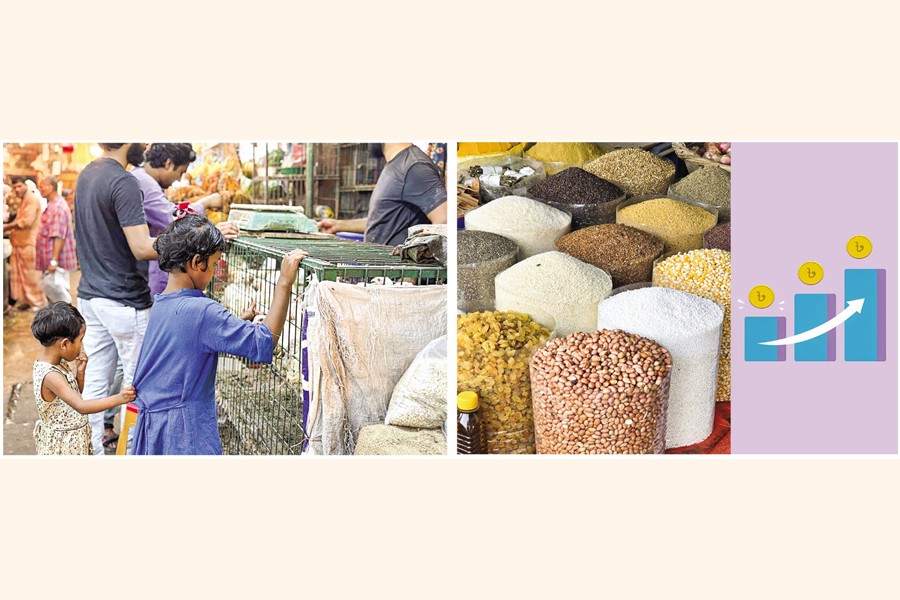
An older woman broke down in tears in a video that spread quickly online. She said she could not afford soybean oil because of its high price. In another clip, a customer complained about the rising cost of lemons and said the market should be shut down for two or three days in protest. "Lemons are now fruits," customers remarked, hinting that their price has made them feel like a luxury. These scenes reflect the reality of Ramadan bazars across Bangladesh this year. Ramadan and Eid are meant to bring peace and comfort. But for many people in Bangladesh, that sense of peace feels distant as the prices of basic goods continue to rise.
The prices of essential goods have climbed sharply nationwide. Necessary goods now feel like a burden for some. Salaries have not increased at the same rate as the cost of goods. For those living on fixed salaries or small businesses, the math no longer works in their favour.
The 'middle class,' often seen as stable, is feeling squeezed. They do not qualify for aid programmes meant for the poorest. Yet they struggle to keep up with rent, school fees, transport costs, and medical bills.
For them, Eid followed by Ramadan often means extra spending. There are guests to host, special dishes to prepare, and children who look forward to their favourite foods. But when the price of soybean oil rises sharply, or when lemons become so expensive that buyers joke they are now luxury fruits, choices must be made. Simple dishes cost more during this season due to high demand. Many families, as a result, quietly cut down on their meals. Fruit is bought in smaller amounts, while meat appears less often on the table. Budget is important in this regard. A breakdown of salaries and bonuses can help manage extra expenses this season. From buying new dresses to bringing changes in the house, everything needs to be calculated.
'Lower-income' families face even tougher decisions. For them, the first three days of Eid may be limited to rice, salt, and perhaps a simple egg curry. Chicken also seems impossible, as it reached a record-high price of above 230 taka. Protein items like beef and mutton may not be regular options.
Yet throughout the season, from Ramadan onward, their needs do not decrease. Talking about Ramadan, fasting requires proper nutrition to stay healthy. Without affordable food, the challenge becomes greater.
A different image of Ramadan is visible on social media. For Eid, the picture remains the same. Lavish lifestyles fill news feeds. Families dine at popular restaurants after a few days. People share and try viral recipes. Trendy drinks and colourful desserts are presented with care. Restaurants and cafes offer special Ramadan and Eid platters, often fully booked days in advance.
This contrast is hard to ignore. While some people explore new trends during this time, others count their coins before buying cooking oil. While some plan restaurant visits, others wonder if they can afford fruits. The gap between experiences feels wider during this month.
The holy month highlights both generosity and inequality. During Ramadan, many Bangladeshi viewers see advertisements featuring families sharing food with neighbours, children carrying plates to nearby homes, and strangers offering iftaar to passersby. These ads portray a warm, caring society. They remind people that festivals are about sharing blessings. However, outside the screen, the reality in some markets tells another story.
In many countries, on the other hand, festive seasons are marked by discounts and special sales. Supermarkets offer reduced prices on essential goods. Governments and businesses often work together to make sure people can celebrate without an extra burden. This raises a question for Bangladesh. Why does the scene often appear different during Ramadan? Why do some essential items become more expensive instead of more affordable?
Market experts often speak of supply chains, import costs, and global price changes. These are real factors. However, many consumers believe that weak monitoring and unfair practices also play a role. Also, geopolitical factors are fuelling the price hike. When demand rises, some traders increase prices beyond reasonable limits. This adds pressure on families who are already managing tight budgets.
Ensuring stable prices of essential goods is not just an economic issue; it is a matter of basic welfare. Authorities can work to prevent hoarding and unfair price hikes before Eid.
Fair-price shops and subsidised sales can make a difference for low- and middle-income families. When citizens see that steps are being taken to control the market, it builds trust and relief.
The emotional videos from the markets are not just viral content. They are signals. They show that for many, it is not only about prayer and reflection, but also about worry. The older woman who could not buy oil and the customer shocked at lemon prices represent thousands of others who may not appear on camera.
Yet, in its true spirit, Ramadan teaches balance and empathy. In Islam, fasting is not only about staying away from food and drink; Eid is not only a personal occasion of happiness; it is about community, sharing, and caring. It is about understanding the hunger of Ramadan, building patience while doing jobs or businesses, and caring for those in need.
A simple meal shared with love carries more value than an expensive feast enjoyed alone. Inviting a struggling neighbour, supporting a family quietly, or contributing to community iftaar programmes can make a real difference. Even small acts matter. A bag of rice, a bottle of oil, or a tray of eggs can ease someone's burden. The whole season of Ramadan is about preparing for how we should celebrate Eid and maintain a lifestyle year-round. It is a time when hearts soften. In homes, mosques, and communities, people are reminded of equality. Everyone stands shoulder to shoulder in prayer. The experience of thirst should create awareness of those who feel it not by choice, but by circumstance.
malihatasnim02215@gmail.com