
Mobilising greater resource from development partners
Muhammad Zamir | Monday, 6 July 2015
In the third week of June, an event - EU-Bangladesh Climate Diplomacy Day - was organised in Dhaka jointly by the Ministry of Environment and Forests, the Palli Karma Sahayak Foundation (PKSF) and the Member States of the EU and the European Union Delegation based in Dhaka. This was done to underscore the importance of this year - 2015 - in the context of climate negotiations. Participants highlighted the importance and benefits of enhancing coordinated action ahead of the next International Climate Conference- COP-21 (the UN Climate Agenda aimed at reaching a new global Agreement) scheduled to be held in Paris, France from November 30 to December 11 this year. Dhaka was urged to actively lobby and try to find the common denominators that would help Bangladesh in the Agreement that would be reached in Paris. References were made to the steps taken in this regard in Geneva earlier this year.
Since the 1992 United Nations Conference on Environment and Development (UNCED), participants and stakeholders involved with this process have been moving forward at a snail's pace. The common equation has been to agree to disagree. Certain countries faced with dire consequences and civil society in general have, however, remained consistent in their anxiety and have continued to reiterate the need to find acceptable solutions to existing and prospective problems.
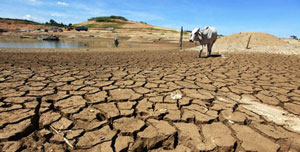
In the meantime, the effects of climate change and climate variability have become very apparent - melting Polar ice, less snowfall on mountains, increasing number of typhoons and cyclones, rise in sea-levels (creating greater salinity in the coastal regions), inordinate hot spells (this summer has seen more than 2000 deaths in India and about a 1000 in Pakistan from heat wave) and floods.
In this context we watched with interest the negotiations that were undertaken in the meeting held from February 08 to 13 earlier this year at the UN Headquarters in Geneva, Switzerland. Countries met to try and reach a global climate agreement on different aspects ahead of Paris. This Geneva meeting underlined that there cannot be any further differences in view of the need to enhance global action on climate change, including curbing greenhouse gas emissions and adapting to irreversible climate impacts through a multilateral rules-based regime.
It may be recalled that this Geneva meeting managed to draft a formal negotiating text which is expected to serve as the basis for further deliberations that might be convened elsewhere between now and the meeting in Paris this December. It is anticipated that this draft can eventually lead to a fair deal for developing countries in the concluding negotiations in Paris.
Analysts have over the last three months carefully scrutinised the 86-page text which was adopted in Geneva and have been encouraged to state that there has been a positive turn for the future. Dr. Achala Abeysingha of the London-based International Institute for Environment and Development (IIED) has noted that the text contains "many promising options for an ambitious, dynamic and evolving agreement for the future climate regime".
Certain factors have been identified in this regard. The Geneva text, firstly, has an option of adopting a Protocol, which will lend credence to international environmental law. This connotes that any signatory, irrespective of changes that might take place in its governance structure, signing on, has to implement in good faith all the aspects of the Agreement that will be adopted.
Secondly, the Geneva text stipulates that on the conclusion of the second commitment period of the current legally binding agreement, the Kyoto Protocol (which addresses emission reductions from 38 Parties only), there will be an option for calling on all nations to enhance their climate action and cooperate on the basis of equity and 'common but differentiated responsibilities and the respective capabilities of different countries'. This approach acknowledges that the global nature and impact of climate change demands the widest possible participation, cooperation and measured action by all countries.
The third significant approach initiated in Geneva was its holistic reference to the important elements that need to be addressed in order to tackle climate change - mitigation, adaptation, finance, capacity building, technology development and transfer, transparency of actions and support.
Participants in Geneva also correctly insisted on the need for the forthcoming Paris agreement to be guided by the best available scientific knowledge and that it should move towards 'a sustainable development pathway consistent with carbon neutrality/net zero emissions by 2050'. One would, however, need to point out here that urging such a future course of action will be useful only if emission reduction targets are regularly monitored and reviewed. For this, there will have to be required political will and less interference from large corporate interests. This needs to be done strictly to achieve compliance.
Another feature that has been stressed upon is that adaptation needs to be addressed with the same degree of urgency as mitigation. It has been suggested that this will require international cooperation. This will then help developing countries to build resilience through the creation of new and more effective financial institutional arrangements. This will be particularly crucial in the context of developing, least developed and small island countries and their efforts within the climate actions matrix and the mechanisms related to regular review commitments.
It was generally agreed in Geneva (a step forward compared to Copenhagen) that measures also need to be taken to enhance clarity and comparability between country commitments, to ensure accountability and mutual trust and to promote ambition and progressive enhancement.
The Geneva text also acknowledges in more ways than one and implies that divisions still exist on different issues. It clearly spells out that future steps will have to be collective in nature if the demands and the vulnerabilities, in terms of life and livelihoods of the most vulnerable countries, including the least developed countries (LDCs) are to be addressed satisfactorily. It would be pertinent to note here that some of the losses in coastal territories due to rise in sea levels cannot be adapted to, but a joint effort will reduce the impact of loss and damage.
Nevertheless, despite all the difficulties we have to look forward to future developments in tackling climate variability with optimism.
This positive approach received a shot in the arm on June 16 with a Report published by six large Multilateral Development Banks (MTBs) - the African Development Bank, the Asian Development Bank, the European Bank for Reconstruction and Development, the European Investment Bank, the Inter-American Development Bank and the World Bank - that in 2014 they had together provided over $23 billion dedicated to mitigation efforts and $5.0 billion for adaptation work. About 91 per cent of the total commitments came from the MDB's own resources and the remaining 9.0 per cent from external resources including bilateral or multilateral donors, the Global Environment Facility and the Climate Investment Funds. South Asia received, according to this Report, the largest share of total funding at 21 per cent. The rest was shared between Latin America and the Caribbean, non-EU Europe and Central Asia, Sub-Saharan Africa, East Asia and the Pacific. About one-third (36 per cent) of the total in adaptation funding went into agriculture and ecological resource projects, and 40 per cent went into projects involving infrastructure (including flood protection) and energy. Renewable energy was the most common mitigation project, drawing 35 per cent of the funding. Energy efficiency accounted for 22 per cent. The banks also invested heavily in sustainable transport, at 27 per cent of the total. It is understood that these MDBs will, in future, harmonise their principles for tracking climate mitigation finance with members of the International Development Finance Club and have already started a similar process for adaptation finance.
Certain details contained in this Report have been mentioned to bring home to the relevant authorities in Bangladesh that they need to be more pro-active in their efforts and seize the opportunities that are currently available. Available data do not indicate that we have, until now, been able to access to our rightful share of international funding that we require to tackle the serious nature of climate impacts in the country. We have spent more than $340 million from our own resources. This trend needs to be redressed with greater resource mobilisation from our development partners.
Climate change has in its own way been impacting the northern parts of the Bay of Bengal with its storm surges, coastal erosion and tidal flooding. This has been affecting the bio-diversity and lifestyle of the coastal people. Rising salinity is also leaving its footprint on agro production. Studies carried out in the recent past have indicated rise of sea level and salinity at Hiron Point in the Sunderbans, at Laboni Point of Cox's Bazar and at Khepupara Point of Patuakhali. Negative impacts arising out of these elements are generating social insecurity.
One can only hope that the major powers that are associated with the high use of fossil fuels will in the period between now and the end of the year, come to an arrangement where we do not end up with another deadlock over global emissions as we witnessed a few years ago at Copenhagen, Denmark. Fossil fuel-based economy has to give way to a post-fossil fuel global economy.
The writer, a former Ambassador, is Chairman, Bangladesh Renewable Energy Society and an analyst specialised in foreign affairs, right to information and good governance.
muhammadzamir0@gmail.com