
Monitoring the progress of SDGs
Polin Kumar Saha | Saturday, 28 January 2017
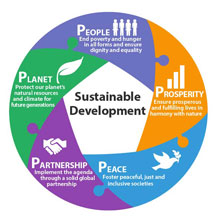
The achievements of SDGs (Sustainable Development Goals) can be judged from the experiences of MDGs (Millennium Development Goals) where a new channel of data revolution could facilitate the existing development process. The transition of monitoring from MDGs to SDGs is much more relevant to formation of new types of data and making them accessible to all classes of people. The SDGs are agreed upon with some specific indicators and targets that involve various data requirements in all the service sectors in a country.
In the process of monitoring the implementation of SDGs, many countries have already developed their national strategy in aiming towards a robust mechanism for data management. The strategy could be focused newly in connection with the country's central data management process, e.g. SDG indicators monitoring can be integrated into the BBS (Bangladesh Bureau of Statistics) data. However, a central SDG monitoring system can work as a unique platform for its operational structure, or it can be integrated with other data management bodies of a country. The potential for achieving sustainability goals is to strengthen openness of data access by enhancing the accountability of institutions in the public interest.
In view of this issue the European Union (EU) is becoming aware of their partner countries. They set up some prioritised areas to follow up the UN-framed sustainability goals to be achieved by 2030. The EU steps are obviously providing useful directions in data collection, management and reaping the potential of data revolution for the wellbeing of developing countries. Bangladesh, like many other countries, clearly should develop a central database system, possibly with the guidance of the EU framework. Following the system, we may think about seven potential areas or process of a country that might be discovered in a transparent data management system:
1. Disaggregation of data with comparison between several departments, especially with intra-functions between different social, environmental and economic categories within the population as foreseen in the 2030 development agenda;
2. Sequencing the data for the SDG indicators for the sake of having trustworthy administrative data for the long term benefits, rather than focusing on survey or census data. Different studies show that the administrative data is viewed as more reliable than other types of data, as it promotes the data availability, data effectiveness, accountability, and transparent institutions at all levels (SDG16.6: Develop effective, accountable and transparent institutions at all levels);
3. Sequencing the investments on SDG indicators that must be accelerated from the weakest to strongest areas of capacity aligned with the SDG indicators.
4. Efforts to report on global financial flows in the SDGs' context and sequencing the data revolution to support the capacity of tax and investment authorities in developing countries;
5. Reducing the possibility of the increasing trend of digital divide of the people in terms of risks and vulnerability to access any types of information and services.
6. Leading the efforts towards regional review mechanisms for the development agenda whereby the institutions can play as strong, transparent and participatory regional review panels at intra or inter-country level.
7. Support to secure human rights and the fundamental needs of human being on the basis of data management, access, privacy, other relevant principles or similar.
We may assume from our practical experiences that the data revolution from the MDG achievements would be helpful for managing the SDGs, but the current trend of lack of priorities to research at the country's grassroots level cannot make a good platform for monitoring the sustainability goals. Traditionally, we are used to ignore the common people's interest, demand, satisfaction, and their information in the decision making process. We can give many examples of such cases of overlooking the citizens' interest in the country's development phase. Efficient data monitoring and access to previous data on projects could give us some alternative right paths for development of the country's future projects.
The data revolution is accomplished by new stakeholders, new partnerships, new platforms, new technologies for bringing data together, and not only by exploring some new ways of involving data analysts, policy makers or citizens. Integrating these components provide a central platform for implementing and monitoring the progress of SDGs towards achieving their success. Targeting big data is a vital part of this change that might be explored. The step toward a digital Bangladesh can play a vital role in the data revolution with the use of mobile phone, social media data (facebook, Twitter etc), and much more. When the digital process is analysed and integrated into the broader sense of data revolution intended for the SDG indicators, it can yield an important benefit. However, the issue remains much more non-integrated from the viewpoint of development statistics, where the data collection only happens both in the public and private sectors.
In the context of Bangladesh's priorities under the SDGs, the report on the Copenhagen Consensus says that the 'digital Bangladesh' is the highest priority sector on the basis of good return on investment. We would say this is certainly an opportunity for us to develop an effective platform of implementation and monitoring the SDGs. An example can be drawn from the figure that almost 50 per cent of the global people still have no mobile internet which is indeed a challenge to our monitoring the achievements of SDGs.
However, it is suggested that the data for the SDG indicators might be extracted primarily from four types of sources, e.g. Census data, Survey data, Administrative data and Geo-spatial data. Drawing data from sources requires need assessment for the statistical capacity development for SDG monitoring.
To summarise, the data revolution has enormous prospects to facilitate achievement of the sustainable development goals and monitoring of the progress towards achieving the 2030 agenda with respect to: (I) The integration of different types of data (census, survey, administrative and geospatial) to build a high quality information pool that is detailed (disaggregated), realistic, time-bound and relevant, (II) The increase in worthiness of data with a greater degree of transparency and openness, keeping away from ethical violations (invasion of privacy, violation of fundamental human needs, exploitation of human rights at group or individual level of data misuse, inequality in production, refusal in access to or use of data); and (III) Based on the IEAG (Independent Expert Advisory Group) report on data revolution for sustainable development, more empowered people, greater participations with accountability, better decisions and better policies have better chance in leading to the significant outcomes for people, profit and the planet.
The writer is a senior research associate and sustainability professional at the BRAC Research and Evaluation Division
polin.msls2009@gmail.com; polin.kumar@brac.net