
Mosul dam: A life source in northern Iraq
Monday, 18 August 2014
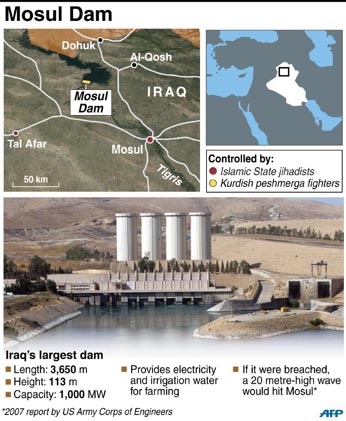
The Mosul dam is the biggest in Iraq and a strategic site that provides water and electricity to more than a million people in the north of the country. Islamic State (IS) jihadists seized the dam on August 7 but Kurdish peshmerga fighters took it back on Sunday with support from US air strikes. Completed in 1984, it suffers from structural problems that caused the US Army Corps of Engineers to once call it ‘the most dangerous dam in the world,’ an accusation rejected by Iraqi authorities. It is built on water soluble soils that must be constantly reinforced to prevent a collapse that could send a wall of water 20 metres (65 feet) high surging towards Mosul, a city of some 1.7 million inhabitants. The dam lies about 50 kilometres (30 miles) north of Mosul on the Tigris River and can provide up to 1,010 megawatts of electricity, which cited the Iraqi State Commission for Dams and Reservoirs. A 2007 study by US inspectors rated its output at a more modest 750 megawatts, said then to be enough power for 675,000 Iraqi homes. The dam also holds back more than 12 billion cubic metres (425 billion cubic feet) of water needed for drinking and irrigation throughout the Nineveh province, and forms part of a regional flood control system as well, according to AFP.