
NATO mulls long-term package for Ukraine
US, Germany fear moves could take the alliance closer to active war with Russia
Friday, 16 June 2023
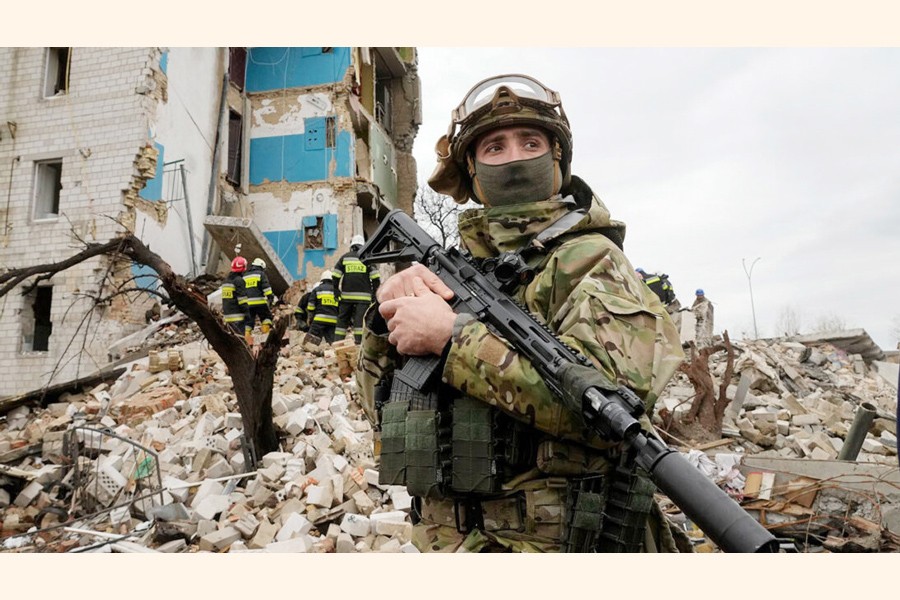
BRUSSELS, June 15 (Reuters): NATO members are racing to complete a plan to provide long-term support to Ukraine, but are wrestling with how best to assure the country's security until it can join the military alliance, according to US and European officials.
With four weeks to go until a NATO summit in Vilnius that is expected to approve the plan, there is agreement that Ukraine cannot join the alliance while fighting is still underway against Russian forces, a position accepted in early June by President Volodymyr Zelenskiy after months of pleading for speedy admission.
Alliance members are close to agreeing incremental steps to strengthen ties with Ukraine, including upgrading how NATO and Kyiv cooperate and a multi-year program to help Ukraine bring its security forces to NATO operational and technical standards, according to officials.
The allies have yet to resolve differences over how to address Ukraine's desire for membership, which has been governed by a vague 2008 declaration that it will join the North Atlantic Treaty Organization without setting out how or when.
US ambassador to NATO Julianne Smith told reporters on Wednesday that members are still discussing how to respond to the Kyiv government's membership aspirations.
"There's a rich conversation going on across the alliance with a whole array of views," said Smith.
A senior alliance source, speaking on condition of anonymity, said there is "a hard search on to find a mechanism that brings Ukraine closer to NATO without taking them into NATO."
Western governments such as the US and Germany are wary of moves they fear could take the alliance closer to entering an active war with Russia, which has long seen NATO's expansion into eastern Europe as evidence of Western hostility.
Asked on Jun 2 about Ukraine's aspirations to join NATO, Kremlin spokesman Dmitry Peskov said it "would be a potential problem for many, many years."
Russian President Vladimir Putin sent his forces into Ukraine in February last year saying Russian security had to be protected. Few military analysts expect Ukraine's just-launched counteroffensive to bring the grinding conflict to a quick end - instead, many predict years of fighting.Over that time, popular support for defending Ukraine in the West might fade and the 2024 US election could yield an administration less willing to spend money on the war.
Hanging over the deliberations is the question of whether alliance members can show unity by forging agreements ahead of the July 11-12 summit in the Lithuanian capital. Failing to do so would hand Putin a political and propaganda coup.
"Nobody wants to take a risk of disunity being displayed openly," said a senior Eastern European diplomat.
To reassure the Ukrainians, Poland and some other Eastern European governments have called on NATO to outline clear steps to eventual membership, and favor accelerated moves in that direction.
Others, particularly the United States and Germany, have been reluctant to embrace this idea, according to diplomats.
But all agree on the need to further boost Ukraine's security between now and the day it joins NATO.
Norway, Denmark to donate
artillery to Ukraine
Norway and Denmark have agreed to donate an additional 9,000 rounds of artillery to Ukraine, the Norwegian ministry of defence said in a statement on Thursday.
Norway will provide the shells, while Denmark will donate fuses and propellant charges, the Norwegian ministry said.
Norway will also donate 7,000 rounds from its own stocks, which have already been sent to Ukraine, according to the ministry.