
Nizami to die for crimes against humanity
Thursday, 30 October 2014
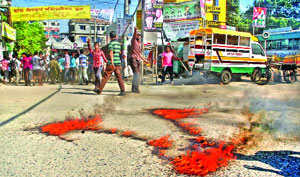
The International Crimes Tribunal-1 Wednesday condemned Jamaat-e-Islami ameer Motiur Rahman Nizami to death for crimes against humanity, including genocide and the murder of intellectuals, during the Liberation War in 1971, report agencies.
The International Crimes Tribunal-1 Chairman Justice M Enayetur Rahim sentenced him to hang till death in a packed courtroom in Dhaka, nearly a year after the case was wrapped up.
The special court said in the unanimous verdict that eight of the 16 charges levelled against him had been proven.
The charges include leading the execution of intellectuals, mass killing, rape and loot during the nine months of bloodshed 43 years ago.
The 204-page judgment was read out by the tribunal judges in phases for 73 minutes that began at 11:12 am.
Hours after the judgment, Jamaat-e-Islami called a staggered 72-hour countrywide hartal in two phases from Thursday protesting Nizami's death sentence for his war crimes.
The party, in a statement issued after the verdict, announced countrywide strikes for Thursday, Sunday and Monday.
Earlier, police brought Nizami to the tribunal amid tight security.
The tribunal sentenced Nizami, the I971 commander-in-chief of Al Badr, a secret killing squad of Jamaate -e-Islami, the capita punishment each on four counts of charges of war crimes, terming Al Badr a criminal outfit.
The three-member tribunal also sentenced Nizami, a former cabinet member during the BNP-Jamaat alliance's rule (2001-06), to life term imprisonment each on four other war crime charges.
It, however, acquitted the incumbent boss of Jamaat-e-Islami of the eight other charges of crimes against humanity in 1971 as the prosecution failed to prove the charges beyond reasonable doubt.
The prosecution examined 26 witnesses, including IO Abdur Razzak Khan, while the defence four, including Nizami's son barrister Nazibur Rahman during the trial.
With the day's pronouncement of judgment, the two ICTs have so far delivered 10 judgments since their formation in March 2010 and 2012 respectively, keeping pending six judgments to be delivered any day.