
No response to Bangladesh sugar tender as its global prices down 30pc
Monday, 23 March 2015
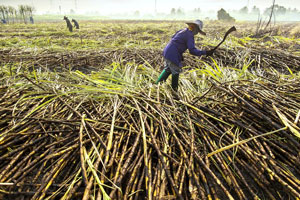
Bangladesh Sugar and Food Industries Corp said Sunday it received no bids for the export of 75,000 tonnes of sugar in an international tender to the European Union, amid low global prices, reports Reuters.
The state agency typically imports white sugar to build its reserves, but a bumper output allowed it to hold the export tender for EU countries, under a preferential quota for the least-developed countries to tap high stocks.
The tender opened this month but drew no bids as global prices are too low, said Harun Mia, the agency's chief purchasing officer.
In October, the agency cancelled its first international tender since 2012, to export 25,000 tonnes of sugar to the European Union, as the only bid it received was below the local market.
Global sugar prices this year have been under pressure from ample supplies from the top two producers Brazil and India, with white sugar sinking to a six-year low this month.
White sugar from the government stockpile is being sold at mill gates at 37 taka ($0.51) a kg, almost half the cost of production. Still, the government agency has found it tough to sell the sweetener, as private refiners are offering the same price but with incentives such as free delivery.
In April, Bangladesh raised import duties on raw sugar by a third and on refined sugar by half, to discourage imports as ample domestic supplies led to a drop in prices.
Private refiners in Bangladesh imported around 2 million tonnes of raw sugar in the fiscal year that ended in June 2014, up from 1.37 million the previous fiscal year.
Bangladesh depends on imported raw sugar to meet annual demand of 1.4 million to 1.5 million tonnes of refined sugar.
In late 2012, the government allowed exports of sugar by private refiners who had been calling for overseas sales as they have more than 3 million tonnes of refining capacity.
Private refiners mostly import raw sugar from Brazil, India and Thailand and export refined sugar to East Africa and the Middle East.
Meanwhile, Wall Street Journal from Hong Kong adds, life is far from sweet for some top sugar-producing nations, as a global glut combined with a collapse in the Brazilian real, the currency of the world's largest producer, has crashed the international price of the sweetener to a six-year low.
While this might be good news for chocolate makers and confectioners, the price slide is leaving a bitter taste for Asian sugar producers such as India and Thailand, among the largest in the world after Brazil.
Sugar prices are down more than 30 per cent since last summer, currently trading a shade below 13 cents a pound on the ICE Futures US exchange.
Brazil's producers have been shielded somewhat from the price slump by the real's slide-the Brazilian currency is trading near 11-year lows against the greenback. Sugar is priced in dollars internationally, so Brazilian producers, whose costs are mostly in reals, can afford to cut their export prices.
Both the Indian rupee and the Thai baht have held their ground relatively well against a strengthening US dollar. That makes it harder for producers in those countries to cut their selling prices, making them less able to compete overseas.
"The fall in value of real to the dollar is a major problem for Asian producers," says Sergey Gudoshnikov, senior economist with the London-based International Sugar Organization "The Brazilian sugar prices may depress the global markets even further."
Sugar prices are under pressure thanks in part to swelling supply. Mr. Gudoshnikov estimates the amount of sugar available on the international market will exceed demand by 600,000 tons this year.
The halving of oil prices since last summer hasn't helped. In Brazil, sugar cane is often used to produce ethanol, but that has become less competitive as a fuel source. Brazilian refineries are therefore diverting more cane to sugar production.
The surplus has also come about because sugar-cane production usually follows a two-year cycle, making it hard for farmers to adjust to market conditions quickly. After the first year of planting, stubble from the cane crop, called rettoons, is left on the ground to mature into a second crop.