
No treatment options available for Khaleda now in BD
She needs to be sent to advanced centre abroad: Medical Board
Tuesday, 10 October 2023
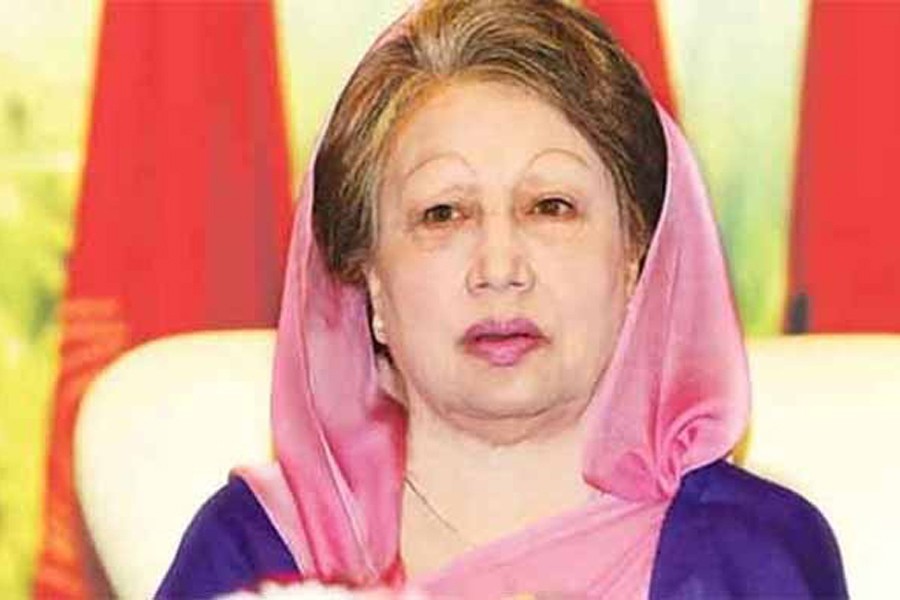
The medical board in the city's Evercare Hospital has recommended that BNP Chairperson Khaleda Zia be urgently sent to a multidisciplinary centre abroad soon as there are now no treatment options available for her in Bangladesh, reports UNB.
Speaking at a press conference at the hospital on Monday, the board also said the 78-year-old former prime minister's life is at risk because of a lack of proper treatment to stop water accretion in her stomach and chest, internal bleeding and infections caused by her liver cirrhosis problem.
"Khaleda Zia has been admitted here for the fourth time…her condition is complicated," the chief of the medical board, Dr Shahabuddin Talukder, said.
He said a critical patient like Khaleda could collapse suddenly as she has been suffering from various diseases.
"Madam (Khaleda) has heart disease with a stent (placed into a coronary artery) and two blockages. So, there's a chance of collapsing when the fluid is removed (from her stomach and lungs). She had to be taken to the CCU to get the water out. This is the reality," he said.
Dr FM Siddique, a member of the medical board, said the BNP chairperson is not getting the treatment she needs at the moment for liver cirrhosis.
He said, "We've done all that we can. She needs to be taken to any advanced centre abroad for necessary treatment."
Siddique said the opposition BNP chief's condition is gradually worsening because of a lack of 'proper treatment.'
He said Khaleda is now facing water accretion in her stomach and chest, infections, and a small amount of bleeding in her stomach.
"This time she was given four bags of blood in the hospital. The actual situation is very complex and difficult. We have now reached a situation where we have no more option to treat her (in the country)," the physician said.
He lamented that a curable disease cannot be treated in the country due to lack of an advanced medical centre in Bangladesh.
Siddique said though Khaleda's condition is slowly getting worse, the time is not over yet to treat her abroad.
"As per the medical board's unanimous decision, I want to convey to all concerned that there's still time to treat her with the transjugular intrahepatic portosystemic shunt (TIPS) and also to transplant her liver at any advanced multidisciplinary centre abroad. Perhaps, we still have this option to improve her condition," the doctor said.
He said TIPS is necessary immediately to stop water from accumulating in her stomach and chest and internal bleeding. "TIPS is a live savings procedure which is not available in Bangladesh. Liver transplantation is also not possible in Bangladesh either."
Another medical board member Prof AKM Mohsin said liver transplantation cannot be done in Bangladesh for lack of required setup, equipment, and manpower.