
Nutritional transition in South Asia
Barkat-e-Khuda | Wednesday, 26 November 2025
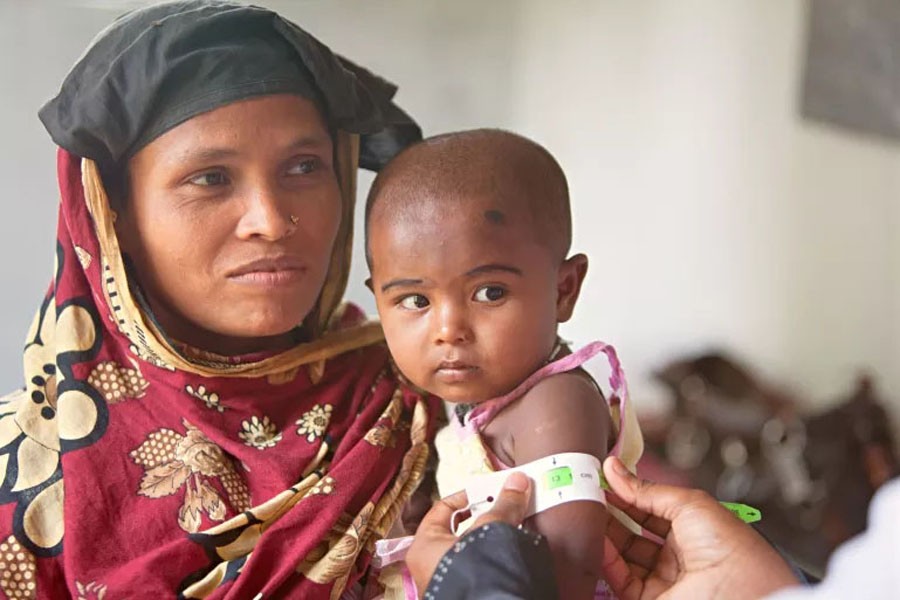
Because of a major shift in dietary patterns and lifestyle changes due to urbanisation and rising incomes, low- and middle-income countries are experiencing a rapid nutrition transition, leading to 'double burden of malnutrition', with under nutrition co-existing with obesity. The poorest populations are most affected. Incidences of obesity are highest among women and children, indicating health inequities.
In South Asia, adult females face a dual burden of malnutrition, with high rates of both underweight and obesity. Among adult females in Afghanistan, there is rising obesity coexisting with persistent under nutrition. Between 2007 and 2018, the prevalence of underweight among Bangladeshi adult females declined considerably from 30 per cent to 12 per cent, though there has been an almost three-fold increase in overweight and obesity from 12 per cent to 31 per cent. Among adult females in Bhutan, there is rising obesity coexisting with persistent under nutrition. In India, adult women are suffering from both under nutrition and obesity. The Maldivian women are suffering from micronutrient deficiencies as well as obesity. Nepalese women suffer from both underweight and over-weight. Pakistani women are experiencing a shift from underweight to a growing burden of obesity. Sri Lankan women have been suffering from under nutrition, micronutrient deficiencies, and obesity.
In South Asia, adult males are suffering from under nutrition and rising obesity. While Afghan men continue to suffer from under nutrition, there is also a rising prevalence of obesity. Adult Bangladeshi men continue to suffer from under nutrition, while there is a simultaneous rise in obesity. Adult men in Bhutan continue to suffer from under nutrition, while overweight has increased from 12 per cent in 2000 to 18 per cent in 2016. The nutritional transition for adult males in India has led to a national shift from a predominantly underweight to an overweight population. In the Maldives, adult males are experiencing a double burden of malnutrition. In Nepal, adult males are experiencing a nutrition transition leading to increased rates of overweight. Adult males in Pakistan are experiencing an increased risk of overweight, as are adult Sri Lankan males; however, there are continued challenges of under nutrition, especially in rural areas.
In South Asia, children under 5 years of age are experiencing nutritional transition. From over 70 per cent stunted in 1970, it has declined to around 38 per cent in 2024. However, it continues to be an issue of major concern. The highest number and per centage of stunted children are in South Asia. The region has the highest child wasting rates among all regions, with millions of children affected by wasting and severe wasting. The region has a high prevalence of child underweight. Bangladesh, India and Pakistan account for half of the world's underweight children. Obesity rates among South Asian children were negligible in 1970; however, there was a considerable increase by 2024. In Afghanistan, stunting among children under five was around 45 per cent in 2024; wasting at around 10 per cent, though declining from around 32 per cent in 2004; and the prevalence of overweight at over 4 per cent. In Bangladesh, child stunting declined by over one-third from around 63 per cent in 1970 to around 20 per cent in 2024; child wasting from 21 per cent in 1996-97 to 11 per cent in 2022; and the prevalence of underweight children declined from around 32 per cent in 2012-13 to around 19 per cent in 2019. There is a growing trend of childhood obesity during recent years at around 3 per cent. Among Bhutanese children, child stunting declined by over three times from 61 per cent in 1986-88 to around 18 per cent in 2024. However, around 5 per cent of children were wasted and nine per cent underweight. Further, obesity increased sharply to around 40 per cent. In India, over one-third are stunted, 19 per cent are wasted, and about 30 per cent are underweight, while 9 per cent are obese. In the Maldives, stunting declined by one-third, from around 47 per cent in 1997 to 15 per cent in 2017, wasting was 9 per cent, and underweight declined from about 40 per cent in 1997 to 15 per cent in 2017. However, childhood obesity is becoming a major concern, with about one-quarter of school-age children being obese in 2018. Child stunting in Nepal declined by 2.5 times from over 70 per cent in 1970 to around 27 per cent in 2022; wasting from 10 per cent in 2016 to 8 per cent in 2022; child underweight from 43 per cent in 2001 to 27 per cent in 2016. However, around half of school-aged children are obese. Pakistan has been experiencing consistently high stunting rates over the last few decades. Wasting has doubled from 9 per cent in 1997 to 18 per cent in 2018. Obesity was not a major public health challenge during the 1970s; however, it increased sharply during recent times, with a prevalence of around 15 per cent. In 2024, about one in ten Sri Lankan children were stunted, 9 per cent wasted, and over one-quarter underweight. Childhood obesity increased three-fold during the past two decades, with a prevalence of around 15 per cent in urban areas.
The double burden of malnutrition has severe economic implications. First, under-nutrition leads to reduced productivity because of impaired cognitive and physical development. Second, obesity leads to increased healthcare expenses because of diseases like diabetes and cardiovascular disease, thereby causing considerable financial hardships on individuals, households, and national economies. Third, the double burden of malnutrition hinders overall socio-economic development.
With the 'double burden of malnutrition', under nutrition co-existing with obesity, South Asian countries need to address both the challenges on a priority basis. Comprehensive measures are required, following a lifecycle approach, targeting women, adolescents, and children. There should be strong government policies that address root causes such as unemployment, poverty and gender inequality. A multi-faceted approach is required to address obesity. The governments in the region should adopt a holistic policy approach that focuses on food security and safety, healthy lifestyle changes (e.g. promoting balanced diets, encouraging regular physical activity), increased budgetary allocation to nutrition, and efficient healthcare delivery systems.
Barkat-e-Khuda, PhD is former Professor and Chairman, Department of Economics, University of Dhaka. barkatek@yahoo.com