
Oil riches in the Bay and the Blue Economy
Shahiduzzaman Khan | Thursday, 27 November 2014
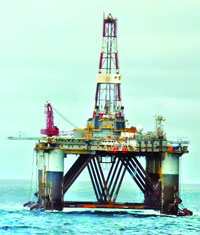
Without going for a new bidding round for offshore oil blocks, the government is now set to launch a survey in the new blocks that were regained by a judgement of the international court of justice.
Energy analysts believe the Petrobangla will, undoubtedly, have an edge before launching of new bidding round if it gets data first. Besides, it will also be able to sell acquired data to the international oil companies (IOCs) following the seismic surveys, they said.
If the firms selected earlier are given a limited time to complete surveys, the potential of the offshore areas could be exploited soon. Petrobangla would then be able to fix rational terms competitive with global market for awarding new offshore blocks. Otherwise, there is a possibility of significant losses if blocks are awarded without surveys.
State-owned Petrobangla is thus mulling floating international tender by December this year to carry out 'non-exclusive multi-client' seismic survey. The Hague-based United Nations Permanent Court of Arbitration (PCA) in its verdict against India in June last upheld Bangladesh's claim of 200 nautical miles' exclusive economic zone and territorial rights in the Bay of Bengal.
The verdict of the tribunal gave the country a substantial share of the extended continental shelf beyond 200 nautical miles sustaining Bangladesh's claim of equitable solution. The tribunal awarded Bangladesh 19,467 square kilometre area out of the disputed 25,602 sq km.
With the verdict, Bangladesh got, fully or partially, all the 10 offshore oil and gas blocks India had previously claimed.
Earlier on March 14, 2012 the International Tribunal for the Law of the Sea (ITLOS), based in Hamburg, Germany, also resolved the maritime dispute between Bangladesh and Myanmar through which several blocks were released from any controversy.
The country's substantial areas in the offshore territory had remained untapped for long due to the maritime disputes with neighbouring India and Myanmar. The country's last efforts during 2008 and 2012 did not get much response from IOCs due to such disputes.
Bangladesh could award only parts of two deepwater blocks -- DS-08-10 and DS-08-11 -- to ConocoPhillips of the USA and that too after a series of meetings three years after the launch of the bidding round on June 16, 2011. ConocoPhillips, however, decided to pull out from both these blocks halting exploration activities seeing non-viable economic prospects there.
Although Bangladesh had selected the UK's Tullow for shallow water block SS-08-05 during 2008 bidding, it could not ink a production-sharing contract (PSC) because of the dispute with India.
The country, however, awarded shallow water block SS-11 to the joint venture of Australia's Santos and Singapore's KrisEnergy and SS-04 and SS-09 to the joint venture of ONGC Videsh and Oil India Ltd.
There is a lot of potential of getting hydrocarbon in Bangladesh's maritime territory as both India and Myanmar already discovered huge gas in the Bay.
With its new territory, Bangladesh's natural gas reserves are now estimated at 200 trillion cubic feet, the largest reserve in the Asia-Pacific. Assuming Bangladesh could strike hydrocarbon in all blocks, it would make it one of the largest natural gas producers in the world.
However, the country needs a comprehensive plan to conduct survey and derive this energy. But the government lacks basic competencies to drill in deep water, from trained oceanographers to laws that safeguard against spills.
Bangladesh Petroleum Exploration Company (BAPEX) has done some experimental gas drillings, but it lacks money and energy infrastructure needed to explore the new territory.
Energy analysts say Bangladesh needs to come to terms with IOCs by reconciling disputes over the price of gas. The country may need to go for fast-track pricing reform if it thinks that this may lead to the large-scale extraction of hydrocarbon resources.
According to a recent report published in The Diplomat magazine, energy subsidies alone cost Bangladesh $1.9 billion in 2013, and much of the food subsidy is choked away by corrupt practices in recent years. By going further into the red to subsidise its poor, Bangladesh would tack onto its budget deficit, a mess that the tax base couldn't possibly clean up.
With foreign investors clamouring to get involved in the gas industry, and the presence of corruption lurking throughout Bangladesh's ministries, rated some of the worst in the world by Transparency International (TI), much of the energy, and revenue won from the UN settlement may not get back to the poorest citizens, it added.
Bangladesh's oil riches are its best opportunity to rise from poverty, creating an equitable distribution of wealth to stabilise the government and the country. Dhaka must seize the moment, the journal concluded.
However, development of adaptive technology, transfer of critical technology, capacity building and beneficial partnership are crucially important to ensure proper use of marine resources of the Bay of Bengal in order to build up a so-called Blue Economy.
Economic analysts believe that finance, including innovative financing, has to be facilitated for securing Blue Growth, and it should not be left to market mechanism. Private sector-friendly policy framework is also needed to attract critical private investment for Blue Economy.
There are, however, a number of challenges that need to be addressed for getting equal share of benefits from resources of the Bay of Bengal. The challenges are sustainability in terms of security and human livelihood, capacity building to protect and preserve maritime resources, technology and knowledge gap, equitable and beneficial partnership and effective governance in terms of policy, strategies for overall maritime and related sectors.
Bangladesh is destined to be economically benefited by properly using the Blue Economy as did many developed countries in the world. Blue Economy, for example, has created jobs for 5.6 million people in the European Union (EU) and contributed 495 billion euros, larger than the size of economy of Belgium.
Very recently, Prime Minister Sheikh Hasina said the Bay of Bengal could be used as the determinant of Bangladesh's future development and economic growth through expansion of international trade, use of marine mineral resources for long term energy security, proper management of marine fish resources and protection of biodiversity and marine environment.
In fact, there is a need for creating skilled manpower to extract marine resources from the country's vast sea area. Bangladesh has a large stock of living and non-living resources available under the seabed and water column. But the country has a dearth of skilled manpower to ascertain the availability of such resources and explore those.
There is no denying that the sea resources play a crucial role in various economic activities including poverty alleviation, achieving self-sufficiency in food production, maintaining environmental balance and facing the adverse impacts of climate change. As a coastal country of the Bay of Bengal, the interests of Bangladesh are associated with the sea.
Marine experts say the government must adopt an integrated framework involving the private sector for rapid acceleration of the activities in the field of trade and investment. The country needs to develop expertise and skilled manpower to explore the resources like high-value fishes, energy, heavy minerals and so on.
An intensive study on the Bay resources is urgently needed as many people and businesses are not yet familiar with the concept of Blue Economy. There is also a need for redesigning of some of the blocks for energy exploration before their bidding. Some research vessels are also required in this connection.
The country needs to adopt short-, mid-, and long-term plans of action to reap benefits from Blue Economy resources. As part of the short-term planning, capacity building must be given top priority by paying serious attention to research and innovation.
...................................................................
The author is Executive Editor of The Financial Express.
szkhan@dhaka.net