
On eve of court ruling, Americans oppose contraceptive ban
Sunday, 29 June 2014
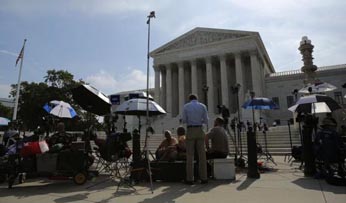
On eve of court ruling, Americans oppose contraceptive ban
A majority of Americans oppose letting employers, based on their religious views, exclude certain contraceptives from workers’ insurance coverage, says a Reuters/Ipsos opinion poll ahead of a US Supreme Court decision expected on Monday. In one of the most closely watched cases of the year, the nine-member court will weigh whether for-profit corporations may raise religious objections to a mandate in President Barack Obama’s signature 2010 healthcare law that their insurance cover contraceptives. It brings to the forefront thorny questions of religious freedom and reproductive rights, along with enduring politicking over the law known as Obamacare, itself broadly upheld by the Supreme Court in 2012. The poll asked whether employers should be able to choose what forms of contraceptives their health plans provide based on their religious beliefs. Of those responding, 53 percent disagreed and 35 percent agreed. Of those surveyed, 12 percent said they did not know. The justices will sit at 10 a.m. ET on Monday for the final day of their nine-month annual term. In the case, two family-owned companies, Hobby Lobby and Conestoga Wood Specialties, challenged the insurance requirement for certain employee birth control devices and methods as a violation of a 1993 religious-freedom law. The Oklahoma based arts-and-crafts retailer Hobby Lobby is controlled by evangelical Christians, and the Pennsylvania-based cabinet-manufacturer Conestoga Wood Specialties is owned by Mennonites. The healthcare law already exempts churches and religious-run entities from the contraceptive mandate. The companies, and others involved in related lawsuits, do not oppose every type of birth control. Some object only to emergency contraceptive methods, such as the ‘morning-after’ pill, which they view as akin to abortion. The Obama administration contends for-profit corporations, even closely held ones, do not exercise religious rights as individuals do and are not covered by the 1993 Religious Freedom Restoration Act, according to Reuters.