
On philosophy of education
Beyond memorisation, towards human development
N N Tarun Chakravorty | Wednesday, 15 July 2026
Education is often seen as a means of acquiring information, obtaining certificates, and securing employment. Although these goals are important, they represent only a part of what education should achieve. The true philosophy of education raises a deeper question: what kind of human being should education create?
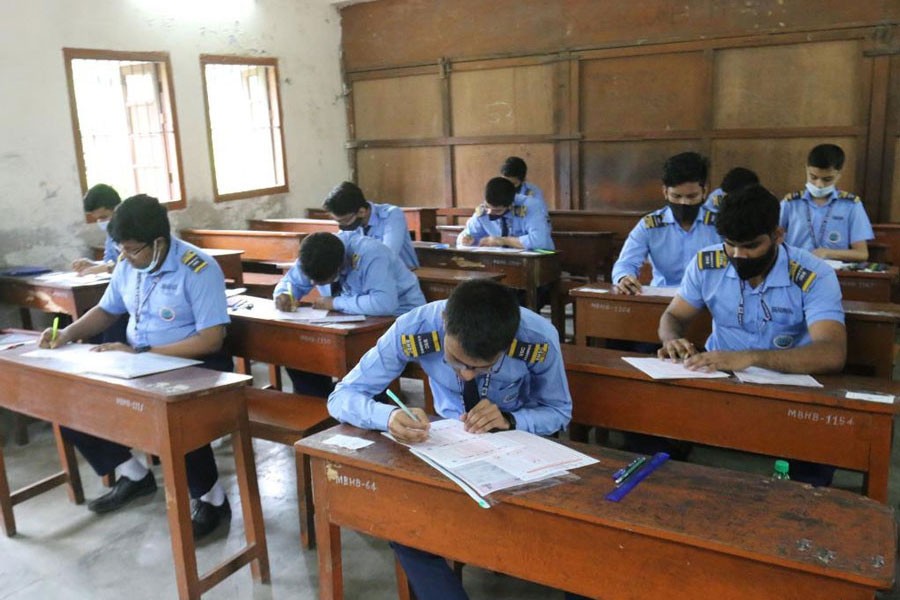
In Bangladesh and in many other societies, educational success is often measured by examination marks, grade point averages, and admission to prestigious institutions. Students spend years memorising information, reproducing textbook answers, and preparing for examinations. Yet a student who achieves excellent results in exams may lack the ability to think independently, solve real-life problems, question established truths, or make meaningful contributions to society. This has become a defining concern of Bangladesh's education system. It seems that education has become merely a process of transmitting information. Wisdom, character, and the development of human potential appear to be absent from the prevailing education system.
The great thinkers of history largely supported the second view. Aristotle argued that education should produce rational and ethical human beings capable of exercising sound judgment. Rabindranath Tagore believed that education should liberate the mind rather than confine it within a rigid system of imitation. Swami Vivekananda saw education as the manifestation of the perfection already inherent in every individual. Socrates, perhaps the greatest advocate of critical inquiry, taught through questions rather than lectures and encouraged students to discover truth through thought and dialogue.
Despite their differences, these thinkers shared a common belief: education should help individuals become independent thinkers.
This principle remains highly relevant in the twenty-first century. The modern world is marked by rapid technological change, artificial intelligence, global competition, and complex social challenges. In such an environment, the ability to analyse, interpret, innovate, and adapt is more valuable than the ability to memorise information. Through digital technology, information is now instantly available. What distinguishes successful individuals and societies is not merely access to information, but the ability to use knowledge intelligently and creatively.
Unfortunately, many education systems still place excessive emphasis on rote memorisation. Students are often rewarded for reproducing established answers rather than creating original ideas. Teachers are expected to complete the syllabus instead of awakening curiosity. Examinations often test memory rather than understanding. Such practices may produce graduates who perform well in exams, yet lose their way when faced with unfamiliar problems that require independent judgment.
Therefore, a meaningful philosophy of education cannot be limited to the question of what students are learning; equal importance must also be given to how they are learning. Education should encourage students to ask questions, challenge established truths, and take part in thoughtful discussion. Learning is not a passive activity in which knowledge is deposited into the minds of students. Rather, it is an active process of inquiry, exploration, and discovery.
For this reason, modern educators advocate student-centred learning. The classroom should be a place where discussion, debate, collaboration, and self-reflection are encouraged. Students must be given opportunities to participate actively in the construction of knowledge rather than merely receiving it. Teachers are not simply transmitters of information; they are facilitators who guide intellectual inquiry.
Another essential dimension of the philosophy of education is the relationship between learning and real life. Education often becomes disconnected from the real challenges individuals face in society. Students may become proficient in theoretical ideas, yet remain unable to apply them in practical situations.
Education becomes meaningful when knowledge is connected with experience. Project-based learning, internships, fieldwork, laboratory experiments, social engagement, and research activities help students to bridge the gap between theory and practice. These experiences develop problem-solving ability, communication skills, teamwork, and leadership qualities-abilities that cannot be achieved through memorisation alone.
At the same time, education cannot neglect its ethical and social dimensions. A society made up only of technically skilled individuals is not necessarily a good society. Education should cultivate empathy, civic responsibility, moral awareness, and respect for diversity. Citizens must learn not only to succeed personally, but also to contribute to the common good.
From this perspective, education plays an important role in sustaining a democratic culture. An informed and critical citizenry is less vulnerable to misinformation, extremism, superstition, and manipulation. Independent thinkers are better able to evaluate political claims carefully, hold institutions accountable, and participate constructively in public life. Therefore, education serves not only personal interests, but also broader social and national goals.
The experiences of several successful countries show the practical application of these principles. Finland emphasises creativity, equity, teacher professionalism, and student well-being instead of excessive standardised testing. Japan combines strong foundational education with moral education, discipline, and mother-tongue-based learning. Singapore has built a future-oriented education system by maintaining high academic standards while encouraging innovation, adaptability, and lifelong learning.
Although these countries differ significantly in culture and history, they share a common understanding: educational excellence depends not only on curriculum content, but also on the philosophy of education. Their success has come through investment in education, encouragement of inquiry, nurturing of creativity, and viewing students not as passive receivers of information but as active learners.
For Bangladesh, these lessons are especially important. The country has made significant progress in expanding access to education and increasing literacy rates. However, important challenges remain. Public investment in education is still relatively low compared with international standards. Many classrooms are overcrowded. Teachers' training needs to be strengthened. The examination system still encourages rote memorisation. A culture of research and innovation has not yet developed sufficiently.
Addressing these challenges requires more than administrative reform. It requires a renewed understanding of the purpose of education. Education policy must prioritise critical thinking, creativity, problem-solving, and ethical development. Curricula should be updated regularly in line with scientific and technological progress. Greater attention and funding must be given to teacher training. Assessment methods should evaluate not only memorization, but also understanding and the ability to apply acquired knowledge.
Most importantly, education must remain inclusive, secular, reason-based, and open-minded. A society that discourages questioning or intellectual diversity risks weakening creativity, innovation, and social harmony. True education flourishes in an environment where ideas can be examined freely and students are encouraged to think for themselves.
In conclusion, the philosophy of education and the philosophy of human development are inseparable. Education is not merely about preparing workers for the economy; it is about preparing human beings for life. Its highest purpose is to cultivate individuals who can think independently, act ethically, solve problems creatively, and contribute positively to society.
A nation that understands this principle invests not only in schools and examinations, but also in the development of human potential. In the long run, that investment becomes the foundation of economic prosperity, democratic stability, social cohesion, and national progress. Therefore, education at its best is not the accumulation of information, but the liberation of the human mind.
N N Tarun Chakravorty is a Professor of Economics at Independent University, Bangladesh, and Editor-at-Large of South Asia Journal. nntarun@gmail.com
[The article is an excerpt from the author's paper, "The Ability to Think Independently and Solve Real-Life Problems: Philosophy, Pedagogy, and Curriculum," presented at the International Conference on Innovation, Excellence, and Quality for the Transformation of Higher Education 2026, held at Independent University, Bangladesh on June 12-13.]