
Over 10pc people in BD thalassemia carriers
FE REPORT | Tuesday, 9 May 2023
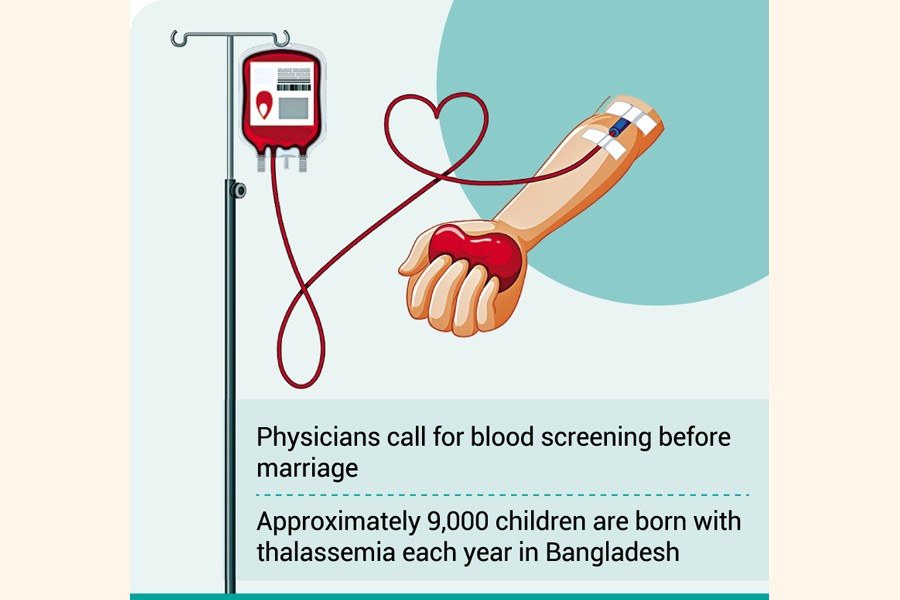
Health experts highlighted on World Thalassemia Day that over 10 per cent of Bangladesh's population are carriers of genetic disorders caused by thalassemia or haemoglobin E.
According to the South East Asia Regional Office of the World Health Organization (WHO), approximately 9,000 children are born with thalassemia each year in Bangladesh, while 60,000 to 70,000 patients in the country are living with beta-thalassemia or haemoglobin E disease.
At a seminar held on Monday at Bangabandhu Sheikh Mujib Medical University (BSMMU) in observance of World Thalassemia Day, speakers stressed the significance of individuals undergoing blood tests before marriage as a priority, citing these projections.
On the occasion of the day, separate rallies and seminars were organised by the Department of Hematology and the Department of Pediatric Hematology and Oncology at BSMMU. The events were addressed by BSMMU Vice-Chancellor Prof Dr Md Sharfuddin Ahmed.
Thalassemia is caused by an inherited mutation in the globin gene of blood haemoglobin, resulting in lower haemoglobin levels in the blood of thalassemia patients. This, in turn, disrupts the transport of oxygen and nutrients to the brain, leading to reduced body growth and potential deformities in various bone structures.
To control the condition, blood needs to be taken repeatedly, leading to excess iron accumulation in the body and decreased performance of various organs, including the liver and heart, according to specialists who spoke at the seminar.
It is usually children who are affected by thalassemia if both parents are carriers. By avoiding intermarriage between thalassemia carriers, it may be possible to reduce the number of thalassemia patients, the speakers emphasised.
They also stressed the need to create awareness among patients, their relatives, healthcare providers at all levels, and the public about the disease.
BSMMU emphasised the importance of premarital blood tests to prevent thalassemia, as it can save future generations from being affected by the condition.
During his speech, BSMMU Vice-Chancellor Prof Dr Md Sharfuddin Ahmed emphasised the importance of a screening programme for the diagnosis of thalassemia.
He also stressed the need for the latest medical services, such as gene therapy and stem cell therapy, to be made available to ensure quality care for patients without the need for medical services outside the country.
The event was attended by Advocate Monzil Morsed, BSMMU Pro-VC Prof Dr Md Moniruzzaman Khan, Treasurer Prof Dr Mohammad Atiqur Rahman, Dean of the Faculty of Medicine Prof Dr Masuda Begum, and others.
The speakers at the event added that necessary initiatives should be taken at both government and private levels to achieve the goal of bringing down the number of thalassemia-affected births to zero in Bangladesh by 2028 through premarital thalassemia screening.
They also underscored providing all thalassemia patients with affordable treatment, including bone marrow transplantation, and making the latest thalassemia treatment facilities available to all.
nsrafsanju@gmail.com