
Over-dependence on bureaucrats to blame
FE Report | Sunday, 25 January 2015
Experts at a meeting in the city on Saturday held over-dependence on bureaucrats in preparation of budget responsible for its not being pro-people as it does not reflect the demand of the grassroots level masses.
They identified weaknesses in the political process for becoming over-dependent on the pressure.
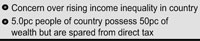
They also expressed concern over the increasing income inequality in Bangladesh which is more than that of the neighbouring countries. They identified lack of initiatives for increasing direct tax collection and creating excessive pressure on value added tax (VAT) for the trend.
Besides, only five per cent people of the country possess 50 per cent of the wealth but many of whom are spared from direct tax which should be the main basis of budget.
Their observations came at a Lobby Meeting with Parliamentary Caucus on National Planning and Budget Parliament Building.
Sushahsoner Jonno Procharavijan (SUPRO) organised the event where SUPRO member organisations working in 45 districts placed the grassroots level demands for inclusion in the upcoming budget for the fiscal year (FY) 2015-16.
Co-chairman of Parliamentary Caucus Meer Shawkat Ali Badsha, MP chaired the meeting while SUPRO general secretary Arifur Rahman moderated it. Nazmul Haq Prodhan, MP delivered the welcome address and SUPRO director Elison Subrato Baroi presented the position paper on the upcoming budget.
General Economics Division (GED) member Shamsul Alam, who was present as a designated discussant in the programme, said Bangladesh could not get rid of top-down planning process and bureaucrat-dependent budget preparation.
Citing an example of failure to set up nine special economic zones (SEZs) in the country which were recommended by the Planning Commission, he said various decisions and recommendations of the commission are not implemented mainly due to political reasons.
"It is a political decision to prepare the budget as per the demand of the bottom….even Bhutan has the system to prepare the budget on the basis of local demands," said Mr Alam.
He said income inequality has been increasing in Bangladesh day by day even more than India despite having a population of same language and culture. Despite being a nation of multicultural and multi-lingual people, India has been able to reduce the income inequality.
"The GINI coefficient of India decreased to 0.33 from the prior 0.37 over the last five years. But in Bangladesh the GINI coefficient increased to 0.46 from the previous 0.27," said Mr Alam.
The government has been emphasising the need for attaining such economic growth in the 7th five-year plan through which adequate employment opportunities will be created, he informed the meeting.
"About 40 per cent of the labour force is illiterate. But productivity, skill and institutional capacity will not increase if there is lack of quality human resources," said Mr Alam.
Former chairman of National Board of Revenue M Abdul Majid, another discussant, said there are inherent limitations and complexities in budget preparation process which makes it more dependent on bureaucrats.
He noted that the present budget is imposed from the top. Mr Majid emphasised the need for an active role of the lawmakers in budget preparation and submitting all the local level demands by March.
He said Bangladesh cannot collect 6.0 per cent income tax from the taxable people which is much lower than that of any other South Asian country. But direct tax is the main tool for reducing inequality in the society, he added.
SUPRO demanded ensuring direct tax-based budget and civil rights against paying tax, keeping essential services and goods out of VAT, ensuring a people-friendly tax system and an automation system, people's participation in tax law formulation and reformation, including grassroots level demand in national budget formulation, keeping open draft budget for all for at least three months before finalisation, more participation of elected representatives in budget formulation, ensuring at least 20 per cent of total budget or 6.0 per cent of GDP for proper execution of National Education Policy 2010, ensuring 1:30 teacher-student ratio and constitutional recognition to ensure health as a basic rights.
msshova@gmail.com