
Paradox of competitiveness through technology import
M Rokonuzzaman | Tuesday, 15 August 2023
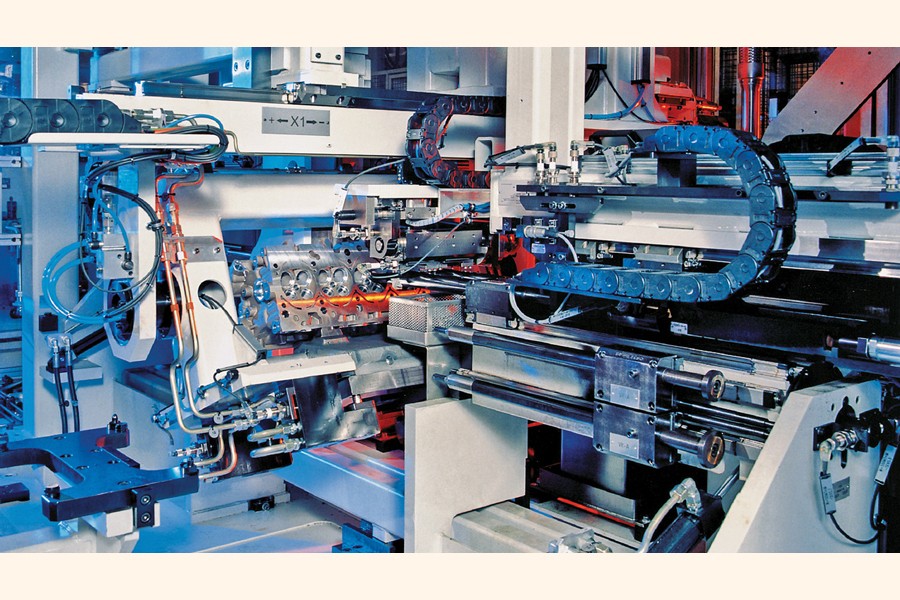
In the global competitive indices, such as World Economic Forum's Global Competitiveness Report, less developed countries have been at the bottom. For example, in 2019, the annual global competitiveness index ranked Bangladesh at the 105th position out of 141 countries. As such indexing relates to the level of development, more or less all countries have been after the race of improving their position. But does the prevailing technology import-driven approach offer short-term gain at the cost of long-term erosion of value addition ability, creating a paradox for less developed countries?
Although the World Economic Forum defines competitiveness as the "set of institutions, policies, and factors that determine the level of productivity of a country", quality, cost, and lead time of production determine the competitiveness. In the mission of improving quality, lowering cost, and reducing lead time, technology in the form of capital machinery plays a vital role. Hence, most of the less developed countries have been after importing capital machinery for improving the competitiveness of whatever they produce. Despite the immediate positive effect, does technology import-driven strategy reduce the long-term competitiveness of nations? Particularly, does it close the window of creating economic value out of knowledge earned through education?
Not long ago, we used to rely on the knowledge, experience, and ideas of an artisan to make banners, with aesthetically pleasant calligraphy and graphics. In those days, an artisan used to take even days to finish a large-sized banner. But those days are gone. We no longer source knowledge, ideas, and experience of local artisans to make banners. Instead, we go to a banner printing shop. With imported modern machines, an operator makes banners with our desired calligraphy, graphics, images, and colour. In terms of quality, cost, and lead time, banner-making out of imported technology is far more competitive than getting the same job done by locally sourcing banner-making knowledge, ideas, and experience. Hence, the competitiveness of banner making out of imported technology has taken over the market of local artisans. Such a reality has been the case in producing many other products, starting from shirts to shoes.
As technology helps us improve quality, reduce cost, and lower lead time, the strategy of less developed countries has been to import capital machinery. Consequentially, such an approach has been reducing demand for local knowledge, experience, and ideas. But it creates low-skilled job, like the way operators of imported banner-making machine has taken over the role of artisan. If we keep pursuing this path of improving competitiveness, what is the reality we will keep facing in the long run? Has it been eroding the ability to add value out of knowledge, ideas, and experience, weakening the core base of competitiveness of less developed countries?
To shed light, let's go back to the basics of economic value creation. The well-known Cobb-Douglas (CD) production function states that economic output is a function of labour (L), capital (K), and total factor productivity (TFP). As TFP distills from knowledge, ideas, and experience, we are investing in education for increasing economic output from the same labour and capital inputs. For the same reason, we have been after improving the skill level of labour through training and experience and updating capital. Often, capital advancement takes place through the improvement or replacement of capital machinery or technology, like the way we updated banner-making capital. As the production technologies of advanced countries are superior, less developed countries have been after importing advanced capital machinery for improving quality, reducing cost, and lowering the lead time-thereby improving competitiveness. Hence, for driving competitiveness improvement through technological upgrades, less developed countries have been after reducing import duties on capital machinery, reaching zero. In some cases, less developed countries have been offering subsidies to import capital machinery. For example, India has been offering as high as 75 per cent subsidies to capital investment for attracting investment in semiconductor manufacturing.
For sure, capital machinery import leads to increasing productivity and quality, reducing cost, and lowering lead time. It also makes low-skilled people eligible for work, like the way banner machine operators have taken over the job of artisans. But what are its implications on total factor productivity, affecting the demand for local knowledge, ideas, and experience? As in the case of banner making, knowledge, ideas, and experience are being built inside the machine. It happens that capital machinery exporting countries have been on the mission of adding such value in machines, turning their education and R&D investment into better-performing capital machinery. By importing the capital machinery, less developed countries have been creating a market for education and R&D of advanced ones.
As explained, imported capital machinery has been improving quality and productivity, reducing the cost of production, and creating low-skilled jobs. But it has been taking place by killing the demand for local knowledge, ideas, and experience. As a result, capital machinery importing countries have been suffering from the erosion of creating economic value from the increasing role of total factor productivity. Consequentially, they have been suffering from growing unemployment and slow salary growth among university graduates. On the other hand, they have been enjoying increasing demand for the low-skilled workforce in manufacturing. Ironically, in the long run, such low-skilled labour demand will start falling due to the import of increasingly sophisticated machines. For example, Bangladesh's ready-made garments sector has already been suffering from the erosion of low-skilled labor demand due to the upgrading of capital machinery.
With the given reality, less developed countries have been suffering from the paradox of improving competitiveness through technology imports. They have been closing the door of creating economic value out of knowledge through the import of increasingly sophisticated machines. As a result, their scope of increasing income level through investment in education has been eroding. Besides, low-skilled job gain will be lost as well. Consequentially, less developed countries have been caught in the vicious cycle of competitiveness improvement through technology import. Hence, the question of how to exit such a cycle and enter into a virtuous one creating the capacity of increasing competitiveness through value addition out of knowledge and ideas is paramount. It appears that countries like Japan, Taiwan, South Korea, and China offer lessons. In retrospect, China's success in growing GDP far faster than India and many other less developed countries have been due to changing focus from capital machinery import to upgrading them through local knowledge and ideas. Similarly, Japan's success in quality has been due to a focus on developing domestic automation and the robotics industry.
Historically, less developed countries started industrial economies through import substitution. Hence, the journey began with the import of the design of products, intermediate goods, and capital machinery. The entry into export-oriented manufacturing for multinational corporations did not change the situation. But the continuity of capital machinery imports for improving competitiveness has been eroding their abilities to add value through knowledge and ideas. Besides, even the low-skilled jobs created through technology import have already started drying up. Hence, finding a way of reversing the trend of capital machinery upgrades has been paramount. Otherwise, technology import-driven short-term gain of competitiveness will likely block the scope of leveraging education for creating economic value. Furthermore, technological import will also be killing low-skilled industrial jobs. Amid the unfolding reality of competitiveness improvement through technological import, less developed countries face the challenge of sustaining even low-skilled industrial jobs, let alone reaching high-income status by leveraging investments being made in education.
M. Rokonuzzaman, Ph.D is academic, researcher and activist on technology, innovation and policy. zaman.rokon.bd@gmail.com