
Preparing for fun visits to Sundarbans
Shihab Sarkar | Friday, 25 March 2022
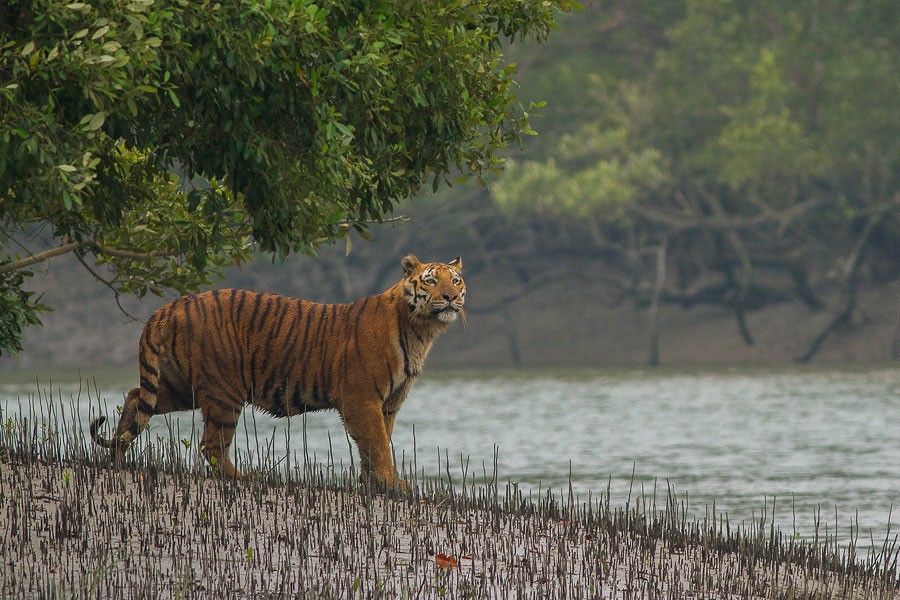
The International Day of Forests was observed on March 21 in Bangladesh and elsewhere in the world. With little notice being given to these Days, the mindless and indiscriminate swoops on the Sundarbans in Bangladesh continue to replicate in newer areas as days go by. Climate experts and local and overseas environmentalists have long been demanding that the forest be saved from encroachers. It's largely the illegal tree fellers who comprise these people. Large sections of illegal wood-cutters and lumberjacks employed by the influential quarters are assigned to clearing large tracks of the vast forest on its fringes. With the lands getting denuded and free of vegetation, the 'big bosses' find the areas ideal for setting up settlements. These people include entrepreneurs in search of locations for raising industrial complexes, human habitations and many other structures. It needs not be repeated that the Sundarbans (area: 139,500 ha) is the world's largest mangrove forest. Over the centuries, it has been protecting the Bangladesh's long coastal belt from the onslaughts of annual cyclones. They brew in the Bay of Bengal, mostly in the monsoon.
Upon a look from the above, especially from a helicopter, the view the sensitive segments of people confront is enough to cause them adrenaline rush. If they happen to visit the forest even after a short gap, the whole stretch of the forest may appear to them strange. To their horror, they might find vast areas below cleared of the densely grown trees, which have, for ages, been indigenous to the area. They might not have the faintest idea that designated places are created to set up 'eco tourism parks' for the general people. Various species of large and small animals are planned to keep there after catching them using traps. A sizeable section of these animals are believed to be the Royal Bengal Tigers, deer, Rhesus monkeys, crocodiles etc. The authorities hope interested people from across the country will throng the 'parks' in exchange of costly tickets.
As far as the mangrove forest experts are concerned, they are said to have yet to hear about such parks built inside the quiet of natural forests. In eastern Africa, game chasing wildlife hunters, both amateur and professional, are found hunting live animals by using lassos. The exercise is largely possible because of the vast swathes of grassy areas in those countries. According to experts, this type of hunting exercises or setting up of eco tourism parks will prove difficult in the Sundarbans, thanks to the forest's typical South Asian nature. As for establishing vast spacious parks, the spot may not be able to attract enough tourists. Unlike people from other countries, Bangladesh forest visitors are more interested to have close looks at the animal from a safe distance, while moving aboard trawlers and launches. In the meantime, the animals long accustomed to the isolation from crowded human presence might feel disturbed, with the so-called eco tourism parks being built around them. Given the unwarranted promptness in setting up these parks, wildlife experts portend difficult times for the baffled animals.
The Sundarbans has been globally recognised as the chief lifeline of the environmental soundness of Bangladesh. After being left out from the list of development priorities for decades, the forest has suddenly found itself in wide focus. As a proof of insensitivity nurtured by different government agencies, they have joined a mad race for getting permission for building eco-promotional infrastructure in almost every part of the forest. These set-ups are feared to deal a severe blow to the Sundarbans' capability to survive on its own. Some of the ill planned structures might finally emerge as the driving of the last nail on its coffin. To realise this impending hazard, let's turn to the anti-environment roles played by various agencies. These organisations or establishments seem to be too eager to complete their respective projects throughout the long vulnerable forest. They hardly bother about the wellbeing of the wildlife species living there. The large and small trees, as well as orchids and aqua-plants, have little value to them. The same goes with the numerous rivers, their branches and the intricate network of canals. The obstructed flows of these waterways caused by oil leakage from various types of tourist vessels are another scourge looming over the otherwise awe-inspiring large forest.
A lot of threats are at present posed to the Sundarbans by around a dozen recreation centres now underway. Prominent of them are tourist recreation centres. These facilities are normally found in the savannahs in central and east African forests. The Sundarbans is still a dense forest with the presence of hundreds of types of animals, reptiles like snakes, crocodiles, lizards, iguanas --- and insects. The Bengal Tiger dominates them all. That these types of animal watching and recreational centres do not fit in with Bangladesh realities is accepted by all the segments related to forestry. Yet a section of entrepreneurs with little knowledge about the benefits of forest preservation are busy doing ground work for constructing environment-friendly eco tourist centres. The first thing they embark on is the clearing of forests.
Experts on forests and wildlife feel alarmed. They can clearly foresee the grim impacts the deforestation of large areas in the centuries-old Sundarbans may have on the mangrove forest. The major impacts include making way for cyclonic damages into the inner forest. Repeated assaults on animals may lead to the start of the process of their mass extinction. At the same time, many species like tigers, deer and monkeys may start migrating to the Indian part of the Sundarbans. A section of Bangladeshi wildlife experts are of the view that the increase in the number of tigers in the Indian Sundarbans is expedited by the endangered state of this majestic animal in the Bangladesh part and their migration. Tigers are skilled swimmers. If their land-based route is made hazardous, they can turn to swimming for crossing over to the Indian part of the Sundarbans. Not long ago, even the segments of highly influential people would think twice before they started planning to encroach on forests --- be they in the Chittagong hill districts, the outlying areas in Moulvibazar or the sprawling suburbs of the Cox's Bazar district town.
A great advantage of encroaching on the Sundarbans is its massive size. People living in the nearby villages on the forest fringes normally remain in the total dark when forest lands get cleared to build concrete structures for different commercial purposes. When they realise what type of an irreparable damage has been done to the forest and the environment of the adjacent areas, the locals can hardly do anything. The grabbers keep going ahead with their environment-hostile activities in the forest. Already seven tourism centres in the forest are in operation. Besides, there are plans to construct seven tall RCC tiger watching towers at places like Katka, Harbaria and Kochikhali. In short, the whole inner Sundarbans is now watching bursts of hectic construction work. In a few years, people from far-off areas might be seen visiting the Sundarbans like they visit tourist spots like Bandarbans or the St Martin's Island. While they visit those sites, most of them have few reasons for remaining mindful of the areas' environmental health. In the ongoing process of the Sundarbans' slipping down to the status of a seaside resort, encircled by isolated remnants of a mangrove forest, the site runs the risk of complete disappearance.
At the moment everything including flash lights, smells and noise pathologically disliked by the wild animals is being made to be in place to cater to the forest visitors. Thousands of nature and animal loving people may have to be prepared to lose themselves in a long, winding maze made out of re-plantation and re-designing of trees. While finding a way out of the maze, the playful tourists may derive lots of fun as they bump into a clown covered in tiger or monkey skins and wearing masks of the animals. In reality, turning the Sundarbans into a massive zoo is in full swing. And it's just a matter of time before it becomes one.
shihabskr@ymail.com