
Preventing the spread of swine flu
Tasdidaa Shamsi | Saturday, 9 May 2015
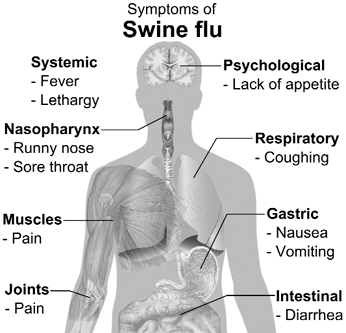
Swine flu is currently a burning issue since its resurgence in our neighbouring countries. It is important to examine the public health threat that swine flu poses to Bangladesh considering an outbreak of the disease in India. We should be concerned about the consequences it can have on the health of our nation and how we can prevent and tackle the spread of swine flu in Bangladesh.
Swine flu is caused by H1N1 virus which can be transmitted from animals to humans. Signs and symptoms include fever, cough, sore throat and all other symptoms of common flu. It is a respiratory infection and the vulnerable groups include the elderly, the pregnant and the young along with people suffering immune-suppressing diseases. Swine flu vaccines are available at healthcare facilities.
Influenza A (H1N1) virus, causative agent of Swine Flu, is the subtype of influenza A virus, the most common cause of human influenza (flu). Avian influenza is caused by H5N1 virus. Influenza A H1N1 is a new virus. Zoonosis are infectious diseases of animals (usually vertebrates), that can naturally be transmitted to humans. Swine flu is a form of zoonosis. Zoonosis can be caused by a range of disease pathogens such as viruses, bacteria, fungi and parasites. The first pandemic of influenza occurred in 1847. During different pandemics of flu in the past a significant number of people died, for example, 40 million deaths happened worldwide during the 1918-1919 Spanish Flu (H1N1) and one to four million deaths during the 1957-1958 Asian Flu (H2N2). So a pandemic of swine flu is indeed a grave concern.
The signs and symptoms of swine flu include fever, cough, sore throat, runny or stuffy nose, body aches, headaches, chills and fatigue. In addition, 25 per cent of the patients have vomiting problems and diarrheal problems. The transmission is through respiratory infection, regular person to person transmission, primarily through contact with respiratory droplets and also transmission from objects. Key characteristics include communicability. Viral shedding can begin one day before symptom onset. Peak shedding is, at first, three days of illness. This correlates with temperature. The problems subsides usually within the 5th and 7th day in adults. The vulnerable groups include pregnant women, old, children and diabetes, heart disease and asthma patients.
As of March 19, 2015 the global situation showed that of 1,11,964 specimens 24.47 per cent tested positive, of which 65.2 per cent or 17,711 were affected by Influenza A i.e. animal to human or human to human and 9464 (34.8 per cent) was affected by Influenza B (from human to human only).
Winter is not the influenza season in Bangladesh. Our influenza season is April to September. Peak season is June and July. India, being a bigger country when compared to Bangladesh, has two distinct seasons of influenza.
If flu vaccine is sold in open market, drug resistance develops. Drug oseltamivir is an antiviral medication that blocks the actions of influenza virus types A and B. Safety measures are taken at point of entries in Bangladesh. Infrared thermometer is supplied. Health workers are deployed at 25 point of entries to Bangladesh. Seven thermal scanners have been implemented at key airports and also at busy land port, Benapole for precaution against flu entering into Bangladesh. Influenza lab capacity of IEDCR (Institute of Epidemiology, Disease Control and Research) includes virology laboratory and test platform.
For the awareness of general population about influenza, communication materials should be developed and seclusion rooms should be introduced for flu patients.
The virology of Avian and Swine influenza is orthomyxo, i.e. the virus becomes active when it gets in touch with human mucosa-RNA virus. Human is a stable reservoir for Swine Flu virus. Classical cholera was prevalent from 1817 to 1923 but it was the modified Eltor bacteria in 1963 which caused cholera pandemic due to more colonies. This explains why Swine Flu is more harmful than normal flu.
WHO has set a criterion for pandemic i.e. whenever a disease has spread over one continent, it is a pandemic. Therefore, H1N1 is a pandemic. H1N1 pandemic mortality rate was observed everywhere except in Mexico and in some parts of India.
Bangladesh has to be prepared for any pandemic. Ebola virus was first seen in 1976 but no drugs were developed to fight it. When the recent havoc was caused by Ebola in western Africa and US doctors got affected while treating, WHO got alarmed. We have to have surveillance and a good laboratory system. More than 95 per cent of new diseases is of animal origin. Human, animal and environmental health is all interrelated. Timely response and act is necessary.
Swine flu symptoms include diarrhea and vomiting. Co-morbidity includes acute respiratory disease. Beds of patients should be at least one metre away from each other. Infection control should be under case management or vice-versa. Case management should be under infection control. We should know how to manage swine flu patients. They should not die.
If we vaccinate for flu in each flu season and follow the simple steps of tackling flu, it can be expected that the prevalence of swine flu will remain at a controllable stage.
The writer, BEng (Hons) (UK), MPH, MBA (IBA, DU), is a public health practitioner.
tasdidaashamsi@gmail.com