
Prioritising river and water management
Jafar Ahmed Chowdhury | Monday, 30 March 2015
World Water Day was observed all over the world on March 22, 2015. In Bangladesh, the day was observed with seminars, messages from the Prime Minister and other dignitaries. Some newspapers published special supplements.
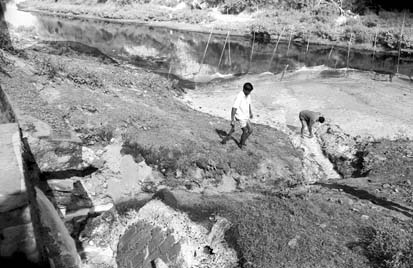
The seminars and the newspapers provided ample information that show how much the country is at stake in having a fresh water environment though the country is crisscrossed by nearly 250 big and small rivers with around 400 tributaries. Water of almost all rivers has become contaminated with industrial effluents and human waste. About 97 per cent of the 80,000 tonnes of human waste virtually goes to the rivers. Along with human waste, untreated industrial effluents containing heavy metals and toxic chemicals have made the Buriganga, the Turag and the Balu around the Dhaka city biologically dead. The Shitalakhya in Dhaka region, the Karnaphuli in Chittagong and the Poshur in Khulna are groaning and may face the same fate soon. Extreme pollution of river water makes it unsuitable for drinking, bathing, household chores, agriculture and fishing. Riverine ecology and biodiversity are also destroyed by such reckless pollution.
This year, the theme of the World Water Day was "Water and Sustainable Development". Water has its diverse uses like drinking, navigation, irrigation, sanitation, hydropower generation, maintenance of ecosystems, biodiversity etc.
Bangladesh is the world's largest delta. It has an estimated 1,210 billion cubic metres of renewable fresh water. In spite of this, it was revealed at a press conference recently that about 98 per cent of drinking water and 80 per cent of dry season irrigation water comes from the 21 billion cubic metres of ground water. The increasing dependence on ground water and the unplanned use of water resources may call further havoc for the country. Experts suggest that over-extraction of ground water is lowering water level posing salinity problem. The fluctuation in groundwater level is also believed to be one of the reasons for arsenic contamination. When the groundwater level goes below the sea level, saline water flows inwards.
Official data suggest that five million out of irrigable 7.6 million hectares of land have been brought under irrigation in Bangladesh by using groundwater. The papers of Bangladesh Water Development Board suggest that availability of useable ground water has become uncertain in some places due to excessive use. This is resulting in the depletion of groundwater level. In Dhaka city, for example, the groundwater table depletes by around three metres annually. It is said that Dhaka WASA can supply 22 per cent of the total demand for 2.4 billion litres of water in the city. The rest comes from the groundwater. In city areas, replenishment of groundwater table is obstructed by destruction of ponds, canals and wetlands, unplanned concrete coverage of the surface and almost dead rivers around the city.
Again seven major rivers, 54 from India and three from Myanmar, provide 92 per cent of the annual flow and carry about 1.5 billion tons of alluvial deposits every year. This creates hindrance to water flow, reduction of flood plains and navigation. Climate change and rising of seal level have also intensified the problem. The melting of the Himalayan glaciers, deforestation and withdrawal of water in the upstream are posing serious threat to the ecology and bio-diversity of Bangladesh. Here arises the necessity of co-operation with the neighbouring countries, particularly India.
Siltation, river bank erosion and lack of dredging have been squeezing the rivers and their navigability. People are found capturing the beds of rivers by planting trees and constructing houses. Industrialists and land grabbers are grabbing the rivers. Canals along thousands of kilometres of highways, once seen, do not exist any more. Neither the local administration nor the BIWTA and Roads and High Ways resist such grabbing or take initiatives to restore rivers and canals.
All these reveal a dismal situation about rivers and water in Bangladesh. The right action
Given the degradation of the rivers and poor state of water management, the right action should be establishment of a River and Water Management Authority (RWMA) by an Act of Parliament. This Authority will formulate necessary framework and policies, direct, supervise and monitor river and water management. It may be manned by experts (engineers, water experts, environmentalists and economists) and experienced present or former civil servants. Chairman-Water Development Board, Director General-Directorate of Environment, Chairman-WASA, Chairman-BIWTA, Chairmen of both Chittagong and Mongla Port Authorities, Chief Conservator of Forests and one representative of the Bangladesh Navy should be ex-officio members of the proposed RWMA. This Authority will undertake any action necessary for fresh water environment in Bangladesh. Its suggestions will be mandatory for the executing agencies. It can also work as a secretariat for Joint Rivers Commission. The proposed authority shall be accountable to Parliament through the relevant parliamentary standing committee. Policy makers should be serious about establishing such an authority for managing rivers and water resources for the betterment of the country and for coming generations.
The writer is an economist
and columnist.
chowdhuryjafar@ymail.com