
Production, sale of Bogura vermicelli boom ahead of Eid
Sunday, 15 March 2026
OUR CORRESPONDENT
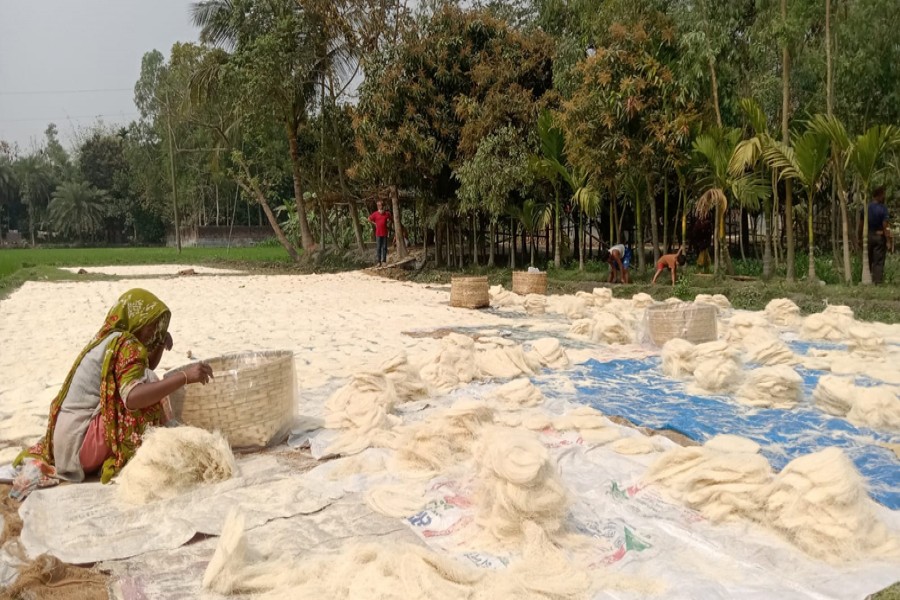
BOGURA, Mar 14: As the country prepares for Eid-ul?Fitr, the northern district of Bogura is witnessing a surge in the production of its famed lachchha semai and thin white vermicelli, with a bustling seasonal industry expected to generate close to Tk5.0 billion in sales.
Nearly 400 factories across the district are now producing the traditional dessert ingredient, widely consumed during the Eid festival.
After meeting local demand, Bogura's semai is distributed to at least 18 districts across the country and exported in small volumes to markets in the Middle East and Europe.
Industry insiders estimate that the seasonal trade - lasting about six weeks around the Eid festival - employs more than 50,000 workers. Many labourers rely solely on the two Eid seasons each year to produce semai, while others remain engaged in year-round manufacturing and sales.
Producers say a factory sells Tk3.0 million to Tk4.0 million worth of semai during the peak season.
Based on that estimate, total sales from the district's factories are expected to exceed Tk10 billion in a month, highlighting the scale of Bogura's cottage-based food industry.
"Demand for lachchha semai does not fall, it increases every year," said Mr Bayezid Sheikh, managing director of Khawza Confectionery and joint general secretary of the northern regional council of the Bangladesh Bread Biscuit and Confectionery Manufacturers Association.
He said the district recorded sales worth Tk4.0 billion to Tk4.3 billion last year, adding that this year's turnover could reach between Tk4.8 billion and Tk5.0 billion.
Clusters of semai factories have emerged in neighbourhoods such as Madla, Bejora, Dhakanta, Shewolakandi, Banani, Sultanganjpara, Chelopara, Naruli and Brindabanpara in Bogura town. Growing demand has also pushed production into nearby upazilas including Shahjahanpur, Sherpur, Dhunat, Kahalu, Nandigram, Shibganj, Dupchanchia and Gabtoli.
Bogura's lachchha semai carries a century-long heritage.
Local artisans prepare the crispy, layered vermicelli using traditional techniques, mixing wheat flour with butter or vegetable fat before shaping and frying the strands.
In recent years, producers have attempted to expand exports to Middle Eastern markets.
However, some manufacturers say the current regional geopolitical tensions have created uncertainty for overseas shipments this season. Hasan Ali, chairman of Akboria Group and president of the Bogura Bread Biscuit and Confectionery Owners' Association said the product could gain a stronger foothold in global markets if export regulations were eased.
"If the government relaxes export policies, Bogura's lachchha semai could secure a significant place in international markets," he
went on.
Along the banks of the Karatoya River, several villages including Bejora and Ghatpara have evolved into specialised "semai villages", where women workers operate both electric and
hand-driven machines to produce, dry and package the noodles.
Local producers say daily output in these areas has reached 50 to 60 tonnes ahead of the Eid.
Wholesale traders from Dhaka and other regions regularly
travel to Bogura to purchase the famed "Chikon semai" or thin vermicelli in large consignments.
They argued that such type of thin vermicelli is hardly available in other parts of the country.
Despite strong demand, the sector faces challenges.
Rising raw material costs - including flour, edible oil and fuel - have pushed retail prices higher. Lachchha semai fried in soybean oil currently sells for Tk240-300 per kilogram, while ghee-fried premium varieties can fetch between Tk800 and
Tk1,500.
Authorities have also flagged food safety concerns at some unlicensed factories operating in unsanitary conditions.
Watchdogs say enforcement drives and mobile courts are conducted every year before Eid, though compliance remains uneven across the sector.
Even so the bustling trade continues to provide vital seasonal employment and sustains one of Bogura's most recognisable culinary traditions during Bangladesh's biggest religious festival.
sajedurrahmanvp@gmail.com