
Promise of universal health coverage must go beyond budgetary allocation
Wasi Ahmed | Wednesday, 17 June 2026
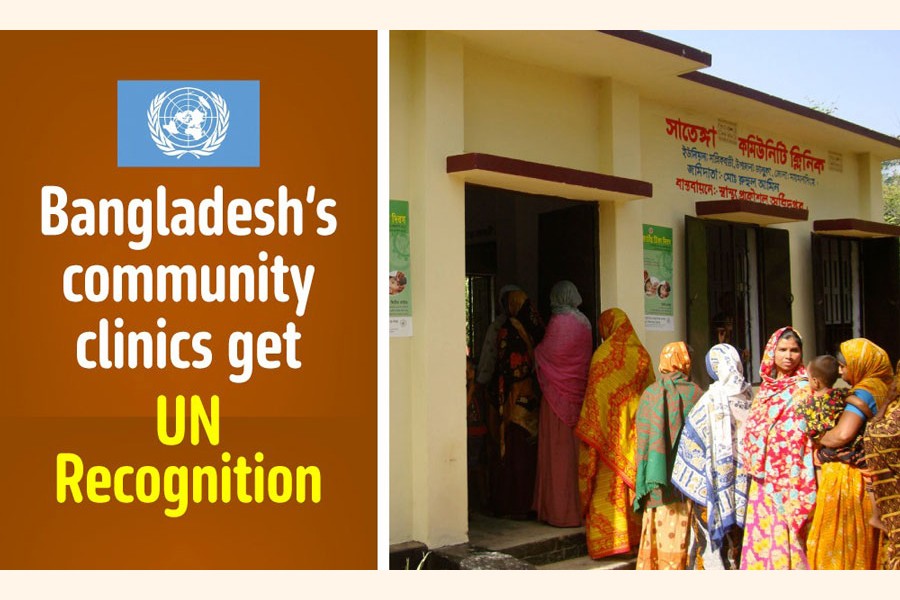
This year the national budget introduces a massive structural shift towards Universal Health Coverage (UHC). The health sector allocation has more than doubled, pushing spending above 1.0 per cent of the GDP for the first time. The primary goal is to shift the medical system from a treatment-centred model to a prevention-focused one, ensuring no low-income family faces financial ruin due to medical emergencies. Yet the promise of universal health coverage also raises a fundamental question: can better healthcare be achieved through financial allocation alone, or does it require a deeper transformation of the institutions that deliver healthcare?
Speaking at a pre-budget seminar, Finance Minister Amir Khosru Mahmud Chowdhury had candidly acknowledged a reality that millions of Bangladeshis confront every day. Healthcare in the country remains heavily dependent on out-of-pocket expenditure. Families often have to dip into savings, sell assets or borrow money to finance treatment. In many cases, the cost of illness itself pushes families into poverty. The minister's observation that out-of-pocket healthcare spending in Bangladesh remains among the highest in the region is therefore not merely a statistic; it is a reflection of the vulnerability faced by ordinary citizens.
Against this backdrop, the proposal for universal health coverage in the budget is both timely and necessary. No country can claim sustainable development while large sections of its population remain unable to access basic medical services. Economic growth, however impressive, loses much of its meaning if citizens cannot afford healthcare when they need it most. A healthy population is not simply a social objective; it is an economic asset. Productivity, educational attainment and overall social well-being are all closely linked to health outcomes.
The government's emphasis on expanding primary healthcare services under the UHC framework is particularly encouraging. International experience consistently shows that strong primary healthcare systems form the foundation of effective and affordable health coverage. Preventive care, early diagnosis, maternal health services, immunisation and community-based treatment can significantly reduce the burden on hospitals while improving public health outcomes. Investing in prevention is invariably less costly than treating advanced disease.
Equally noteworthy is the intention to engage private-sector organisations and non-governmental actors in delivering healthcare services. Given the limitations of public infrastructure and manpower, a collaborative model may offer the most practical route to expanding healthcare access rapidly. Bangladesh's development experience has repeatedly demonstrated the value of partnerships between government, NGOs, and private service providers. However, such collaboration will require robust regulatory oversight to ensure quality, affordability and accountability.
Yet enthusiasm for universal health coverage should not overshadow the formidable challenges that lie ahead. Financing is only one component of the healthcare equation. A larger budget, though essential, cannot by itself guarantee improved services. The country's healthcare system continues to suffer from structural weaknesses that have accumulated over decades. Shortages of skilled health professionals, inadequate facilities in rural areas, uneven quality of care, and governance deficiencies remain persistent concerns.
Urban healthcare presents another major challenge. Rapid urbanisation has created dense populations whose healthcare needs often fall between the responsibilities of different institutions. While rural primary healthcare networks have received some policy attention over the years, urban primary care remains fragmented and insufficient. A truly universal system cannot leave this growing segment of the population underserved.
Moreover, the issue of trust cannot be ignored. Many citizens bypass local facilities and seek treatment directly at tertiary hospitals because they lack confidence in primary healthcare centres. Unless service quality improves substantially, expanding coverage on paper may not translate into meaningful access in practice. Universal healthcare requires not only infrastructure but also public confidence in the system.
The broader reality reveals an important fact: health sector reform cannot be isolated from wider governance reforms. A sustainable universal healthcare system requires a stable and expanding revenue base. If tax collection continues to lag behind economic growth, financing ambitious social programmes will become increasingly difficult.
Similarly, the concerns raised by business leaders about bureaucratic inefficiencies, investment bottlenecks and employment generation point to the interconnected nature of development. Economic growth generates the resources needed to fund social protection. At the same time, a healthier workforce contributes to economic productivity. The relationship between economic and social policy is therefore mutually reinforcing rather than separate.
The announcement of UHC should therefore be viewed not as the culmination of reform but as its beginning. The real test will lie in implementation. Clear financing mechanisms, institutional accountability, workforce development, digital health management systems and effective monitoring frameworks must accompany the budgetary commitment. Without these supporting pillars, even the most ambitious healthcare programme risks falling short of its objectives.
Bangladesh has reached a stage in its development journey where citizens increasingly expect not only economic growth but also quality public services. Universal health coverage embodies that aspiration. It reflects the belief that access to healthcare should not depend on income, geography or social status.
The budget offers an opportunity to translate that belief into policy. But success will ultimately depend on whether healthcare reform is approached as a comprehensive national transformation rather than a fiscal announcement. Universal health coverage is not merely about spending more on health; it is about building a system that protects citizens from illness, financial hardship and exclusion. Only then can the promise of universal healthcare become a meaningful reality for all.
wasiahmed.bd@gmail.com