
Remittances help Nepal recover from quake damages
Md. Ansar Uddin Anas | Saturday, 1 August 2015
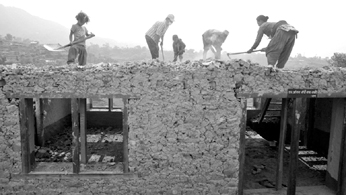
Remittance, the money migrants are send home, has become a driver of welfare of poor families around the world. Many countries are heavily dependent on remittances sent by their nationals working abroad. Asian countries are on top in receiving remittances for decades. Except Afghanistan and Bhutan, almost every country of the South Asian region, one of the major hubs of origin of international migration, is reliant on remittance of workers' wage-earnings sent from oversees. Nepal receives close to 30 per cent of its gross domestic product (GDP) through remittances, up from 12 per cent in 2003, according to the World Bank estimates.
Remittance is consistently contributing to more than 10 per cent of GDP in the Bangladesh economy, while India's remittances totalled around 4.0 per cent of its GDP in 2014 - almost the same average for Pakistan and Sri Lanka during the period.
In the recent past, contribution of remittance has become a major area of discussion and policy planning for the governments of many countries. In disasters, it can play a particularly important role in people's survival and recovery from disasters because they represent a relatively stable form of income, usually increasing in times of crisis and directly contributing to household incomes.
However, humanitarian actors often fail to consider remittances in assessment and response design - a neglect that reflects a broader tendency to undervalue the capacities of crisis-affected populations. It is also the manifestation of a growing global debate on migration and development with North-South social and economic set-up.
After the disastrous earthquake on April 25, remittances to Nepal increased by more than 25 per cent in May compared to the previous month and these will be useful for rebuilding the small Himalayan country's ravaged economy, as stated by the World Bank experts at a recent conference in Singapore.
More than two million Nepalese work overseas, and most of them are in Saudi Arabia, Qatar and the UAE. The UAE is the home of around 300,000 Nepalese expatriates. On an average, Nepal receives about $500 million per month in remittances. The amount has increased substantially in the wake of the earthquake. Nepal is among the best in the world when it comes to remittances received as a proportion of the country's gross domestic product.
The Nepalese economy is highly dependent on remittance, which totalled $5.9 billion in 2014. It also accounts for nearly 30 per cent of the GDP for next fiscal year, and is set to increase significantly, because tourism, which is their next big contributor, has also taken a hit due to the earthquake.
The economic loss caused by the earthquake is estimated to be anywhere between $1.0 billion and $10 billion, according to the US Geological Survey's estimate. Rebuilding cost could easily exceed $5.0 billion, according to estimates. Apart from the donors, development partners and the government's own reserve, remittances from the Nepali migrants and its diaspora have become the lifeline for rural Nepal where the post-disaster attention was not there.
It is remittance which is helping Nepal to slowly getting back on its feet after the devastating tremor.
Although the road to recovery in Nepal has been difficult, the people of the country of mountains have shown great determination and efforts in getting life back on track. Schools are reopening, construction is progressing and repairs are being undertaken in the affected areas. In support of the Nepali diaspora, remittance houses like money transfer and express money have also waived their remittance fees to send money to Nepal. This was motivated by the Nepalese government.
A 2009 study by the World Bank found that remittances typically increase after a natural calamity hits an overseas worker's home nation. "Migrant remittance flows increase in the aftermath of natural disasters, macroeconomic or financial crises, and act as a safety net for households that have migrants abroad," the study said.
For instance, the study points out that the survey of households in four villages in Pakistan after a devastating earthquake in 2005 revealed that migrant remittances were important factors in disaster recovery and reconstruction. Indonesia's Aceh region, too, recovered faster from the tsunami in 2004 because of migrant remittances.
Remittances through international migrants are a relatively stable form of income. In the last 31 years, increased remittance flow has been contributing to the economic development of Bangladesh. It is evident that remittances not only increase household incomes, but also have the potential to increase local and national economic growth. A recent study by Refugee and Migratory Movements Research Unit (RMMRU) found that remittance has been a key driver of economic growth and poverty reduction in Bangladesh. The migrants send back billions of dollars and the families are using these resources for improvement of educational facilities and services, and health services. Remittance influences a hike in local wage and new job creation where international migration is widely common. The RMMRU study also revealed that the daily wage is almost double in areas receiving high amount of remittances compared to other backward districts. One can recall the 2008 Global Financial Crisis, where Bangladesh escaped the disaster just because of the continuous flow of remittances from its people working abroad. However, some major challenges are considered as impediments to further socio-economic development of Bangladesh.
While remittances should not be seen as a panacea or substitute for humanitarian action, there is a clear potential for humanitarian actors to do more to explore the complementarities between emergency relief and people's own efforts to support friends and families in times of crisis. The Nepalese disaster is a classic experience from where we may learn a lot. The first and foremost is the recognition of remittances through mainstreaming migration in development planning of the country.
There must be a strong working relation and management strategy of remittance transfer with financial support centres so that, in times of need, they can come forward without any hesitation. The central bank should have a remittance management centre to monitor and ensure the best productive use of this financial transfer. For this reason, the design of assistance programmes should be done in ways that complement and enhance remittance flows. This means flexible assistance programming, which enables people to combine their own resources and capacities with the resources provided through remittances.
The writer works at Refugee and Migratory Movements Research Unit (RMMRU), University of Dhaka.
anasbd1990@gmail.com