
Repatriating Rohingya refugees to their homeland
Wednesday, 16 July 2014
President Barack Obama, accompanied by former Secretary of State Hillary Clinton, visited Myanmar in November, 2012. The trip facilitated Myanmar's opening up to the international community. Obama was the first US President to undertake a visit to Myanmar. Secretary of State Hillary Clinton was the second highest-ranking member of the US cabinet in 53 years after the visit of John Foster Dallas.
While addressing graduating cadets of the US Military Academy at West Point in New York on May 27 this year, Obama expressed the hope to 'gain a new partner in Burma without having fired a shot '.
Hillary Clinton also observes: "While the Arab Spring was losing its lustre in the Middle East, Burma was giving the world new hope that it is indeed possible to transition peacefully from dictatorship to democracy" (Page 101 in Hillary's book, Hard Choices, published in June, 2014).
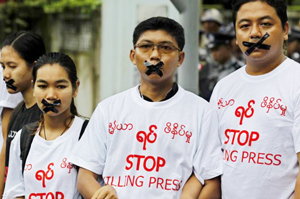
These hopes of Obama and Hillary are now reportedly dwindling because the military-backed government of Gen Thein Sein has cracked down on the press. The parliament of Myanmar is also in the process of making a law to impose restrictions on freedom of religion.
Meanwhile, Nobel laureate Aung San Suu Kyi is still barred from contesting the presidential election in 2015. She was, however, allowed to contest parliamentary polls in 2012 to become a member of parliament.
It is true that the Myanmar government released hundreds of political prisoners conditionally and permitted holding of election to parliament. But it did not change constitutional provision that restricts Suu Kyi to contest the presidential elections. This is a shame for the Myanmar government. Members of the National League for Democracy party of Suu Kyi have started a signature campaign to file a petition for the removal of veto power that allows the military to change the Constitution.
In 2012, Aung San Suu Kyi addressed a joint session of both Houses of the British parliament. She was decorated with Congressional Gold Medal by both Houses of the US Congress. A reception was given to Suu Kyi by the Norwegian Nobel Peace Committee. Amnesty International gave her the award of 'Ambassador of Conscience'. As such, the government and people of Myanmar should have been proud of Suu Kyi and restrictions on her should have been lifted by now. The way the Myanmar government is treating Suu Kyi indicates that it is not willing to surrender state power to a civilian administration. In the 664-member Myanmar parliament, the Armed Forces occupy a quarter of seats and hold key ministerial posts under the Constitution.
The human rights situation has become worst since Obama visited Myanmar. Rohingya Muslims, in particular, who have been living there for generations, have been stripped of their citizenship by the Gen Ne Win government. The 1982 citizenship law does not recognise Rohingyas as citizens of Myanmar. The military administration holds the firm belief that the Rohingyas do not exist and they are Bengalis who had migrated from Bangladesh. But the fact remains that Rohingyas are settled in mostly Rakhine state of Myanmar for centuries.
The plight of Rohingya Muslims is deplorable. They are a long-persecuted minority community in Myanmar. Since sectarian violence swept the country in 2012 when security forces and Rakhine Buddhists reportedly attacked Du Char Yar Tan village in northern Rakhaine state killing a number of Rohingya Muslims, the government of Gen Sein flatly denied all the reports of atrocities there. But UN High Commissioner for Human Rights Navi Pillay said there were credible reports of atrocities.
In 2012, an appeal was made by the United Nations to Myanmar to grant minority citizenship to Rohingyas. That too was turned down by the Myanmar government. According to an exhaustive report in the Washington Post on July 07, "the situation is most dire in Burma's western reaches, where more than 100,000 Rohingya Muslims are living as virtual prisoners, with little access to health care and food. The fast-deteriorating conditions prompted Tomas Ojea Quintana, a former United Nations special rapporteur for human rights, to say in April that there is an element of genocide in the Rohingyas' plight".
As a result of persecution, many Rohingya Muslims took shelter in Bangladesh, India and Thailand while many Rohingyas drowned while travelling in ferry boats. A large number of Rohingya Muslims have been living in Bangladesh as refugees since 1992.
Members of the international community, particularly the ASEAN member-states, should pursue Myanmar to repatriate Rohingya Muslim refugees and resettle them where they belong. If no action is forthcoming, it is suggested that the ASEAN should consider expelling Myanmar from its membership.
It is not only Muslims who are being persecuted in Myanmar, but the members of the Christian community in Kachine state are also being repressed. There are frequent clashes between the military and armed ethnic Kachins. A ceasefire in Kachin state did not last. As reported, Myanmar's security forces destroyed churches and many villages.
According to the Washington Post, President Obama is due to visit Myanmar to attend a regional conference in November this year. It is likely that the US President would press for democratic reforms and improvement of human rights situation and granting of citizenship to all the minority communities in Myanmar.
Joseph Crowley of the Democratic Party, who is co-chair of the Bangladesh caucus in the House of Representatives, has reportedly introduced a bill to link additional aid to Myanmar's compliance with human rights reforms and rule of law strictly. The Ambassador of Bangladesh to the US should pursue Congressman Joseph Crowley to address the issue of Rohingya Muslims, who are now refugees in Bangladesh, and press for their repatriation to Myanmar and resettlement there with due respect.
The writer is a retired diplomat from Bangladesh.
amjad.21@gmail.com