
Reserves deplete as BB feeds dollar-hungry banks
Imports squeeze for LC constraints
JUBAIR HASAN | Saturday, 7 October 2023
Dollar-hungry commercial banks continue banking on drip-feed from the central bank amid the weakening of Bangladesh's foreign-exchange reserves while imports squeeze for LC constraints, sources say.  Slowing remittance and export incomes add up to the pressures on reserves that dropped far below the IMF-set bottom line in its lending tags.
The country's falling forex reserves bear further pressure for such continuous feeding of the US currency by the Bangladesh Bank (BB) to the banks-in what remains a riddle to some bankers and economists.
Shortly after the Russia-Ukraine war broke out, Bangladesh came under immense pressure so far as its forex reserves are concerned from early last fiscal year (FY'23) because of a quick fall in forex holding with the commercial banks in the wake of significant rise in import costs globally and less-than-expected levels of earnings from remittance and export receivables.
Since then, the central bank, as part of its market intervention, has intensified the sale of the greenback from its reserves to the banks to help them meet their foreign-currency obligations, sources at the BB said.
But, over the last several months, the US dollar holding by the commercial banks continues rising thanks to various greenback-saving moves by the BB. Despite the surge, the sale of dollars from the reserves is not being controlled.
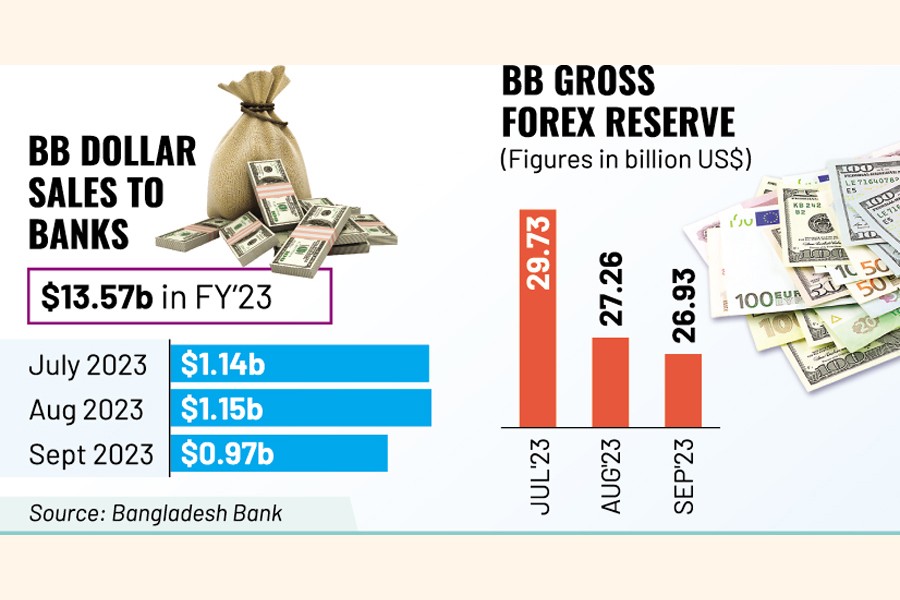
According to BB statistics, the central bank sold a record amount of US$13.57 billion to the commercial banks helping them to meet their overseas transactions amid the forex crunch in FY'23.
But the upward trend in dollar sales continues in this ongoing fiscal (FY'24) while the volume of monthly dollar sales by the BB in July, August and September were recorded at $1.14 billion, $1.15 and 0.97 billion respectively, the data showed.
Seeking anonymity, a BB official says the dollar sale from the forex reserves by the central bank continues rising because of the growing demand from the commercial banks.
The BB had sold the American currency amounting to less than a billion a month to the banks since February last but it soared to over a billion-mark from the start of this financial year.
About the September figure of $0.97 billion, the central banker says there were two government holidays that month in addition of the weekly holidays.
"So, the sale did not take place on those days. That's why the September dollar-sale count was less than a billion. Otherwise, it could go past August figure," the official says.
He says the growing sale puts immense pressure on the reserves, which are falling fast.
According to the BB data, the gross foreign-currency reserves amounted to $29.73 billion at the end of July. It declined to $27.26 billion in August and stood further down at $26.93 at the end of September.
By a latest IMF count as part of a review of its loan terms, the reserves stood at $21.06 billion as of October 4.
Contacted for his view, professor at the department of Economics of East West University AK Enamul Haque said the volume of imports went down significantly while the amount of interest payments didn't increase much.
"Then, why the reserve is falling down too fast! That I don't understand at all," he wonders.
The Economics professor fears the whole economy could collapse if the costly dollars were only being used to stabilise the exchange rate.
Central bankers are saying that the BB has been selling dollars to meet foreign- currency obligations of the banks for import of foodstuffs, chemicals and petroleum products, he mentions.
The eminent economist suggests that the central bank give them incentives in local currency instead of dollar.
"Are we indirectly helping capital flight? This needs to be addressed seriously. Otherwise, the economy will be in serious trouble that we don't want."
The professor voices a note of caution: "Under such situation, we need to focus more on increasing the supply instead of relying on restrictions because imposition of embargo could fuel up forex flight."
jubairfe1980@gmail.com