
Restoring canals to fix water woes
Atiqul Kabir Tuhin | Thursday, 19 March 2026
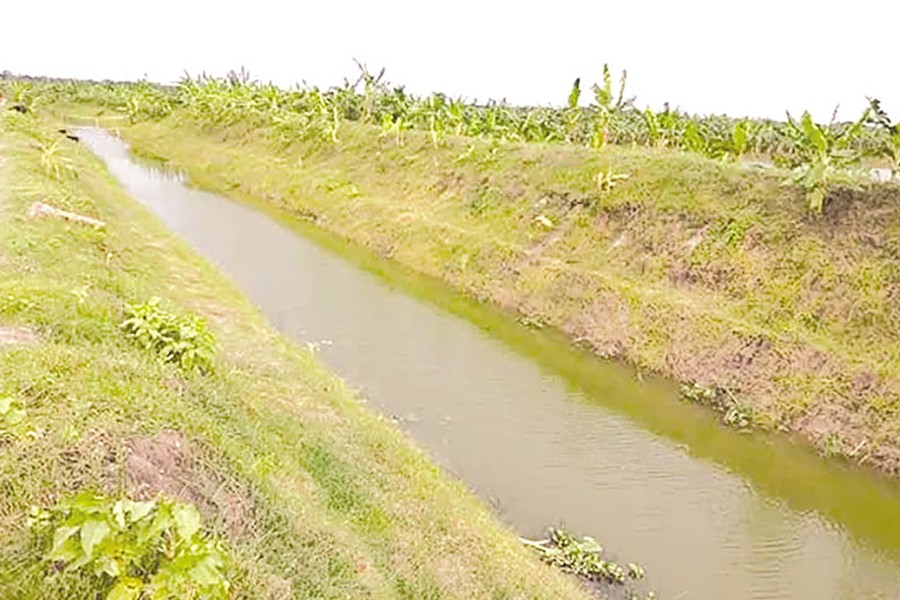
For Bangladesh, rivers and canals are as vital as veins are to the human body. The country is uniquely blessed with a vast network of waterways that crisscross the land, sustaining its life, agriculture and economy. Today, this intricate system is in grave peril due to decades of neglect. Many canals and rivers are already dead, while those that still flow face dire threats from pollution, siltation and encroachment.
The consequences of this neglect are far-reaching. In a country that proudly identifies itself as riverine, the degradation of rivers and canals has severely disrupted the natural water management system. For centuries, these waterways acted as natural drainage channels, irrigation sources and flood buffers. Their decline has forced increasing reliance on groundwater for agriculture, leading to a steady and alarming depletion of aquifers in many regions. This raises serious concerns about long-term water security, particularly in the face of climate change and erratic rainfall patterns.
At the same time, the disappearance of canals has intensified waterlogging across both urban and rural areas. Even moderate rainfall now inundates streets in Dhaka and other cities, while low-lying regions suffer frequent and prolonged flooding. What were once self-regulating natural systems have been replaced by costly and often inadequate artificial solutions.
Against this backdrop, the recent launch of a nationwide canal restoration programme by Prime Minister Tarique Rahman offers a glimmer of hope. The fact that the Prime Minister personally took part in re-excavation at Sahapara Canal in Dinajpur underscores the urgency and importance of the initiative. The launch — coordinated with simultaneous excavation efforts led by ministers and lawmakers in 54 districts — marks the first phase of the implementation of a major election pledge made by BNP to restore 20,000 km of rivers and canals across the country.
Earlier, the Ministry of Water Resources undertook a technical assistant project, titled, ‘Identification and Classification of Canals of Bangladesh and Preparation of a Geoinformatics Database’, worth Tk315.7 million as approved by the Planning Commission (PC) to classify canals and create a geo-informatics (GIS) database for the purpose. The project is to be implemented by the Water Development Board (BWDB). The Agriculture, Water Resources and the Rural Institutions Division of the Planning Commission will be extending the required support for the work. The digital database containing information on both existing and lost waterways would enable the government to bring all rivers and canals under a unified management framework.
The benefits of restoring rivers and canals are immense, both economically and ecologically. Reviving these natural waterways would improve drainage, reduce waterlogging, enhance agricultural productivity and restore ecological balance. A freely flowing canal network can serve a dual purpose—acting as a drainage system during the monsoon while also functioning as a reservoir to store water for the dry season. Redirecting the agricultural burden back to surface water would strengthen rural water management and reduce excessive dependence on groundwater. Healthy rivers also act as natural buffers against floods, absorbing excess water during heavy rains and releasing it gradually, while sustaining biodiversity, fisheries and livelihoods. Better use of stored surface water could significantly improve irrigation, create employment opportunities in rural areas and, crucially, help arrest the alarming depletion of the water table in northern districts.
However, restoration efforts must be accompanied by strict measures to prevent pollution. Ironically, in many areas rivers and canals are treated as convenient dumping grounds for domestic and industrial waste. The plight of the River Buriganga is a glaring example. Once the lifeline of Dhaka, it has been reduced to a heavily polluted channel, choked with industrial effluents, plastics, medical waste and untreated sewage. The relocation of tanneries from Hazaribagh to Savar was intended to alleviate this burden. Instead, pollution has effectively been transferred to the Dhaleswari River, where untreated wastewater continues to be discharged due to the inefficiency of the Central Effluent Treatment Plant. Therefore it needs to be ensured that all industries install and properly operate effluent treatment plants.
Beyond industrial waste, flow of untreated sewage into the waterbodies poses another serious threat. In and around Dhaka, large volumes of human waste are discharged directly into rivers and canals due to inadequate sewage treatment infrastructure. Expanding and modernising sewage treatment facilities must therefore be a central component of any long-term solution.
Encroachment, meanwhile, remains one of the most persistent and politically sensitive threats to the survival of rivers and canals. Across the country, waterways have been unlawfully occupied, narrowed or even erased to make way for settlements, factories and commercial establishments. If the ongoing restoration drive is to yield lasting results, the government must ensure that reclaimed canals are protected from falling back into the same cycle of neglect and renewed encroachment by influential quarters.
Ultimately, however, the success of this ambitious initiative will require more than government action. The state can initiate excavation, provide technical expertise and enforce regulations, but long-term sustainability hinges on active public participation in their upkeep. Restoring and protecting the waterbodies is a shared responsibility; only through an effective partnership between the state and the community can we restore these vital arteries to their rightful place and deliver lasting benefits.
aktuhin.fexpress@gmail.com