
Rising from the grave
Abdul Hannan | Saturday, 1 April 2017
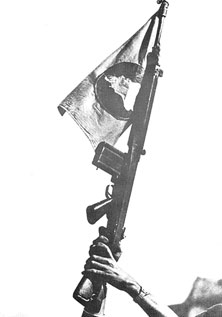
Pakistan has repeatedly denied of genocide in the then East Pakistan. They may have read my story of blood curdling horror and atrocity perpetrated by the invading Pakistan army 45 years ago on April 3,1971, the most dreaded day in my life. It continues to send a chilling shiver of panic and emptiness down my spine. It is a story of insane orgy of mayhem and massacre of a sleeping hamlet. It is a poignant and sordid narrative of my personal tragedy of how on this day my life, like that of many others, was shattered to pieces for ever as I was caught unawares by a gruesome and grisly terror of death and destruction unleashed by the occupation Pakistan army on the unsuspecting innocent civilian population in a neighbourhood of Dhaka city across the Buriganga river. Ever since it has been known as the infamous Zinzira massacre. It is a lurid account of brazen ethnic cleansing, a ruthless execution of racial hatred and a campaign to exterminate Bengalis. It is a story of slaughter of the innocent.
GREAT EXPECTATION: December 1970 was the happiest moment in my life in particular and for the Bengalees in general. I had just returned to my work in Islamabad after nine months' higher training in West Germany and there was a happy reunion with my wife and children. Bengalees had won a landslide victory in the national election held in December winning 67 seats out of 69 earmarked for East Pakistan in the constituent National Assembly. There was euphoria among Bengalee community in Islamabad. The state power and authority were at last within the grasp of East Pakistan. There was great expectation that Bangabandhu Sheikh Mujibur Rahman would soon be sworn in as prime minister. The end of exploitation and tyranny, deprivation of the Bengalees and discrimination against them was within sight at last.
BACKGROUND OF POPULAR UPRISING AND STIRRING OF INDEPENDENCE: But soon the joy evaporated and was turned into despair. President General Yahya, in collusion with the military clique and conspiratorial Z A Bhutto, the PPP leader in West Pakistan in a nationwide broadcast on March 01 postponed the March 03 constituent Assembly session sine die. There was a groundswell of widespread resentment among the people. Disillusioned, the Bengalee took to the streets in angry protests. Bangabandhu declared a non-violent non-cooperation movement against the Pakistan authorities and stopped paying taxes to the Centre. There were sporadic clashes with the army which let loose repressions and killing of innocent demonstrators. Many labourers in Chittagong port were killed by the army when they refused to unload arms and ammunition from the ship Swat. There were ominous signs - arms and troops movement from West Pakistan. Admiral Ahsan, governor in East Pakistan, and General Shahibzada Yakub Khan, known to be doves sympathetic to the cause of Bengalee, were replaced by General Tikka Khan known as a butcher of Beluchistan and General Niazi nicknamed Tiger Niazi for his animal ferocity. The chief justice BA Siddiqi refused to administer oath to governor Tikka Khan. Bangabandhu at a mammoth public meeting on March 07, just stopped short of declaring independence of Bangladesh. He made a clarion call to the Bengalee nation to be prepared to make supreme sacrifice for the liberation of Bangladesh. It was a full blown rebellion and revolution in the offing. These were unmistakable stirrings of independence.
ESCAPE FROM PAKISTAN: Suddenly there was an air of distrust and suspicion among my colleagues and neighbours. These were writings on the wall. These were straws in the wind of a gathering storm. I told my wife that it was not a moment to wait and waver. It was a moment to take a hard decision to escape to freedom which was round the corner. I prayed for 10 days' casual leave on account of feigned serious illness of my old father.
On the appointed day of my departure as I was preparing to leave my house under lock and key. I saw my wife watering the vegetable garden at the backyard and the flowers at the front courtyard. As I was hurrying up, she gave a long lingering look behind at what she had built bit by bit over the years at her little home with care and fondness - the furniture, the curtains, the small woollen carpet she bought from Landikotal bordering Afghanistan, the Telefunkin television and the Bosh refrigerator which I brought from West Germany. A look of sadness and melancholy on her face was unmistakable
As we boarded the plane we saw rough and rugged-faced persons occupying the entire plane excepting 14 seats for five families. There was no mistaking that these were soldiers in civilian clothes. On arrival home I told my father about the troops' movement. He said he would duly make an arrangement to inform Bangabandhu. Meanwhile Yahya and Bhutto kept Bangabandhu and other Awami League leaders engaged in a dialogue negotiating the terms of the six-point demand with no result. It was clear the dialogue was a mere cover to gain time for army crackdown at an appropriate time. The Pakistani treachery and betrayal of army crackdown on the dark night of March 25 are now history.
IN QUEST OF SECURITY: The Pakistani army was on a daily rampage of mid night knocks for shooting, plunder and rape in the city thereafter. People were leaving the city in panic and in quest of safety in the countryside and beyond the border. Soon our neighbourhood on the Elephant road looked deserted and empty. We were at our wits' end. Rumours were rife about an impending house to house search, killing and detention by the army assisted by the Beharis. Our village home in Saydabad, Kasba, Brahmanbaria, bordering India was a mud house and inadequate for living. My father decided to take shelter in the house of his Khan Bahadur friend in Faridpur where my father was a superintendent of police in 1949. On March 31 the entire family including my parents, my elder brother professor Momen of the Institute of Social Welfare, Dhaka University, and his wife and eight-year son Masud bin Momen, now Ambassador and permanent representative to the UN, and his two-month old daughter, my younger brother Hasnat Abdul Hte who was under order of posting in Patuakhali as ADC, my other younger brother Abdur Rashid, an architect, myself and my wife and our two 7 and 3 years old sons and my three sisters left our Elephant Road house. My mother was giving the last minute feed to the chickens and the cow in the cowshed. Tears rolled down her eyes. It was a heart-rending scene.
As we were crossing the Buriganga river by a boat, my mother who had high blood pressure, suddenly fell very ill. We decided to stay put in Zinzira until my mother recovered. We took shelter sharing a wide veranda with other refugees in a two-storied building. We were served khichury with vegetables from the gruel kitchen. At midnight I heard mother sobbing. No wonder she was heart broken at the turn of events which reduced us to refugees and homeless. We continued to spend three nights at Zinzira as mother was not recovering.
ZINZIRA KILLING FIELDS: At the dawn of April 03 we were awakened from sleep by three loud mortal shell bursts in quick succession in our vicinity - a war tactic of flushing out the enemies from hideouts. Everybody ran helter and skelter in panic. I took my elder son Tinku in my arms and my wife held our younger son Rinku in her one arm and a bag she was carrying in her other arm and started running towards the direction of south as the shell fire was coming from the north. No sooner had we covered some distance towards the south than we heard the sound of shooting from the south. We then started running towards the east but soon found people running from the east attacked by the Pakistan Army. We were trapped. Now we were running towards west. My wife was lagging behind in the race and fell down on the ground under the weight of our son and the bag she was carrying. I pleaded with her repeatedly to throw away the bag and she reluctantly threw it away at last. We became short of breath for constantly running and wanted to take shelter in a mosque at a short distance. But it was full to the brim. There was a graveyard behind the mosque and we found people lying in the graves to hide their heads from stray bullets. There were a few vacant graves covered with creepers and leaves. I hesitated as there might be poisonous snakes and insects in the graves. I had no choice. We were between the devil and the deep sea. The Pakistan army was more ruthless and cruel than snakes and insects. We cleared the grave of grass and leaf and lay down there. After about half an hour the sound of gunshots stopped. People were rising from the graves one after another and gathering in front of the mosque. It was surreal. We too followed them. An elderly person pointing at my wife asked me if she was my wife. I nodded my head. He said her saree was wet with mud and clay and she needed to change. He asked me to follow him to his house nearby. His wife gave my wife a saree to change. He also gave me a lungee to change my pant as I looked like a student. He was worried about our safety. He sent for a boat to take us to Dhaka.
We crossed the Buriganga by a small boat, reached Noabganj via Kamrangir char. We took a rikshaw and reached Elephant Road in the afternoon and I went to our neighbour for the key of our house. I passed sleepless night anxious to know the fate of my parents and brothers and sisters.
Early next morning the entire family returned home miraculously unharmed. Abba narrated how he ran some distance alone and took shelter in an abandoned hut. The army aimed guns at him twice. He said, 'la ilaha illallah'. They spared him. After the army's Zinzira operation was over at noon, Abba went out in search of us. The village was littered with dead bodies. In the evening he went back to the house where we had taken shelter. There he met our entire family. Momin Bhai narrated how he and others took shelter in a mosque nearby as mother could not run. When the army entered the mosque in search of young people, Momin Bhai, Hasnat and Rashid hid themselves behind the row of women standing at the rear. Army picked up some young persons and left.
RANK GENOCIDE: This is how the entire family was saved from the jaws of death. An estimasted 3000 men and women and children perished in the cold-blooded murder and massacre of the innocent in Zinzira, reminiscent of the Mylai massacre in Vietnam, slaughter of Bosnian Muslims in seventies, Cambodian killing fields and Rawandan genocide. Pakistan can atone for its sins by not denying its guilt but admitting it and extending unqualified apology to the Bangladeshi bereaved families.
JOINING THE RANKS OF FREEDOM FIGHTERS: In May, Hasnat went to join his duties in Patuakhali at the prodding of chief secretary Shafiul Azam. Abba recited from the holy Quran the whole day in prayer for his safety. Shafiul Azam's brother-in-law, SDO of Sirajganj who fled the Pakistan army and surrendered at his behest, was killed by the Pakistan army. The DC Abdul Awal had suffered bullet wounds by the army. Rashid disappeared to join the ranks of freedom fighters. My other brother Dr Mobin left his job in Hammersmith Hospital in London and founded, along with Zafrullah Chowdhury, the field hospital of Melaghar under Major Khaled Mosharraf. My brother-in-law Captain Khurshid uddin, a co-accused with Bangabandhu in the Agartala conspiracy case, melted in the crowd of refugees and later joined the war as a freedom fighter. My mother was restless. I kept changing my address and moved from place to place in the city to evade arrest.
PERSONAL TRAGEDY: It is true we all returned safe from Zinzira. But my life was not the same again. My wife gradually became silent. There was a vacant look on her face. Doctors treating her at home and abroad said she suffered the irreversible loss of her memory stunned by the trauma of shock and awe of Army assault in Zinzira. I however still strongly believe that she might have thrown away fragments of her identity when she parted away from her bag containing her little world of precious possession of her wedding saree, wedding photo album and eight tolas of gold ornaments which I managed to buy her after a wait of eight years of our marriage. She had since then often withered and languished in a miserable existence of self-inflicted loneliness and isolation for the rest of her life until she died a few years ago. Shelley, my wife, indeed paid a heavy price for freedom. Shelly, my wife, is one of the many unknown heroes of the Liberation War.
As for me, I am carrying the scar ever since and living a dull, drab and cheerless life without meaning and colour.
Abdul Hannan is a columnist and a former diplomat. hannanabd@gmail.com