
Russia sanctions not working, says an Italian leader
Ukraine's N plant partly goes offline amid fighting
Monday, 5 September 2022
CERNOBBIO, Sept 04 (AP/AFP): The leader of Italy's far-right League party, Matteo Salvini, has sparked debate by saying that the unprecedented sanctions the West had imposed on Russia over the Ukraine invasion weren't working.
"Several months have passed and people are paying two, three, even four times more for their bills," he told Rtl radio. "And after seven months, the war continues and Russian Federation coffers are filling with money.
"Are the sanctions working? No. Today, those who have been sanctioned are winners and those who put the sanctions in place are on their knees," he tweeted the day earlier.
"It's evident that someone in Europe has made a bad calculation. It is essential to rethink the strategy to save jobs and businesses in Italy," he said.
Skyrocketing energy prices since the start of the war in Ukraine have wreaked economic pain on countries in the European Union which before the war had been reliant on Russia for a large chunk of its gas supplies.
Following Salvini's comments, Enrico Letta, leader of the Democratic Party and one of his main adversaries ahead of parliamentary elections on September 25 retorted on Twitter: "I think (Russian President Vladimir) Putin couldn't have said it better."
The leaders of Italy's main parties were due to speak later on Sunday at a debate.
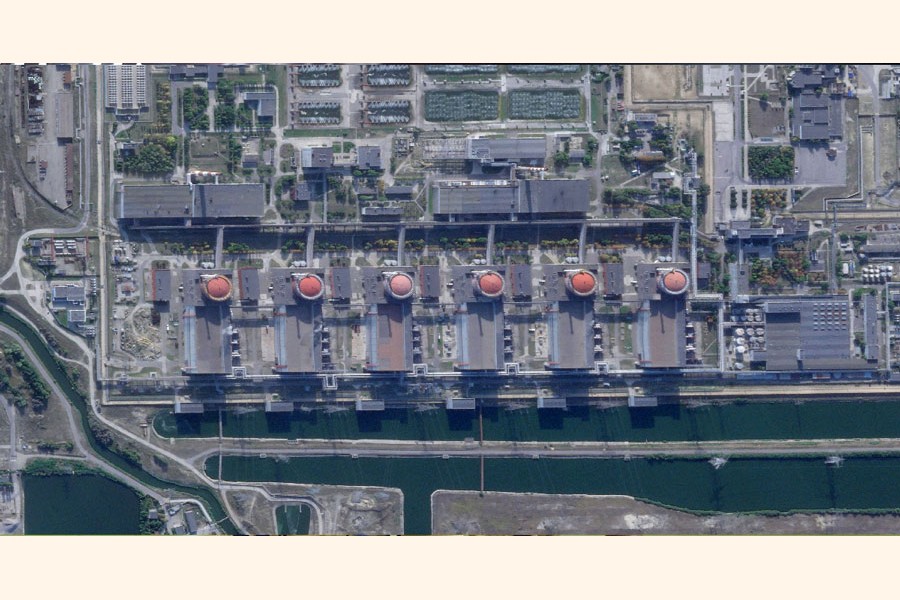
The head of the U.N. nuclear watchdog said Saturday that the Russian-controlled Zaporizhzhia nuclear plant in Ukraine was disconnected to its last external power line but was still able to run electricity through a reserve line amid sustained shelling in the area.
International Atomic Energy Agency Director-General Rafael Grossi said in a statement that the agency's experts, who arrived at Zaporizhzhia on Thursday, were told by senior Ukrainian staff that the fourth and last operational line was down. The three others were lost earlier during the conflict.
But the IAEA experts learned that the reserve line linking the facility to a nearby thermal power plant was delivering the electricity the plant generates to the external grid, the statement said. The same reserve line can also provide backup power to the plant if needed, it added.
"We already have a better understanding of the functionality of the reserve power line in connecting the facility to the grid," Grossi said. "This is crucial information in assessing the overall situation there."
In addition, the plant's management informed the IAEA that one reactor was disconnected Saturday afternoon because of grid restrictions. Another reactor is still operating and producing electricity both for cooling and other essential safety functions at the site and for households, factories and others through the grid, the statement said.
The Zaporizhzhia facility, which is Europe's largest nuclear plant, has been held by Russian forces since early March, but its Ukrainian staff are continuing to operate it.
The Russian-appointed city administration in Enerhodar, where the Zaporizhzhia plant is located, blamed an alleged Ukrainian shelling attack on Saturday morning for destroying a key power line.
"The provision of electricity to the territories controlled by Ukraine has been suspended due to technical difficulties," the municipal administration said in a post on its official Telegram channel. It wasn't clear whether electricity from the plant was still reaching Russian-held areas.
Vladimir Rogov, a member of the Kremlin-appointed regional administration said on Telegram that a shell had struck an area between two reactors. His claims couldn't be immediately verified.
Over the past several weeks, Ukraine and Russia have traded blame over shelling at and near the plant, while also accusing each other of attempts to derail the visit by IAEA experts, whose mission is meant to help secure the site. Grossi said their presence at the site is "a game changer."