
Sachin Karta—a pearl inside an oyster
Zeenat Khan | Saturday, 15 August 2015
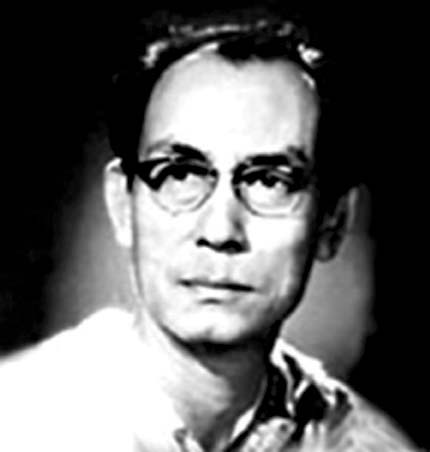
Who hasn't heard these unforgettable lyrics 'O prem Jamunai hoito keu dhyeu dilo dhyeu dilore/Akul hiya dukul bujhi bhanglore' sung by Kumar Sachin Dev Burman? In this particular song, every word and its overwhelming sensation touch the soul. The words and every notation of the song were composed with a new and intense faith in love. The song is deeply imbued with Bengali Romanticism and traces the romantic ideals and the heavenly joy of being in love.
Like many of SD Burman songs, this passionate song reveals the feeling of someone about to be overpowered by love, to be swept away as in a tidal wave of feelings. The metaphorical river Jamuna's banks are about to be breached by the sudden onslaught of passionate love. Just as the river is awakened by its waves, as the burning lamp is embraced by the flying insects diving into oblivion, the heart of the beloved is all aflutter, soon to be awakened with an incredible feeling of bliss. To a mind in romance, the reference to the ripples in the river will undoubtedly open the heart's door that eventually leads to the soul.
SD Burman's Bengali songs are dominated by varied repertoire of tunes. Their mood, angst and passion are usually bathed in melancholy. Sachin's heart piercing Bengali songs are heavily influenced and nurtured by the climate of East Bengal (now Bangladesh).
With some of his songs the literal meaning is hard to establish because the meanings are allusive, not definitive. Sachin's most famous song, 'Shonogo dakhino haawaa prem korechi ami/ Legeche chokhete nesha dik bhulechi ami', is a very modern song synthesized with a folk tune. Unless one has an attentive ear for such dissimilarities - it is difficult to make out the mixture. In this number, the lover asks the southern wind to listen: 'I am in love'. He is lost; his eyes are full of splendour and intoxication. His/her hidden thirst increases, and is also excited by love. This feeling is in tune with the seasons (barsha, sharat, hemanta, basanta). The lover asks the powerful wind to listen: 'I have lost all directions, since I am in love'.
How about the melodious song 'Bhalo lage biroho boro bhalo lage/Birohe shohagini rohe moner ghorete'? In this song the universal theme of love is not always there, and that's when we feel longing. It seems separation is welcome to the singer/lover as it strengthens love. Rather than being disheartened by the distance, the lover is animated, and loves even more. Sadness approaches with the colour of death, but the lover transforms it into the colours of spring. In this personification of love and longing, Sachin mixes classical tune with folk tune and the combination personalises the separation to an extreme height that only a master musician is capable of doing.
Two other of his loved folk songs with ragas - Mano dilona bondhu, mano nilo je shudhu/Ami kiniye thaki and Tumi ar nei she tumi are delightful reminder of love, a central theme in most of his Bengali songs.
In some of his other Bengali songs, Burman had changed his style by uttering each word individually and by changing the verses from mukhda to antara in the classical Hindustani music style. One example would be Barne gandhe chhande gitite, and in this specific song the immortal lines Mukta jemon shuktir buke temni amate tumi/Amar praner premer bindi tumi shudhu tumi, has brought out the melody by this musical genius. Other extraordinary Hindi songs such as Sun mere bandhure, and Jaane kya tuney kahi, the enchanting melodies of Burman reverberate in the hearts of music lovers even forty years after his death.
Clad in his signature dhoti and kurta, the great composer's creative and modern outlook to music changed the contours of sub-continental Indian music. A musical genius, he continues to mesmerise us with his melancholy voice, with a rendition of folk-like Bengali songs as well as Hindi film songs.
Sachin Dev Burman, affectionately called Sachin Karta, was born on October 01, 1906 in British India. He was the youngest of nine siblings in a royal family of Tripura. The Tripura royal family at the time was great connoisseurs of art and culture. His father, Nabadwipchandra Dev Burman, a well-known skilled sitarist and dhrupad singer, was his first teacher. His mother, Nirupama grew up in the artistic atmosphere of the royal family where she was well trained in Manipuri music, song and dances. When Sachin was young, the family moved to Comilla in East Bengal (now Bangladesh).
Later, Burman received training in classical music from Ustad Badal Khan as well as Bhishmadev Chattopadhyay. His training in classical music gave him a definitive foundation for his later compositions. Burman started his music career as a folk singer and light classical musician for Calcutta radio station in 1932.The mysticism of folk and local village songs had a very deep impact on him.
His famous early folk compositions were often swayed by his huge repertoire of folk tunes from 'Bhatiyali' or the boat songs, the Sari and Dhamail traditions of the North East. His Bhatiyali songs are the songs of love, the earth and the rivers of East Bengal.
His music attracted famous poet and composer Kazi Nazrul Islam and the two maintained a friendly relationship.
Later Burman moved to Bombay and started composing for films. His first recorded song was for Tinkari Chakrabortay's Senjher Pidim in 1935. His compositions have been sung by famous names like Lata Mangeshaker, Mohammad Rafi, Asha Bhosle, Talat Mahmood, Geeta Dutt and Kishore Kumar.
Burman was a music director from 1939 until his death. In most of his compositions, he used the bansari (flute) and often mixed Indian classical ragas with Western music. This experimentation proved to be very fruitful and redefined the way film songs were composed. SD Burman also incorporated the sounds of dance into his music.
From the 1930s to the 1970s his music achieved the status of classics of that time. According to the Wikipedia, he went into a coma soon after recording the song Badi sooni sooni sung by Kishore Kumar for the film 'Mili'. Burman died on October 31, 1975 in Bombay.
The roots of SD Burman music are profound, and appeal to the contemporary mind and soul without losing any charm and resonance. The emotional energy in the Burman songs is electrifying and there is always that wishful hope where one wants to surrender to his beloved. The mood in some of his popular songs is an unsatisfied one like Ki kori ami ki kori/Bone fagun buke agun. The constant yearning which leads to the unknown, and the uncertainty whether love would reach its ultimate destiny makes Burman's unique songs stand apart from that of his contemporary composers and musicians.
A large number of SD Burman songs have stayed in the repertory as classic-songs. The classic oldies that Burman sang in his powerful voice are timeless and earned him the sobriquet of 'The Inimitable Composer.'
Many years after him, we know, sing and love his music for their aesthetic appeal. His tunes remain unchanged and play an important role in our lives with a lot of relevance. We continue to nurture the prominent romantic theme in our hearts.
When we think of love, longing, and experience heartbreak, we often tend to lose ourselves in the haunting music of maestro SD Burman. We keep on believing, 'Like a pearl inside an oyster you reside in me/The touch of love in my heart that's you, only you.'
Zeeant Khan is a columnist
and a fiction writer.
zeenat.khan1983@gmail.com