
Say ‘no’ to child marriage
Md Harunur Rashid | Saturday, 4 July 2015
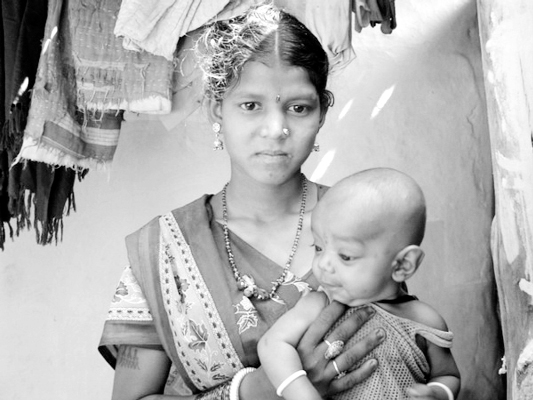
There has been much talk on child marriage for the last few years but, most probably, in vain. Of course, we should keep in mind child marriage is a violation of human right. Not only that it adversely affects education, health and wellbeing of girls and perpetuates cycles of poverty. It is very much upsetting that Bangladesh has one of the highest rates of child marriage in the world. Survey shows that in Bangladesh 64% of women currently aged 20-24 were married before the age of 18. This is despite the fact that the minimum legal age of marriage for females in Bangladesh is 18 years and 21 for males. This is a global phenomenon and a grave cause for concern.
Lack of education and poverty are strongly associated with levels of child marriage. Not only is this an additional driver, marriage under the age of 18 also deprives girls of their right to education. Many girls drop out of school after entering wedlock. Another adverse effect of child marriage is early pregnancy and childbirth. These can have detrimental and long-term health effects on girls whose bodies are not developed enough to give birth, and also increase health risks to the newborn.
Sadly, Bangladesh has the highest rate of child marriage in South Asia, a trend that is becoming a "national crisis" and needs to be addressed urgently. At the launch of a research paper in Dhaka recently, researchers said nearly 64% of Bangladeshis between the ages of 20-24 now had already been married before they reached 18 years.
According to Elena Ahmed, interim country director of Plan Bangladesh, education appears to be a strong deterrent because, as the study shows, 86% of women with no education were married before 18 years of age, compared to 26% of women who had completed secondary or higher education. Referring to the situation as a "national crisis" the UNFPA representative Argentina Pinto Matavel Piccin said it was necessary to fight to end the practice. The situation in Bangladesh is by far the worst among its South Asian neighbours. A study conducted by Plan's regional offices in partnership with the International Centre for Research on Women, revealed the rate of child marriage in India was 47% and 41% for Nepal, much lower than Bangladesh's 64%.
Unfortunately, marriage in Bangladesh has become an epidemic and requires the government to act on its promises to tackle the problem. Bangladesh has the fourth highest rate of child marriage in the world, behind Niger, Central African Republic and Chad. The UN children's agency, UNICEF, estimates that in 2011, of women aged between 20 and 24, 65% were married before the age of 18, and 29% before they turned 15. The present government promised to end child marriage of under-15s by 2021 and reduce by more than one-third the number of girls married between the ages of 15 and 18, with the ultimate goal of eliminating the practice by 2041. The legal age of marriage in Bangladesh is 18 for women and 21 for men.
But we are afraid of child marriage and it is unfortunate to attempt to revise the Child Marriage Restraint Act (CMRA). While welcoming tougher penalties for those who perform or allow child marriage, draft proposals issued last year include lowering the age of marriage for women to 16 and men to 18. Poverty was given as another main reason girls were married off at a young age, a situation compounded by the country's vulnerability to natural disasters. Girls are often seen as a financial burden on their families until they are married and live with their husbands, and are more likely than boys to be pulled out of school when money is tight, said the report.
In November last year, the UN passed a resolution urging all countries to enact and enforce laws to prevent child, early and forced marriage. The survey findings highlight just how prevalent child marriage is in Bangladesh and the changing trends. Practices of early marriage was more common in rural areas compared to urban areas with the poor and marginalized sections of society being the worst affected.
The safety of girls is also a major factor for child marriage. Therefore, steps have to be taken by government to improve girls' safety in communities, including through national and community-based child protection systems and mechanisms. Increased awareness of families, especially fathers, and communities is also required. The survey also highlighted the importance of involving men and boys as key agents to stop child marriage. Investing in girls' education was another major recommendation.
More importantly, early marriage causes girls to drop out of education and limits their opportunities for social interaction. Only 45 per cent of adolescent girls are enrolled in secondary school and even fewer attend regularly. Early marriage leads to early pregnancy. One-third of teenage girls aged 15 to 19 are mothers or are already pregnant. Adolescent mothers are more likely to suffer from birth-related complications than adult women.
Lastly, it can be a unique idea to involve the teachers' community and the Imams of the mosque to advertise the negative impact of it and the result of mature marriage in society because they guide the guardians and young generation simultaneously and because they have a special value in society and honoured by the respective society and its people.
Of late, the eradication of child marriage and parents' awareness is slowly occurring. However, the rates are still high with 66 per cent of girls being married before the age of 18. Therefore, we should consider the physical aspect of the girls' community and their maternal health. The parents should be educated immediately against the adverse impact of child marriage. It is not a one way approach; it should be a combined effort between government and respective guardians that can certainly decrease the menace of child marriage from the society.
The writer is Assistant Deputy Secretary, BKMEA and
independent researcher of economics and cultural affairs.
Email: harun.bkmea@gmail.com