
Shaping political socialisation in BD
Matiur Rahman | Sunday, 25 January 2026
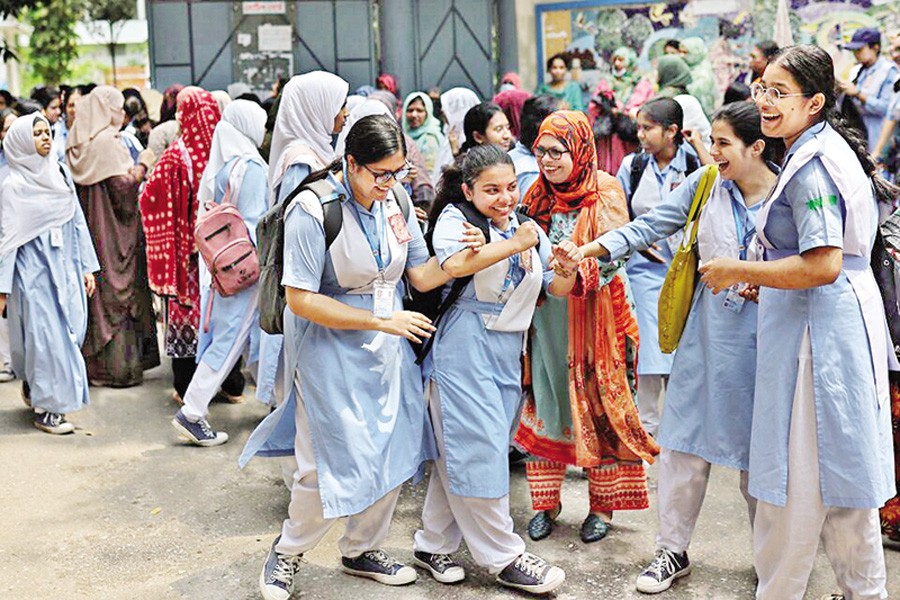
Political preferences, loyalties, and behaviours do not emerge spontaneously in Bangladesh. They are cultivated over the years through subtle and persistent influence of social institutions and interpersonal relationships. This process, widely studied as political socialisation, encompasses how individuals acquire political knowledge, internalise norms, and form enduring attitudes towards governance, authority, and civic responsibility. In Bangladesh, a country with a vibrant yet deeply polarised political culture, the family and the educational system are the primary arenas where political identities are shaped. Understanding their roles provides insights not only into voting behaviour but also into the sustenance, resilience, and limitations of the country's democratic culture.
Political socialisation is both an individual and a societal phenomenon. David Easton, a pioneer in political systems theory, argued that political systems survive and reproduce themselves as successive generations internalise the values, norms, and expectations necessary for participation. Easton conceptualised political socialisation as the process through which societal inputs-ranging from family teachings to media narratives-are filtered through individual perceptions to produce political orientations, including party affiliation, civic engagement, and trust in institutions. In Bangladesh, this process is nuanced by historical upheavals, socio-economic disparities, and intense party rivalries. Citizens do not simply acquire abstract political knowledge; they inherit narratives of struggle, loyalty, and moral obligation, which are embedded in family and school settings.
Families are arguably the most influential socialising agents in Bangladesh. Children encounter politics first within their households, where conversations, behaviours, and emotional responses signal what is important, who is trustworthy, and who is not. Families transmit political allegiance, often deeply entwined with historical memories. For instance, experiences related to the 1971 Liberation War, the rise of political dynasties, or periods of authoritarian rule inform intergenerational attitudes. These narratives are conveyed as stories imbued with emotion, shaping how children perceive political actors and the moral stakes of engagement.
Albert Bandura's social learning theory provides a framework to understand this phenomenon. Bandura argued that individuals learn behaviours and norms through observation and imitation of role models. In Bangladeshi households, children observe parental participation in political discourse, expressions of party loyalty, and reactions to political events. These behaviours transmit both cognitive knowledge-who holds power, what political mechanisms exist-and affective orientation-the pride, anger, or fear associated with political actors. Over time, these attitudes form the foundation of political identity, influencing not only voting patterns but also civic behaviours such as protest participation or political discussion.
However, familial political socialisation is neither uniform nor deterministic. Class, gender, religious affiliation, and geographic location mediate how political attitudes are transmitted. Urban middle-class families, with greater access to media and diverse political networks, may encourage critical reflection and debate, fostering nuanced political consciousness. Conversely, families in rural or economically marginalised settings may socialise children into pragmatic, survival-oriented political behaviours, emphasising loyalty to local power brokers, patronage networks, or established party hierarchies. Gender further complicates the picture. Traditional patriarchal norms often socialise boys toward visible political engagement while subtly discouraging girls from active participation, even as formal rights and opportunities may exist. Pierre Bourdieu's concept of habitus illuminates this dynamic: political dispositions are shaped by socially structured environments, producing patterns of thought and behaviour that are deeply internalised and often unconscious.
If families provide the emotional and identity-based foundation for political socialisation, schools serve as formalised arenas for knowledge acquisition and civic skill development. The education system in Bangladesh theoretically equips students with an understanding of constitutional principles, governance structures, and civic responsibilities. Textbooks in primary and secondary schools introduce concepts such as fundamental rights, the electoral system, and the responsibilities of citizenship.
Jean-Jacques Rousseau and John Dewey have long emphasised that schools are central to cultivating engaged citizens. Beyond teaching facts, schools are meant to model democratic principles: fair decision-making, debate, deliberation, and respect for diverse viewpoints. In this sense, schools are not merely sites for transmitting knowledge but are laboratories for political experience, where students learn how to navigate authority, negotiate disagreement, and develop a sense of civic agency.
Yet in practice, the political socialisation function of schools in Bangladesh is complex and at times contradictory. While curricula include civic education, classroom dynamics often reflect hierarchical norms and role learning. Teachers wield considerable influence; their political beliefs, pedagogical styles, and engagement with students shape how civic lessons are internalised. From the symbolic 'interactionist' perspective of George Herbert Mead, political self-concepts are constructed through social interaction. Students interpret authority, negotiate expectations, and internalise societal norms in day-to-day interactions, which often convey as much about power and citizenship as formal lessons do.
Complicating this dynamic is the entanglement of student politics with national party politics. University campuses and even some secondary schools host politically affiliated student organisations. While student activism can provide opportunities for leadership and civic engagement, it often fosters loyalty-driven, competitive, and confrontational political identities. Conflict theorists, including C. Wright Mills, would argue that such dynamics reproduce societal power inequalities, channeling political energies into competition for influence rather than deliberative citizenship. As a result, students may internalise partisan loyalties at an early age, learning to equate political identity with group affiliation rather than policy debate or civic reasoning.
Despite these challenges, schools also offer spaces for cultivating more reflective and participatory political attitudes. Debate clubs, cultural programmes, and community service initiatives provide avenues for students to exercise leadership, dialogue, and problem-solving skills. Paulo Freire's pedagogy of the oppressed is instructive here. Freire argued that education should be dialogical, linking knowledge with lived experience and encouraging critical consciousness. When students engage in problem-solving projects, debates, or social initiatives, they develop political skills that transcend partisan loyalties and enable a nuanced understanding of civic responsibilities. Such experiences can counterbalance more rigid forms of political instruction and lay the groundwork for active, deliberative citizenship.
The interaction between family and school socialisation is critical. When both institutions transmit consistent messages-whether about loyalty to authority, deference to tradition, or partisan allegiance-political identities tend to consolidate. When they diverge, individuals may experience cognitive dissonance, prompting reflective evaluation of inherited attitudes. A student raised in a strongly partisan household but exposed to critical, inquiry-based classroom environments may develop a more independent political perspective. Conversely, when both family and school reinforce hierarchical and loyalty-based orientations, political attitudes become entrenched and resistant to change.
Bangladesh's political environment amplifies the influence of family and school socialisation. Social identity theory, developed by Henri Tajfel and John Turner, explains this phenomenon. People derive part of their self-concept from group memberships. In Bangladesh, political parties function as social groups that provide identity, protection, and belonging. Early socialisation in families and schools shapes which groups are perceived as part of "us" and which are "them," laying the foundation for intergenerational continuity in political attitudes and voting patterns.
Media and digital technology intersect with these traditional agents of socialisation. In the contemporary context, television, social media, and online news shape political knowledge and perceptions. However, media consumption is often filtered through familial interpretation or constrained by school-based critical discussion, making the family and school central to understanding how political attitudes are processed. Misinformation, partisan framing, and selective exposure further interact with socialisation processes, reinforcing existing beliefs rather than fostering independent evaluation.
The patterns of political socialisation in Bangladesh have both positive and challenging implications. On the one hand, they have produced high levels of political engagement. Voter turnout rates, participation in rallies, and intense interest in politics demonstrate the enduring effectiveness of early socialisation. Citizens feel a sense of moral investment in political outcomes, reflecting a deeply internalised political consciousness. On the other hand, rigid and highly partisan socialisation can exacerbate polarisation. Early experiences of loyalty and identity-based politics may undermine deliberation, critical reflection, and trust in institutions. In addition, socialisation that is gendered, class-based, or regionally skewed can reinforce structural inequalities, limiting the inclusiveness of democratic participation. These dynamics suggest that democratic resilience in Bangladesh depends not just on electoral processes but on the quality and nature of political socialisation.
To strengthen democratic culture, both families and schools need to adapt to changing social realities. Families can foster intergenerational dialogue that emphasises critical thinking rather than uncritical loyalty. Parents and elders who encourage questioning, discussion, and debate create conditions for citizens capable of reflective judgment. Schools, meanwhile, must move beyond rote civic instruction towards practices that cultivate agency, deliberation, and respect for pluralism. Incorporating participatory projects, service learning, and debate-based curricula can equip students with practical skills for democratic engagement.
Political socialisation in Bangladesh is a complex and dynamic process, shaped by the interplay of families, schools, and broader societal structures. Drawing on theories from Easton, Bandura, Bourdieu, Mead, Freire, and Tajfel, we see that political identities are forged through both observation and reflection, emotional attachment and rational deliberation, inherited loyalty and institutional experience. Families imbue citizens with affective and identity-based orientations, while schools offer structured knowledge and civic skills. Together, they form the crucible in which Bangladesh's voters are shaped.
For democracy to flourish, attention must be paid not only to elections and formal institutions but also to these formative social spaces. By fostering critical, inclusive, and reflective political socialisation, Bangladesh can cultivate a generation of voters capable of informed choice, civic engagement, and constructive participation in public life. In a country where politics is historically charged and deeply personal, understanding the formative influence of families and schools is essential-not merely for explaining current voter behaviour, but for envisioning a more resilient and participatory democratic future.
Dr Matiur Rahman is a researcher and
development professional.
matiurrahman588@gmail.com