
Sheep farming elevates lot of Rajshahi low-income people
Sunday, 9 July 2023
RAJSHAHI, July 08 (BSS): Many of the marginalised households have improved their living conditions through rearing sheep in the region, including its vast Barind tract, during the last couple of years.
Abdul Mannan (53) of Mollapara village under Godagari upazila has become self-reliant through sheep farming.
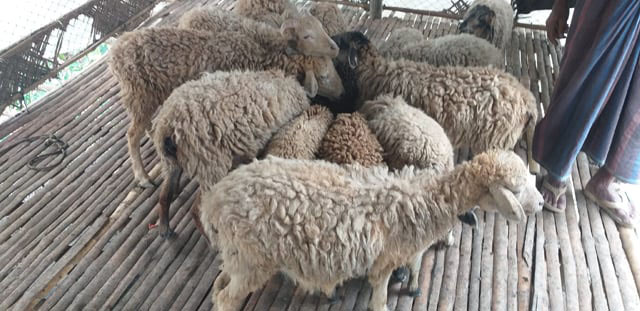
Out of curiosity, Mannan had procured two sheep from one of her neighbours around eight years back and started its rearing. Now, he has 26 sheep.
He along with many of his co-villagers was imparted a five-day training on intensive sheep farming by the nearby Demonstration Sheep Farm (DSF).
Mannan said the sheep farming has eradicated his poverty and enhanced dignity in the society. He gets money, meat and milk from it regularly. Habiba Khatun, wife of Abdul Kuddus, a farmer of Rajabari in Godagari upazila, has become an icon in the field of sheep farming.
Now, she is leading a very happy life with her family as she became very successful and self-reliant through rearing the sheep. She is also helping the women who want to grow sheep farms.
Anandi Saren, daughter of Mikhail Saren in Sundarpur village of Godagari upazila in Rajshahi, has attained success through efficiency in the micro-level venture.
After getting one sheep as donation on a voluntary basis in 2017, she enhanced the number to 15 at present by dint of her much attentiveness and devotion to the sheep rearing venture.
Mita Mormu (15), a student of class nine in Kakonhat Girls High School, has found the path of generating income through sheep farming.
She said sheep farming has a vital role in women empowerment and poverty reduction at the grassroots level. Many of the students have attained success through sheep farming, she added.
She said the single lamb was her lifeline for taking the poverty-prone family to a stable position. But her initial stage was not happy as many of her neighbors criticised the sheep farming initiative.
Mormu said the sheep farming has eradicated her poverty and enhanced her dignity in the society. She gets money, meat and milk from it regularly.
Like them, 125 ethnic minority households were given 145 sheep in Godagari, Tanore and Chapainawabganj Sadar upazilas since 2017 with the main thrust of facilitating them to continue their respective institutional learning through the sheep rearing income.
Jahangir Alam Khan, coordinator of Integrated Water Resource Manage-ment Project, said the incidence of child marriage among the ethnic minority girls is comparatively high because of their dropout from school due to financial constraint.
He said they have given sheep among the students so that they can improve their living and livelihood conditions through rearing.
Motivating and inspiring the landless, small and low-income people to attain their self-reliance through sheep farming is another motto of the initiative.
Many other people of Paba and Godagari upazilas have changed their socio- economic condition by rearing sheep commercially. They have been making handsome money.
On behalf of the 'Validation of Good Practices of On-farm Lamb Production System' project, 59 farmers were given 600 lambs besides imparting them with need-based training on how to rear those in the two upazilas.
The project intends to boost the supply of nutritious lamb meat with improving the living and livelihood condition of the marginal farmers through rearing lambs.
Prof Jalal Uddin Sarder of the Department of Veterinary and Animal Sciences at Rajshahi University (RU) said there is no protein-value difference between the meat of sheep and goat or cattle.