
Shifting away from collateral-based lending key to CMSME survival
Mutual Trust Bank MD Syed Mahbubur Rahman shows alternatives for transition
FE REPORT | Sunday, 28 June 2026
Bangladesh's cottage, micro, small and medium enterprises (CMSMEs) remain the backbone of Bangladesh's economy with a major contribution of nearly 30 per cent of GDP and employing around 85 per cent of the industrial workforce. Yet, despite their structural importance, the sector is facing mounting financial stress, slowing credit expansion, and rising loan defaults-stoking concern about its long-term growth trajectory.
As of May 31, 2026, private-sector credit growth is only 4.98 per cent. By December 31, 2025, less than 17 per cent of total bank loans had gone for the CMSME sector, far below the regulatory target of 25 percent. At the same time, the share of classified (non-performing) loans in CMSMEs has risen to 24.1 per cent. These figures show that the sector is struggling to survive rather than focus on sustainable growth.
Yet CMSMEs remain vital for Bangladesh's economy for the sector's contribution to the country's GDP or gross domestic product and employment. Over recent years, the combined effects of COVID-19, political instability, global conflicts, high inflation, and rising non-performing loans have weakened both the demand for and supply of credits. As a result, business expansion has slowed sharply.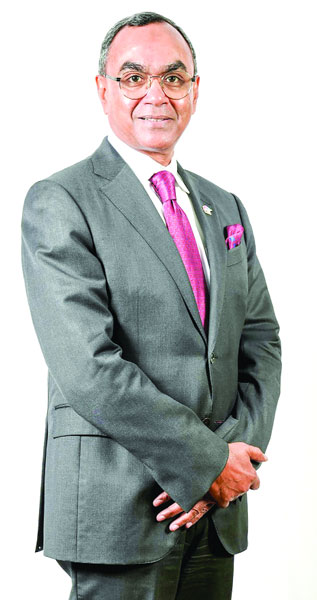 In an interview with The Financial Express, Syed Mahbubur Rahman, Managing Director of Mutual Trust Bank PLC (MTB), has said recent macroeconomic indicators clearly reflect the strain facing the sector, even as it continues to remain central to inclusive growth and employment generation.
Even so, Rahman expresses cautious optimism. Bangladesh Bank, commercial banks, and other financial institutions are working together through policy support, refinance schemes, and digital initiatives to revive activity and improve access to finance. As the economy stabilises, he says, the CMSME sector is expected to regain momentum.
Structural bottlenecks in CMSME financing: Nearly 95 per cent of businesses in Bangladesh fall under the CMSME category, yet a significant financing gap persists.
Rahman says the main challenge is the high cost of serving this segment. Many banks lack specialised infrastructure, tailored products, and digital delivery channels to make CMSME financing profitable. On the entrepreneurs' side, limited financial literacy, weak record-keeping, and insufficient collateral make credit assessment difficult.
He adds that rising non-performing loans have further constrained lending appetite, reinforcing reliance on traditional collateral-based credit models.
However, he believes this model is increasingly outdated. The future lies in cash flow-based lending, supported by digital-transaction data, automated credit scoring, QR-based payment, and customer-focused financial products. He also stresses that improving entrepreneurs' financial literacy is equally important.
In his view, shifting from collateral-based to cash flow-based financing is the key transformation needed for sustainable CMSME growth.
CMSMEs in trade and global markets: Rahman also has highlighted the challenges CMSMEs face in international trade. Many small importers struggle to open letters of credit (LCs) and access trade finance due to weak collateral positions and limited financial knowledge.
On the export side, CMSMEs often participate indirectly through large exporters, particularly in the garment sector, which limits their ability to build independent export credentials.
He also points to increasing competition from large corporate groups entering traditional CMSME markets and recent foreign -exchange volatility that disrupted trade-linked businesses.
Still, he notes progress as banks are now offering revolving credit facilities, working-capital support, and tailored trade-finance solutions. With the right financial products, advisory services, and digital trade platforms, trade finance can become a major growth driver for CMSMEs in Bangladesh.
MTB PLC's CMSME strategy: At MTB PLC, CMSME financing is a top priority, Rahman says.
He notes that the bank understands that every business has unique financial needs, especially in manufacturing and trade. That is why it offers solutions such as cash flow-based lending, specialised accounts, 24/7 cash management, automated loan processing, dedicated teams, and cluster development programmes.
He shares that 36 per cent of CMSME loans are collateral-free and based on cash flow, while 20 per cent support women entrepreneurs. Around 78 per cent of CMSME lending goes to cottage, micro, and small enterprises, and 53 per cent is invested in manufacturing.
His bank is also working with Bangladesh Bank to expand digital lending and entrepreneurship -development initiatives. By 2030, the bank aims to become a leader in CMSME banking through innovation, inclusion, and technology-driven financial services.
Breaking the collateral barrier: Collateral remains one of the biggest barriers to CMSME financing, Rahman says.
He points out that if banks rely only on collateral, many capable entrepreneurs will remain excluded.
The noted banker emphasises that cash flow-based lending offers a viable alternative. At MTB, this approach has allowed the bank to provide 36 per cent of CMSME loans without collateral, proving that it can be both inclusive and sustainable.
Rahman says term loans, which make up nearly 50 per cent of the CMSME portfolio, help businesses expand while managing repayment more effectively.
At the same time, he underscores the importance of improving financial literacy, documentation, and compliance among entrepreneurs to strengthen access to finance and long-term sustainability.
Women entrepreneurs and financial inclusion: Rahman notes that women entrepreneurs face disproportionate barriers in accessing finance due to limited collateral, small-scale operations, and weak financial records.
"The central bank's refinance schemes at a concessional interest rate at 5.0 per cent have helped improve access for women," he says.
At MTB, supporting women entrepreneurs is a strategic priority. Today, 20 per cent of its CMSME portfolio goes to women-led businesses, far above the industry average of 7.0-8.0 per cent.
"Inclusive financing strengthens not just businesses but also broader economic and social development."
Rahman says, "CMSMEs are central to employment , entrepreneurship , poverty reduction , and inclusive growth. Strengthening financial support for them is not just a banking priority - it is a national economic necessity."
Digital future of CMSME financing: The future of CMSME lending, according to Rahman, will be shaped by technology, data and the digital ecosystem.
He says traditional relationship manager-driven lending is costly and less scalable. Banks will increasingly rely on digital-data sources such as mobile-wallet transactions, e-commerce records, and merchant payment histories. Automated credit-scoring systems will make lending faster, more objective, and more inclusive.
Digital platforms and fintech partnerships will further expand access while reducing costs and improving risk assessment.
Globalisation, sustainability and policy support: The banker says CMSMEs must evolve to remain competitive on the global market by focusing on quality, compliance, innovation, and sustainability rather than price alone.
He stresses investment in certification, branding, technology, and skills development, along with stronger integration into global value chains.
On sustainability, he has highlighted the role of green finance in supporting renewable energy, energy efficiency, and waste-management solutions, while noting the need for greater awareness among entrepreneurs.
He also calls for coordinated policy support, including simplified taxation, improved regulatory frameworks, common facility centres, and fair competition policies to prevent market domination by large corporates.
High-potential sectors and future outlook: Key growth sectors include garment backward linkages, agro-processing, jute, leather, handicrafts, and tourism-related industries. These sectors will be central to employment generation, export diversification, and value addition as Bangladesh advances toward upper-middle-income status.
MTB PLC supports these promising sectors with specialised financial solutions for expansion, innovation and sustainability.
Rahman says CMSMEs will continue to play a defining role in the economy.
He observes that business is evolving rapidly with AI, digital transformation, sustainability, and stricter regulations, and CMSMEs that embrace these changes will lead the market.
By 2030, he adds, technology-driven enterprises with strong governance and eco-friendly practices will dominate.
CMSMEs will remain a powerful engine of growth, jobs, and inclusion. At MTB, he says, the bank is investing in digital and AI-driven solutions to build a phygital model-combining digital convenience with trusted physical banking. The future of CMSME banking will be defined not just by lending more but by creating sustainable value through innovation, inclusion, and long-term partnerships.
sajibur@gmail.com