
Should Bangladesh Bank be buying dollars right now?
Syed Abul Basher | Sunday, 12 October 2025
Not so long ago, just over a year, Bangladesh Bank (BB) was criticised for failing to meet the rising demand for US dollars. Foreign exchange reserves had fallen from a peak of about $48 billion to less than $20 billion, and panic about dollar shortages dominated headlines. In a striking reversal, BB is now doing the opposite: buying dollars from the market, or in effect removing excess dollars, in an effort to stabilise the exchange rate while rebuilding reserves.
Over the past three months alone, media reports suggest that BB has purchased around $2 billion, something unimaginable a year ago. Several forces lie behind this turnaround, but two stands out. First, the US dollar has weakened globally against a broad range of currencies and is expected to lose more ground. The current Trump administration has signalled its preference for a weaker dollar to support US manufacturing. Second, despite on-going domestic uncertainty, Bangladesh's dollar inflows through remittances and export earnings have been holding up well and showing a positive outlook. As of this writing, BB's reserves stood at $27.12 billion-this after clearing a backlog of overdue payments from earlier periods.
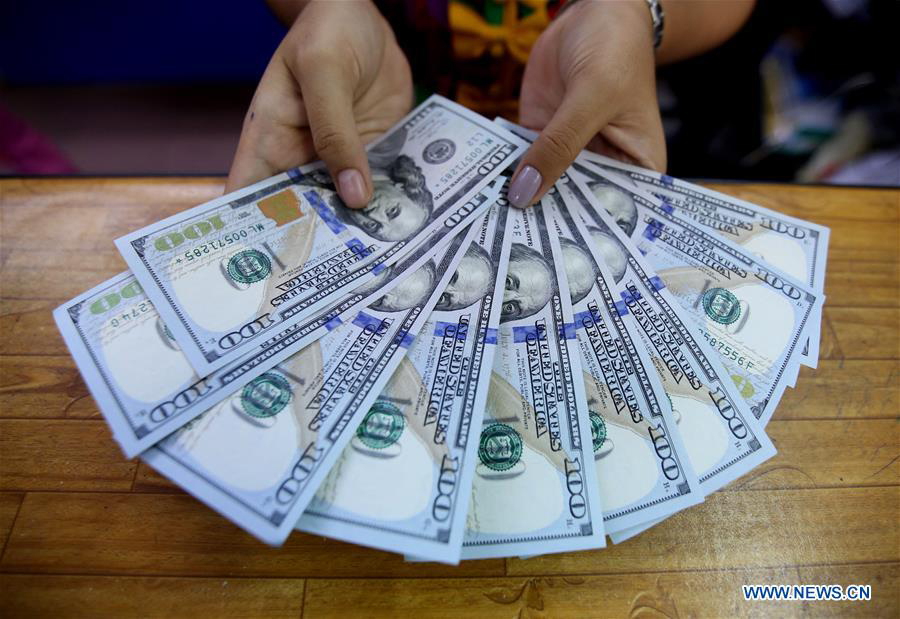
The dollar's weakness is not confined to major currencies-it has also fallen against several emerging-market currencies, including the Thai baht and, most strikingly, the Russian ruble. Reports from the curb market suggest that the taka itself is under appreciation pressure; had BB not intervened and bought US dollars, the exchange rate might have been closer to Tk 115 per dollar instead of the current Tk 121-122 range.
It is well established that a stronger taka would help reduce imported inflation, which remains stubbornly high at around 9 per cent and continues to erode the purchasing power of low- and fixed-income households. Lower import costs would translate into cheaper food, fuel, and raw materials. It would also make imported machinery and intermediate inputs more affordable for the garment sector, which depends heavily on imported textiles and accessories. Thus, the present policy of keeping the taka intentionally weak through dollar purchases has clear distributional consequences: it favours exporters and remittance earners, while imposing higher prices on consumers and domestic producers dependent on imports.
A friend of mine in the e-commerce business recently complained about this very issue, frustrated that BB is buying dollars when the global dollar itself has weakened. I initially shared his view and saw the policy as anti-people. But a mentor of mine made a wise counterpoint: this might actually be the right time for BB to rebuild reserves-even if inflation is still high.
In May 2025, Bangladesh Bank moved toward a more market-based, flexible exchange-rate regime, under which the taka's value is determined largely by demand and supply. Yet this "market-based" system remains under close regulatory supervision, including an annual dollar-spending ceiling of $12,000 per person. In practice, it is a managed float rather than a free float. For such a system to be credible and resilient, the central bank needs adequate reserves to counter external shocks or sudden capital outflows.
Recent history offers sobering examples. In 2018, when Turkey's reserves ran low, the lira lost almost 30 per cent of its value in a few months, sparking capital flight and pushing inflation above 25 per cent. Sri Lanka's experience in 2022 was even more severe: with reserves under $2 billion, the country defaulted, ran out of fuel and essential goods, and saw widespread protests that toppled its government. These cases underline a simple but powerful lesson-a country without sufficient reserves loses both policy space and public confidence when shocks arrive.
If BB's goal is to rebuild reserves sufficient to cover at least six months of imports-roughly $40-45 billion-then now may be the ideal moment to do so. As of December 2024, Bangladesh's reserves covered only 3.1 months of imports, far below international norms. With the dollar currently cheaper, accumulating reserves is like buying insurance when premiums are low: you don't wait for a fire to break out before putting in protection.
Of course, this strategy comes with short-term costs. By buying dollars, BB injects more taka into circulation, which has the potential to add to inflationary pressure. But the trade-off may be worthwhile if it strengthens the long-term financial stability and help prevent far greater pains coming from a future currency crisis.
So the real question is whether BB should allow the taka to strengthen-helping contain inflation now-or continue buying dollars to rebuild reserves for future stability. Ideally, such policy choices would be guided by economy-wide analyses, such as computable general equilibrium (CGE) simulations, which quantify the distributional and welfare effects across sectors and households.
Even without a formal model, BB's internal data could shed light on the short-term inflationary impact of reserve accumulation versus the long-term risk of inadequate buffers. On one side of the ledger, a stronger taka would immediately reduce inflation and ease living costs. On the other, building reserves from $27 billion to $40-45 billion while the dollar is relatively cheap could shield the country from external shocks that would otherwise be far more damaging.
What matters most now is policy clarity. If BB explicitly commits to a reserve-accumulation target-say $40-45 billion within the next 12-18 months-and then allows the exchange rate to adjust more freely, the temporary inflation cost becomes defensible. But if interventions continue indefinitely without clear goals or communication, the result will be persistent inflation, market uncertainty, and erosion of credibility.
At this stage, a well-communicated reserve-build program could also anchor expectations in both the banking and external sectors. It would signal that the central bank is rebuilding strength-not suppressing the exchange rate-and that once the target is achieved, market forces will play a greater role.
Moreover, linking this reserve strategy to broader macroeconomic coordination such as aligning fiscal deficits, external borrowing, and monetary targets could strengthen overall policy coherence. For instance, BB could publish a quarterly Reserve Adequacy Report explaining the sources of inflows, intervention rationale, and progress toward its target. Such transparency would reduce speculation and help balance the competing objectives of price stability and external resilience.
The author is an economist and independent researcher. syed.basher@gmail.com