
SIBOS 2015: Getting familiar with latest strategy of international trade
Nironjan Roy | Saturday, 23 May 2015
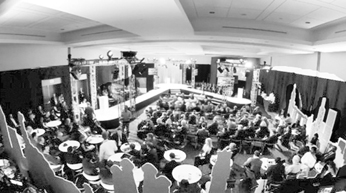
The SWIFT's International Banking Operations Seminar (SIBOS) is the biggest-ever gathering of banks and financial institutions of the world. SIBOS is held every year in different countries facilitating banks and financial institutions of every geographic location to participate in this seminar. Although this seminar is arranged by the SWIFT (Society for Worldwide Interbank Financial Telecommuni-cation), yet this is an open forum for all banks and financial institutions, especially for those which are actively involved in international trade and finance.
About 7,000 decision-makers and experts from banks and financial institutions all over the world attend this seminar and exchange their views and ideas for mutual benefit and interest. The heads of trade finance departments which are known as International Divisions in our country's banking industry and relationship managers from most of the banks in the world attend it.
The SIBOS 2014 was held in Boston, the USA from September 29 to October 02, 2014 where most of the banks from Europe, Africa, Asia, North America and South America participated. This seminar has a great importance to the bankers, especially those who are working in the trade finance department. Due to globalisation and dominance of information technology in trade and business, the volume of international trade has increased manifold. Moreover, the nature and scope of international trade has also changed considerably keeping pace with the ever-increasing trade volume. In order to take advantages offered by different countries, manufacturing, trading and investment are also moving in different locations based on which trading pattern and strategy are being changed. Banks are continuously changing their trade service products so as to capture the opportunity from changes in international trades.
Once upon a time, LC (Letter of Credit) was the only and most popular means of international trade which is now being replaced by the Open Account accompanied by SBLC (Standby LC). Even Risk Participation and Trade Advance are becoming the most popular and attractive trade service products being offered by many international and regional banks. Because of ever prolonged recession sweeping over developed countries particularly the USA and Europe, regulators and central bankers are imposing various rules, regulations and restrictions which need to be complied with by the commercial banks. This compliance is also equally applicable to the counterparty of the trades. Otherwise, they may be subject to violation.
After financial crash in the USA in 2008, the Dodd Frank Act was introduced and all the banks/financial institutions domiciled in the USA should be compliant with this act. The counterparty banks i.e. which intend to enter the transaction with US banks must confirm whether their trading banks are compliant with the act. Otherwise their transaction may be subject to the restrictions/suspension. At the same time, banks continuously review their own policy, based on which they develop new strategies and products in a bid to cope with the changing rules and regulations.
In SIBOS, these new strategies, policies and products are discussed in details. How the industry has manoeuvred the past challenge and what are the new challenges the industry foresees are the main topics widely discussed in this seminar. Banks' new direction and main focus in the coming year are well covered in various discussions of this seminar. Apart from these, all banks make extensive efforts to find their new trading partners so that their budgetary target can be achieved. So this is the right forum and good opportunity to find appropriate trading partners and establish correspondent relationship which may play pivotal role in increasing the country's international trade volume. Although this seminar is dominated by large and well established banks, yet small banks have greater opportunity too. During this seminar, the attending officials from small banks have an exclusive opportunity to personally meet the high officials of the large banks and can thereby present their prospect and interest of trading with them.
Usually the intent of trade or proposal is submitted to the regional relationship manager. There is little chance for the small banks to reach the ultimate decision-makers and resultantly right decision remains out of reach. Attending this seminar, if effective meeting can be arranged with those high officials who are ultimate decision-makers of their respective banks, good result may be derived. Because this high official will not only remember the new proposal but also periodically follow up with the respective relationship managers who will then be obliged to submit the proposal at the adjudicating level. Considering the importance of this seminar and with a view to maximising the number of trading partners, many large banks set up their own stalls so that intending counterparties can easily meet them with their potential business plan.
SIBOS has great importance for banks in Bangladesh because our country has already emerged as one of the potential trading countries with tremendously rising import and export volumes which have attained or even exceeded the annual turnover of US$ 30 billion milestone. There is an enormous prospect of exporting many non-traditional items including varieties of cookies, spices, furniture, jute products and pharmaceuticals because the quality of these products has already reached international standard and even exceeded the standard of our neighbouring countries. Some appropriate measures from the business community and the government bodies are required to start exporting these non-traditional products to the mainstream retail chains in the developed world where products mainly from our neighbouring countries are sold. With this growth potentiality, time has come for our country's bankers to be familiar with the latest concept and strategy of international trade. Moreover, they will have to establish good rapport and relationship with the potential banks so that best trade finance products and services can be provided to our business community.
It may be mentioned here that international trade is now being carried out based on the networks established among trading partners including banks. So maintaining good business relationship with large banks, we can easily enjoy their best products and services at easy terms and prices. Furthermore, all the large banks develop various sophisticated financial services which they sell though other banks' retail channels. Many large banks have enormous investible funds which they do not directly invest to importer or exporter but lend to other banks which in turn invest to those importers/exporters. This is the way international trade is shifting its dimension and our banks will have to be well-prepared to capture this kind of emerging opportunity.
In spite of being a member of developing countries, Bangladesh has some special features too. Our country has never defaulted to repay any international payment which is very common in many countries and this kind of default heavily downgrades the country's rating. Our country's rating is good and improving over the time. International print media, The Economist and the Wall Street Journal in particular, have projected our country with positive growth. Our banking industry has made a considerable progress in implementing BASEL II. Foreign exchange reserve of our country is quite high which is viewed as a very positive indicator by the trading partners and international rating agency as well. The payment performance of our banks in settling international trade is very satisfactory except some stray situations. With all of these positive parameters, our banks can easily establish effective correspondent relationship with the potential banks of the developed world which will eventually ensure our banks' easy access to their trade finance products and services. This access not only maximises our trading volume but also reduces import cost and increases export revenue.
It is to be mentioned that following various regulatory compliance and banks' persistent risk rating policy, banks from developed countries will not enter into any trading activity if pre-authorised counterparty arrangement is not established.
SIBOS may be an eye-opener for banks in our country because by participating in this seminar, our banks will be familiar with the present as well as future challenges of international trade and can prepare themselves accordingly. In addition, they will be able to find their suitable counterparties whom they may approach to establish trading arrangement.
SIBOS is the forum where all heads of trade finance department who are the sole decision-makers attend. Bankers from our country may take the opportunity to participate in SIBOS and thereby make a good approach in establishing trading arrangement with the prospective international banks.
Mere participation will not bring any desired result because some sort of homework, research and well preparation are required to reap the optimum benefit of participation in SIBOS. In our country, more than 50 banks are operating and obviously all banks are not equally strong in terms of financial standings and compliance. Those banks which are maintaining steady growth in terms of both volume and revenue should consider participation in SIBOS. These banks have to be rated by the rating agency, their financial statement should be prepared by the reputed Chartered Accountancy firm and good asset quality will have to be maintained. Countries with whom we have high volume of trade i.e. export and import will be identified and from these countries, some banks will be selected for establishing counterparty arrangement. A memorandum will have to be prepared portraying the country's as well as respective bank's growth history, economic and financial indicators and underlying the country's and bank's focus for the next two/three years in international trade.
Compliance issues, including ALM (Anti-Money Laundering) and BASEL II, will also be highlighted. In the seminar, attending bankers must meet those selective banks and hand over the prepared write-ups. There should be face-to-face meeting with the high officials of those selective banks providing the details on our present and future trading potentiality and thereafter a periodic communication should follow.
Next SIBOS will be held in Singapore in 2015. It was not cost-effective for many bankers to participate in recently held SIBOS in Boston in 2014. However, a good number of bankers from our country should be prepared to participate in SIBOS-2015 to be held in Singapore from October 12-15. Even some officials from the Bangladesh Bank should also consider participation because they need to know how international trade is being changed and having consistency with the change, our foreign exchange regulation will have to be updated. Participation in SIBOS may usher in a new era for banks in Bangladesh to capitalise the emerging opportunities created in the international trade in the world today.
The writer is a Toronto-based banker.
nironjankumar_roy@yahoo.com