
Skills key to poverty reduction in developing nations: Hanna
FE Report | Monday, 16 December 2013
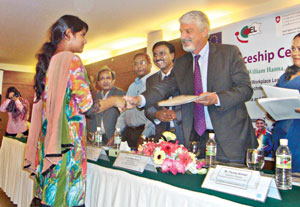
The European Union (EU) Ambassador to Bangladesh William Hanna said Saturday skills are the key to reducing poverty in developing countries.
"Skills mean decent jobs and decent income. Skilled workers increase the quality and competitiveness of products made in Bangladesh and help enterprises and the economy grow as a whole," said Mr Hanna.
He said skills development is on top of the development agendas of both the EU and Bangladesh.
The EU ambassador handed over certificates to a total of 8,000 apprentices across Bangladesh who recently completed skill apprenticeships.
Three years ago, only 98 apprentices registered with the Bureau of Manpower, Employment and Training (BMET). Introducing apprenticeships and their upscaling has been a key initiative of the TVET Reform Project, supported by the International Labour Organisation (ILO) and funded by the European Union (EU), an ILO statement said.
The Government of Bangladesh, supported by the ILO and financed by the EU, has been working since 2008 to improve the skills development system in Bangladesh, to make skills relevant, nationally recognised and demand-driven.
Two programmes taking apprenticeships to this new level in Bangladesh are in the Centre of Excellence for Leather (COEL), graduating 6,000 apprentices in the leather sector; and a partnership between UNICEF, BRAC and the ILO, graduating 2,000 apprentices in a number of trades, with another 3,000 starting in 2014.
One of the key initiatives has been improving the apprenticeship system and introducing the concept of dual apprenticeships, where learning happens in both training institutions and in workplaces. Another change is that dual apprenticeships are designed so that apprentices can directly enter jobs upon graduation. Industry sectors across Bangladesh are successfully using and upscaling these models.
Director of ILO Country Office for Bangladesh Srinivas Reddy said, "The improvements that are being made to the skills development system in Bangladesh are making it possible for everyone in the country to access training, including female apprentices in non-traditional trades, persons with disabilities and people with low levels of education."
He said the initiatives for skills development have been possible because of the partnerships between industry and government training institutions, the adoption of gender-responsive, flexible training methods and incorporating basic literacy and numeracy into skills.