
Sri Lankan leader faces election battle as war effect wanes
Wednesday, 7 January 2015
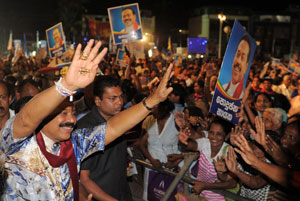
COLOMBO, Jan 6 (agencies): Sri Lanka goes to the polls Thursday to elect a new president after a bitterly fought contest between incumbent Mahinda Rajapakse and his main rival Maithripala Sirisena.
Sri Lanka's President Mahinda Rajapakse will face an unprecedented challenge from a newly galvanised opposition when he seeks re-election this week, five years after his crushing military victory over Tamil guerrillas.
South Asia's longest-serving leader had appeared politically invincible after his forces crushed the Tamil Tigers in 2009, ending a decades-long conflict and ushering in a new era of prosperity for the island nation.
Rajapakse won a landslide election victory in 2010, but critics say the 69-year-old has failed to bring about reconciliation with Sri Lanka's Tamil minority in the years that followed.
His second term has been dogged by accusations of corruption, including undermining the independence of the judiciary and lining the pockets of political cronies through lucrative contracts.
The surprise decision of his health minister Maithripala Sirisena to defect from the ruling party and stand as the main opposition candidate has turned what might have been a walk-over into a real contest.
Political commentator Victor Ivan said the low-profile Sirisena had become a symbol of simmering discontent over corruption.
"He (Rajapakse) failed to ensure reconciliation," Ivan told AFP.
"His focus was in mega-highways and ports. That was good for GDP growth, but not enough to heal a society wounded by decades of conflict."
Sri Lanka's economy has grown by an annual average of over seven percent since the war ended, partly thanks to hefty investment from close Rajapakse ally China.
But the opposition says Chinese contractors have employed few local people, and household incomes have not kept pace with national growth rates.
Opposition parties including the main Tamil party have rallied behind Sirisena, a 63-year-old farmer-turned-politician who is from the majority Sinhalese community.
While he still has support among Sinhalese voters, Rajapakse is widely detested by members of the country's biggest minority, who account for 13 percent of its 15 million people and usually vote as a bloc.
The president has taken drastic measures to shore up support, slashing fuel prices, cutting water and electricity tariffs and giving subsidised motorcycles and hefty pay increases to 1.6 million public servants.