
Stock market imperatives: unlocking wealth through reform
Abdullah A. Dewan | Thursday, 11 September 2025
America is both a rich and wealthy country. Its richness lies in abundant natural resources-but its true strength emerges in transforming those resources into lasting wealth through robust institutions, innovation, and productivity. Wall Street is more than a speculative arena; it channels capital into productive enterprises, spreads risk, and finances transformative ideas. Companies like Apple, Microsoft, Amazon, Google, Face Book, and Tesla did not grow on resources alone-they scaled globally because institutional frameworks multiplied innovation into tangible economic energy.
Bangladesh is endowed with abundant potential: fertile deltaic lands, a youthful workforce, a thriving textile and manufacturing sector, and rapidly expanding human capital. Yet these resources remain dormant unless institutional structures convert them into enduring wealth. The global lesson is evident: institutions, not raw resources, drive enduring wealth creation-just as the world's largest companies, mostly American with a combined market capitalization of $12 trillion, thrive because of robust systems of capital allocation. Even firms like Taiwan Semiconductor Manufacturing Company (TSMC), deeply tied to U.S. investors, highlight how institutional strength magnifies resource potential into global influence.
INSTITUTIONAL DESIGN IS DECISIVE: Pension funds, mutual funds, insurance companies, and retail investors channel capital into firms with strong governance and oversight. The profits in turn generate capital gains, dividends, and corporate taxes, which governments can reinvest in infrastructure, education, and social services. This cycle produces a multiplier effect: private wealth recirculates through the economy, fueling employment, technological innovation, and sustained productivity growth. Emerging markets can emulate this model by ensuring that equity markets link private wealth creation with national development, reducing dependence on external borrowing while financing industrialization and technological adoption.
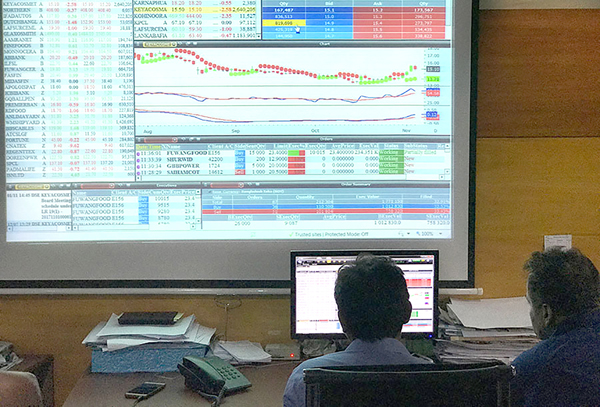
THE BANGLADESH STOCK MARKET: A Linear Drain Unlike the circular flow of capital in advanced economies, Bangladesh's stock market operates more like a linear drain. Retail investors-middle-class households, pensioners, and small savers-supply the capital, but it is siphoned off by politically connected insiders. IPO manipulation, rumour-driven trading, and privileged access to information concentrate profits in a narrow elite, eroding public trust and discouraging long-term participation.
The history of market crashes underscores this systemic fragility. In 1996, deliberate distortions wiped out thousands of small investors; the pattern repeated in 2010-11, this time compounded by weak regulatory enforcement. Both crises, often cushioned by political protection, deepened public mistrust. Ordinary investors bore massive losses, leading to a prolonged withdrawal of household participation from the capital market.
STRUCTURAL WEAKNESSES AND GOVERNANCE CHALLENGES: The Bangladesh Stock Market (BSM) remains constrained by entrenched structural weaknesses. Corruption and political interference allow politically exposed persons (PEPs) to capture rents through IPO manipulation, volume inflation, and earnings distortion. Deficient corporate governance deepens these vulnerabilities: boards often subordinate fiduciary duties to partisan or personal agendas, while auditors at times collude to obscure financial realities. The prolonged listing of chronically unprofitable or dormant firms-Z-category stocks-undermines market credibility and signals regulatory laxity. Weak disclosure practices, including irregular reporting, inconsistent dividend payments, and delayed announcements, further exacerbate information asymmetry. Political volatility-manifested in hartals, electoral cycles, and recurrent social unrest-intensifies speculative trading and accelerates capital flight, crowding out productive investment. In such a systemically opaque environment, retail investors encounter heightened risks, deterring participation and preventing the stock market from evolving into an engine of inclusive growth and capital formation.
RECENT MARKET PERFORMANCE: Signals and Stress Over the past five years, Bangladesh's stock market has experienced significant volatility. After modest post-COVID recovery, it underperformed regional peers such as Pakistan, Sri Lanka, and India through 2023-2024. In 2024, the Dhaka Stock Exchange (DSE) fell over 16 per cent, while Pakistan's KSE-100 index rose about 6 per cent and Sri Lanka's CSE rebounded sharply after pandemic lows. In early 2025, Bangladesh remained among Asia's worst performers, with low liquidity and falling investor confidence, whereas India and Pakistan saw steadier gains. By mid-2025, Bangladesh's market rallied sharply - DSEX rose more than 12 per cent in one month - thanks to easing inflation, currency stabilisation, and renewed investor interest. Nevertheless, structural weaknesses, regulatory gaps, and reliance on policy stability continue to make Bangladesh's market highly sensitive compared with regional counterparts.
CIRCULAR SYSTEMS VS. LINEAR DRAINS: Advanced economies demonstrate self-reinforcing capital cycles -- households save, firms invest, governments collect taxes, and resources are reinvested in productive sectors. Returns circulate widely, generating employment, innovation, and long-term growth. Bangladesh, by contrast, experiences linear flows: capital enters but rarely benefits the broader economy. Concentrated profits hinder wealth democratisation and limit inclusive growth. Bridging this gap is essential for the BSM to evolve into a genuine engine of development.
QUANTITATIVE POTENTIAL OF A REFORMED MARKET: A credible BSM, with total capitalisation at 25 per cent of GDP (~$125 billion) and robust participation and transparency, could deliver significant fiscal and economic gains. With a 10 per cent annual return and a 3 per cent dividend yield, capital gains and dividend taxes could generate roughly $2.25 billion annually. Reinvested with a conservative multiplier of 1.5, this translates into a GDP impact of $3-3.5 billion per year. Productive corporate investments of $5 billion could create roughly 100,000 jobs annually, boosting industrial productivity, technological adoption, and service sector growth. Combined, these fiscal and investment effects could inject $5-6 billion per year into the economy, contributing 1-2 per cent to annual GDP growth. Both rural and urban economies would benefit, amplifying wealth distribution and inclusive growth.
REFORMING THE BANGLADESH STOCK MARKET: The Bangladesh Securities and Exchange Commission (BSEC) and government reforms aim to strengthen regulatory independence, criminalise insider trading with enforceable penalties, mandate independent boards and audit committees, ensure timely and transparent disclosures aligned with global standards, streamline delisting procedures for non-performing firms, launch tax-incentivised retirement accounts, upgrade market infrastructure, and enhance investor education. Rigorous implementation of these measures could restore confidence, improve liquidity, and transform the BSM into a platform for inclusive, long-term wealth creation.
REGIONAL SUCCESS STORIES: Bangladesh can draw lessons from peers in Asia. India's SEBI reforms strengthened regulatory independence, digitised trading, and enforced governance standards, attracting domestic and foreign capital while restoring public trust. Vietnam's equitisation of state-owned enterprises created transparency and increased private participation, resulting in vibrant markets. Indonesia's experience demonstrates the risks of market liberalisation without consistent enforcement, highlighting that discipline, transparency, and consistent governance are critical. These cases collectively show that fragile markets can become engines of growth through structural reform.
GLOBAL INTEGRATION AND EXTERNAL LINKAGES: No stock market operates in isolation. Policy changes, interest rates, and fiscal measures in major economies ripple globally, affecting Bangladesh through foreign portfolio flows, exchange rates, and trade patterns. Integrating domestic reforms with international best practices enhances investor confidence and capital mobilisation, while mitigating exposure to external shocks. Global connectivity amplifies the "c-squared" multiplier effect of efficient institutions, making domestic capital more productive and resilient.
THE WAY FORWARD: Trust and institutional credibility are central. Liquidity alone cannot drive growth; enforcement, governance, and political will are essential. A thriving BSM channels capital into productive avenues, safeguards investors, and aligns market incentives with national development. Bangladesh has the ingredients for success: a young workforce, expanding industries, and entrepreneurial dynamism. Systemic reforms and transparency can make the stock market a cornerstone of sustainable economic growth.
A well-regulated, transparent, and integrated BSM could transform domestic and foreign savings into productive investment, generate employment, increase fiscal revenue, and support sustainable growth. Institutional reform, regulatory independence, robust corporate governance, investor protection, and global integration are prerequisites for unlocking the transformative power of the BSM. With proper implementation, Bangladesh can move from a fragile, confidence-draining system to a vibrant, inclusive engine of national prosperity - where latent resources truly become amplified wealth.
Dr Abdullah A Dewan is a former physicist and nuclear engineer at the BAEC and professor emeritus of economics at Eastern Michigan University, USA.