
Stories of rural women changing their lot
Sajida Islam | Sunday, 14 December 2025
When Shilpi from Dakshin Paikpara in Chandpur suddenly found herself in a role of raising two children alone, she feared her life had reached a dead end. Her husband had abandoned the family, and her days were spent worrying about how to manage food, school fees, and the most basic needs. Today, the small yard where she rears ducks and chickens tells a different story. With support from the SWAPNO project, she has built a modest yet dependable income source. It isn't just money -- it is the confidence of knowing she can stand on her own feet.
Similar shifts are happening in quiet corners of the country. In Sherpur, Moni Begum's life took a difficult turn when her husband became disabled. For years, she struggled to keep her family afloat, working in a garment factory in Ashulia before returning home due to illness. She was desperate to rebuild her life but did not know where to begin. After enrolling in SWAPNO's livelihood training in Nakla, she started a small duck-rearing initiative. What began with a handful of ducks has now grown into a profitable farm, allowing her to earn regularly and employ other women facing hardship. It is not a dramatic success story -- just the steady, determined rebuilding of a woman who refused to remain defeated.
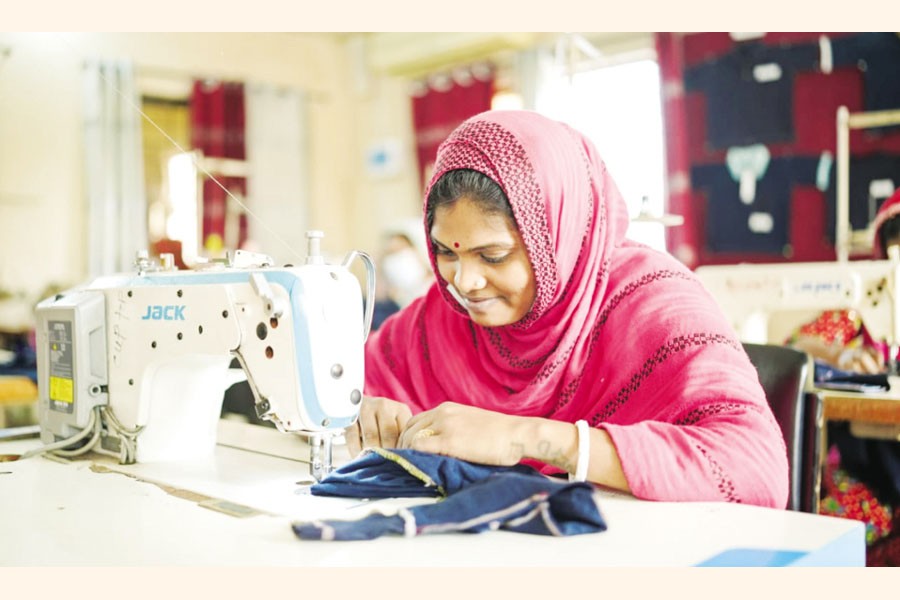
In Cumilla, Afroza represents another dimension of SWAPNO's impact. After completing the project's first batch of formal sector training, she joined Amir Shirts Factory as a junior operator. Her monthly income, including overtime, reaches around Tk 18,000. Three more women from Bagerhat and Pirojpur, all graduates of the same training cycle, have joined the same factory. Their experience is transforming not only their economic situation but also their expectations of what a rural woman can aspire to.
These individual stories have taken shape across SWAPNO's working areas. The project, active in 12 districts and 283 unions since mid-2023, implemented by the Local Government Division (LGD) and UNDP Bangladesh, funded by the Embassy of Sweden and Marico Bangladesh, is designed to support 10,188 women-headed ultra-poor households through paid work, savings, skills development and job placement. Thousands of women have already been engaged in income-generating activities, earning wages that allow them to contribute to their families and make small but meaningful investments. Many have saved money for the first time in their lives, reinvesting it in livestock, small businesses, agriculture or education for their children.
A major focus of the programme is preparing women for the formal sector. Training in industrial sewing, garment line operations and workplace discipline has opened doors that previously remained out of reach for rural women. In Cumilla and Chandpur alone, hundreds of women have completed training and many are already working in factories. Project officers continue to monitor their progress, help them settle in, and maintain links with employers to support long-term placement. This follow-up system, project officials say, is one of the reasons the transition to formal work has been smoother than expected.
Alongside training and income support, SWAPNO places much emphasis on climate-resilient livelihoods. In areas frequently affected by floods, drought or soil salinity, women are receiving guidance on climate-smart agriculture, drought-tolerant crops, water-efficient production and safer livestock practices. Demonstration plots and community sessions help women test techniques that reduce risk and improve yield. Environmental resilience is becoming a practical skill rather than an abstract concept.
Health protection has also become a visible pillar of the project. More than ten thousand women are now enrolled in micro-health insurance, giving them access to services they previously avoided because of cost or distance. Telemedicine consultations have become a lifeline for women in remote areas, particularly those who had never spoken to a doctor before. Insurance claims have been settled promptly, easing the financial burden during emergencies.
Yet perhaps the most noteworthy change is the shift in social attitudes. In many rural families, women were initially discouraged from attending training or leaving home for work. Concerns about safety, honour and societal norms kept them confined. What changed that mindset was sustained community engagement -- meetings with families, involvement of local leaders, open discussions with religious figures, and the visible success of early participants. Women who once hesitated to step inside a Union Parishad office now speak confidently in public meetings, interact with officials, and travel for work without fear. Their families, too, have begun to see the value of their earnings and the respect they have gained.
Across these districts, the transformation is quiet but unmistakable, Shilpi earning from her backyard, Moni running a small enterprise in Sherpur, Afroza and the young women from Bagerhat and Pirojpur working in factory shifts in Cumilla -- each reflects a small step toward greater economic independence. Their progress is neither accidental nor isolated. It is the outcome of a structured initiative built on skills, support and follow-up, giving women the tools to rebuild their lives.
As Cumilla Additional Deputy Commissioner (General) Md Saiful Islam has observed, many rural women are now becoming self-reliant because the project provides "both opportunity and the confidence to use it." If the current momentum continues, SWAPNO may well become a model for how targeted, practical interventions can help the most marginalised women reshape their futures with quiet determination.
sajidaparul@yahoo.com