
Successful resilient community model of Nabinagar Colony
Tuesday, 20 June 2023
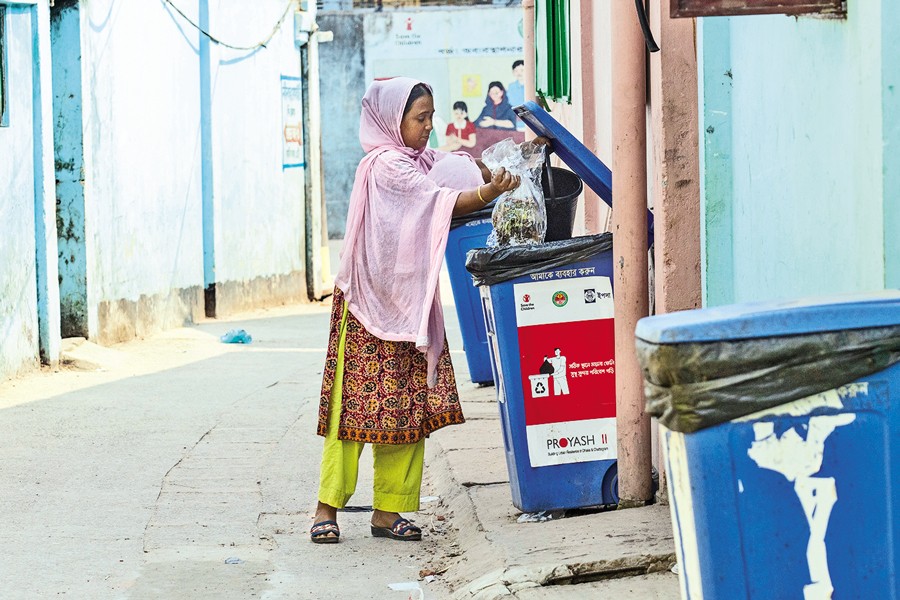
Nabinagar Colony, located in Ward 7 of Chattogram's West Sholashahar, is a residential area where a significant portion is an urban informal settlement of low-income families.
Through integrated waste management and safety measures, this neighbourhood has become a model for the Chattogram City Corporation and has inspired the implementation of this model in other areas of Chattogram as well.
Prior to taking this initiative in Nabinagar, dealing with waste, open drains, and waterlogging were common issues. Even a little rain might have caused waterlogging and increased mosquito infestation, further inconveniencing the residents.
The clogged drains often resulted in stagnant water entering houses, leading to daily hardship.
The active participation of local residents has been instrumental in making the transformation of Nabinagar possible. Under the Proyash II project with support from Save the Children International and Chattogram-based NGO Young Power in Social Action (YPSA), initiatives were taken to implement this model in Nabinagar Colony. Various initiatives were taken to make the area habitable and safe, emphasizing cleanliness and greening.
Waste bins were placed in front of every lane to reduce waterlogging, and residents were encouraged to dispose of their daily waste in designated bins instead of draining it. Separate women and children groups were formed to spread awareness for not throwing garbage into the drains.
Sayed Mehedi Hasan (17), a resident of Nabinagar, said, "It is our responsibility to create awareness among children about keeping this area clean and green. We have worked hard to make our area clean and beautiful in Nabinagar.
We do not want this place to be like it used to be. Teaching children these good habits is very important to sustain our efforts. That is why we are always making every possible effort."
Alongside cleanliness, fire safety was another significant initiative taken at Nabinagar. Under the initiative, gas and electricity connections of every household in Nabinagar were examined to identify and repair faulty electric wires, faulty gas connections, and missing circuit breakers.
Upon inspection, it was identified that due to defective wires and electrical equipment and the absence of circuit breakers, most houses in the colony were at risk of fire.
The residents were informed of these findings so that they could take necessary steps for repairs and fire hazard reduction. Many families have already taken the initiative to repair their electricity lines.
Alongside local residents, ward councilor Md. Mobarak Ali played a significant role in implementing this waste management model in Nabinagar.
"We have designed the model by including 80 houses and 300 families, as an exemplary waste management model. We will establish waste disposal units in various locations where people of the area will properly dispose of their waste.
We have hired waste collectors on behalf of the community. The Nabinagar Development Committee is working on development initiatives and monitoring," he said.
When the model was presented to Rezaul Karim Chowdhury, Mayor of Chattogram City Corporation, he expressed interest in implementing it in other wards as well. "Nabinagar's initiatives have gained broad acceptance.
By following these initiatives, we can ensure proper waste management across the city," he said. The transformation of Nabinagar showcases the power of community participation and collective effort for ensuring a clean and resilient community.
Nasim Banu, Director of Social Development at YPSA, said, "Creating a replicable waste management model in an area that was once known for indiscriminate waste disposal is an extraordinary success story.
YPSA is also implementing this model in some other areas of Chattogram city under other projects." It demonstrates that the success of Nabinagar model has not only improved the living conditions of the local community, but also inspired similar initiatives for sustainable waste management and resilience in other communities.