
Tapping into vast potential of handicraft export
Atiqul Kabir Tuhin | Thursday, 7 May 2026
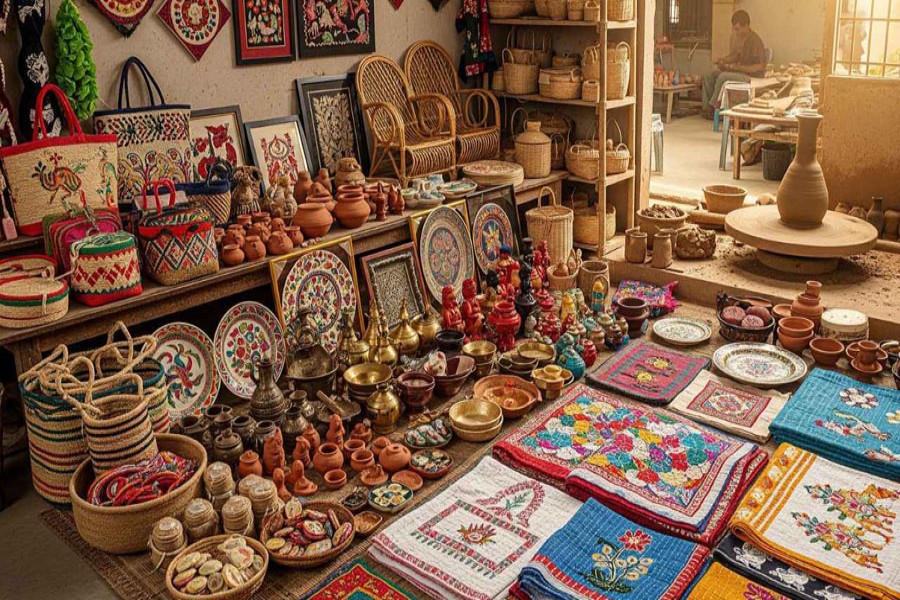
Underprivileged rural women of Jhenaidah have set an admirable example of self-reliance. Instead of taking micro-credit at the risk of defaulting, they are making impressively designed handicrafts with an eye to foreign market. According to a recent report by a vernacular daily, a total of 800 women of three upazilas of the district are crafting baskets, trays, mats and showpieces with water hyacinth, rice straw and date leaf. As far as can be ascertained from the photograph in the report, the products are not only useful but also ornate and visually appealing.
Working from home, they can earn around Taka 3,000 per month. And their products are finding market in as many as 82 countries including the US and Canada. The initiative, led by BD Creation in Jhenaidah, demonstrates how proper training, design innovation and market linkage can transform trashes into treasure.
If handicrafts made of such waste materials gain popularity in the markets abroad, it is a boon not only for the 800 poor women but for the whole country. Handicraft represents a country as much as its art and literature. Bangladesh, in this regard, possesses a rich and diverse tradition. The sustained interest of foreign buyers, evident in international exhibitions and export fairs, attests to the global appeal of rural artisans' craftsmanship.
Among the most iconic of these is Nakshi Kantha, the intricately embroidered quilt that has long been woven into the cultural fabric of Bangladesh. Characterised by elaborate motifs, vibrant colours and meticulous needlework, each piece is both a utilitarian object and a work of art. Traditionally crafted by rural women, kantha embroidery has served as a means of self-expression as well as self-reliance. Through patience and skill, ordinary pieces of cloth are transformed into extraordinary works of art. The sheer sight of Nakshi Kantha is a kaleidoscopic feast for the eyes, for which it has been winning the hearts and minds of the people at home and abroad generation after generation.
Equally noteworthy is Shital Pati, a finely woven mat made from natural fibres, widely used as a seating mat, bedspread or prayer mat. Recognised by UNESCO as an element of the Intangible Cultural Heritage of Humanity, the craft of Shital Pati weaving embodies both aesthetic appeal and ecological sensibility.
Bangladesh also boasts a wide range of handloom textile products including Jamdani, Tangail, Rajshahi Silk, Monipuri and so on. The handloom products including saris, shawls, bedcovers, scarves, bags etc are acclaimed and coveted for their quality and aesthetic beauty. Jute products also deserve special mention. As an eco-friendly and versatile material, jute enjoys a vibrant market in both raw and finished forms. Then there are eye-catching earthenware, stoneware and porcelain which potters skillfully produce. The products range from an assortment of pots, cups, flower vases and decorative objects. They come in all sizes and an assortment of variations, in exquisite styles, offering an artistic and brilliant way to furnish the home and office and bring what nature has to offer inside.
For decades, cheap environment-threatening polythene and plastic products usurped the space of many traditional handicrafts. However, with growing global awareness about environmental sustainability, there is now a renewed demand for eco-friendly products, particularly in Europe and North America. This shift presents a significant opportunity for Bangladesh to diversify its export basket by tapping into the untapped potentials of this sector.
According to estimates, the global handicrafts market is currently valued at US$ 1,107 billion and is projected to reach US$ 2.3 trillion, growing 10.15 per cent annually. Despite its long-standing tradition of craftsmanship and a rich heritage of handmade products, Bangladesh's share in this vast global market is negligible. This limited presence reflects persistent challenges such as inadequate product diversification, lack of branding and marketing, limited access to international markets, and insufficient policy support - factors that continue to constrain the sector from realising its full export potential.
It is therefore imperative to scale up such initiatives by bringing a larger number of public and private actors into the fold, while simultaneously exploring new and emerging markets for Bangladeshi handicrafts. As the government is keen to reopen state-owned factories in the textile and jute sectors through public-private partnerships, some of these facilities could be repurposed or adapted for the large-scale production and processing of traditional handicrafts. The establishment of dedicated design centres and training facilities is also important to enhance product innovation, quality control and skill development. Such measures would not only generate employment but also help standardise quality and ensure a consistent supply for export markets. Ultimately, the sector's full potential can be realised through coordinated efforts between the government and the private sector, supported by research, design development and favourable policies.
At the same time, just as certain organisations are supporting the entrepreneurial efforts of underprivileged women at the grassroots level, Bangladesh's missions abroad must assume a more proactive role in promoting these products. This can be achieved through greater participation in international trade fairs, exhibitions and cultural expos, as well as by facilitating access to global e-commerce platforms. Strategic branding, market intelligence and diplomatic support can significantly enhance the visibility and competitiveness of Bangladeshi handicrafts in the global marketplace.
The handicraft sector thus offers Bangladesh a strategic opportunity to promote export diversification, generate rural employment and advance sustainable development. As demonstrated by the women of Jhenaidah, craftsmanship is more than a symbol of self-help. It opens pathways for rural women to be part not only of national but global economy.
aktuhin.fexpress@gmail.com